
Bark (plant covering): structure, function and human uses
Bark is the protective outer covering of woody stems. This article covers its structure and growth, functions, ecological roles, human uses, variations, and basic identification and conservation concerns.
Bark is the multi-layered outer covering of the trunks, branches and twigs of woody plants and trees. It develops outside the vascular tissues and includes living and dead cells that together protect and support the plant. Distinct appearances — smooth and pale on some birches, thick and corky on some oaks, or deeply fissured on old pines — reflect differences in anatomy and growth. For basic context see entries on stems, woody plants and trees.
Image gallery
10 Images


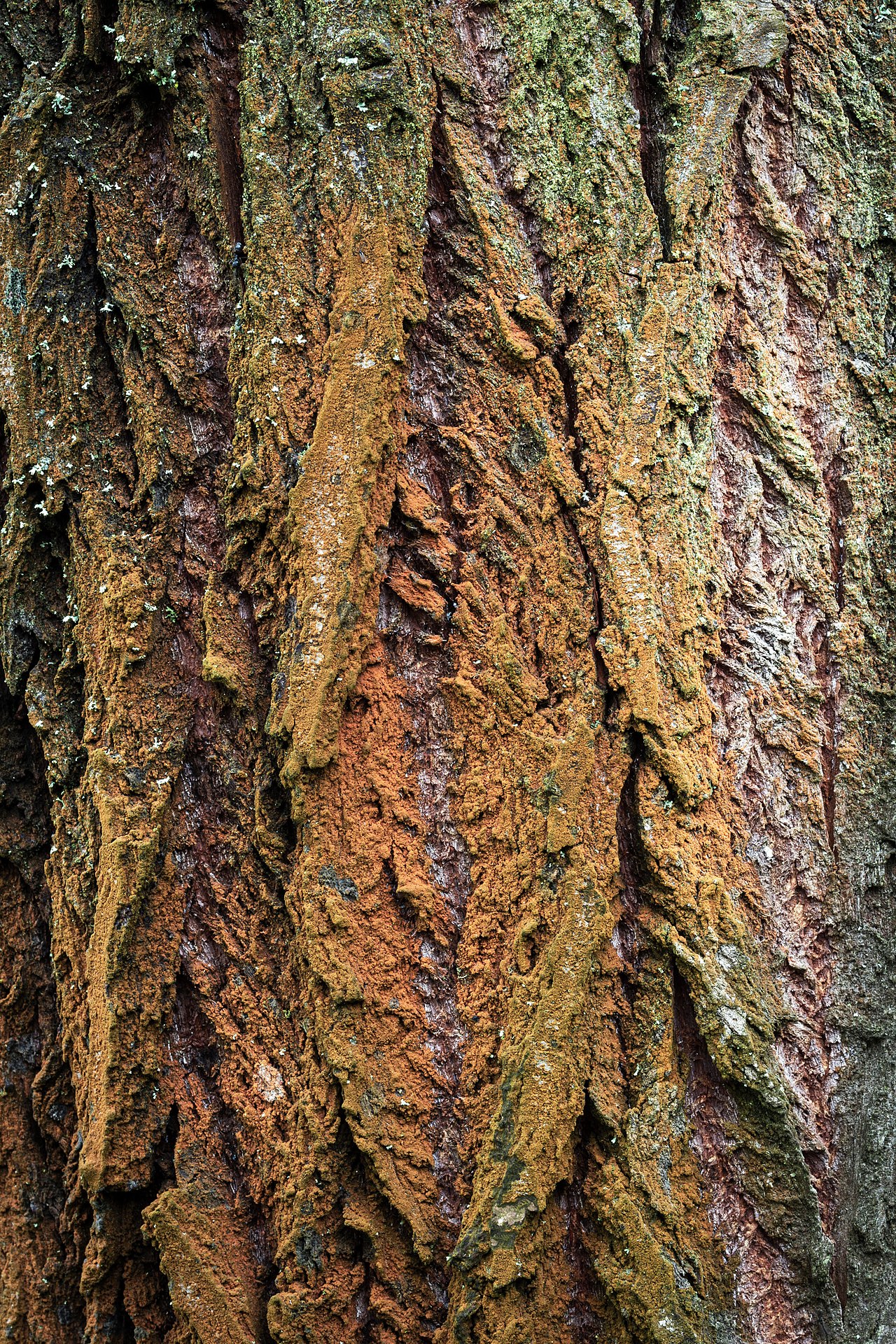


Structure and growth
Bark is not a single tissue but a sequence of layers that change as a stem expands. Immediate layers include inner bark (the secondary phloem), which conducts sugars, and outer tissues formed by the periderm. Much outward growth of bark is driven by the vascular cambium, a cylinder of dividing cells that produces wood inward and phloem outward. In mature stems the original epidermis is replaced by a periderm, which usually contains a cork cambium (phellogen) that produces cork (phellem) and sometimes phelloderm. Porous structures called lenticels in the periderm permit gas exchange between living inner tissues and the atmosphere.
Functions and ecological roles
The primary role of bark is protection. It shields conducting tissues from mechanical injury, pests and pathogens, and reduces water loss. Bark moderates temperature extremes and can confer resistance to fire, frost or insect attack in adapted species. As habitat, bark hosts a diverse community including lichens, mosses, insects and fungi; its texture, thickness and chemistry influence which organisms can use it. Bark characteristics may also aid species recognition by humans and animals.
Uses and cultural importance
Human societies have long made use of bark. Cork, harvested from the cork oak, is an important material for insulation, flotation and bottle stoppers. Many barks supply tannins for leather tanning; some inner barks are aromatic and used as spices (for example cinnamon), while others have medicinal compounds (willow bark contains salicylate-related substances). Bark fibres have been beaten or woven into cloth in several cultures, and bark is also used as fuel, mulch and as building material in some traditional crafts.
History, variation and identification
Bark-like protective tissues are ancient: evidence of secondary growth and protective outer layers appears in the fossil record back to deep geological periods such as the Carboniferous. Different lineages evolved diverse bark anatomies and chemistries that reflect habitat, herbivore pressure and climate. Field identification often uses bark texture (smooth, peeling, fissured, scaly), colour and pattern in combination with leaves and buds. Common examples include thin papery birch bark, broad plated oak bark, flaky plane tree bark and thick corky bark of cork oak.
Threats and management
Bark can indicate tree health: cankers, unusual lesions or evidence of boring insects (for example bark beetles) are warning signs. Management of forests and urban trees considers bark traits when assessing fire risk, pest susceptibility and habitat value. Conservation of species that rely on particular bark types benefits from protecting old trees and recruiting younger trees with potential for similar bark structure.
- Key layers: inner bark (phloem), periderm (outer bark), phellogen/cork cambium.
- Main functions: protection, transport support, insulation and habitat provision.
- Human uses: cork, tannins, spices, traditional medicines, textiles and fuel.
For more anatomical detail see the entries on the vascular cambium and the cork cambium, and for broader botanical context consult materials on stems and woody plants.
Questions and answers
Q: What is bark?
A: Bark is the covering of the stems of woody plants, like trees.
Q: What does bark do?
A: Bark protects the tree.
Q: What can bark of different plants and trees look like?
A: Bark of different plants and trees can look very different, it can be rough or smooth and can have different colors.
Q: Where does most of the bark grow from?
A: Most of the bark grows from the vascular cambium.
Q: What are lenticels and what is their function?
A: Lenticels are found in the bark and they allow gases to move in and out of inner tissues which have living cells.
Q: How long has bark been on trees?
A: Bark of one kind or another has been on trees from the Carboniferous period.
Q: Where else can bark be found on trees?
A: Bark is obvious on stems and branches, and on some kinds of storage organs.
Related articles
Author
AlegsaOnline.com Bark (plant covering): structure, function and human uses Leandro Alegsa
URL: https://en.alegsaonline.com/art/9005