
Mudskipper: the amphibious goby of intertidal shores
Mudskippers are amphibious gobies adapted to life on muddy coasts, mangroves and tidal flats. They forage, move and reproduce on exposed substrate and illustrate key adaptations for life at the sea–land margin.
Overview
Mudskippers are a group of fishes notable for spending long periods out of water while remaining active. They belong to the goby family, the Gobiidae, and include several genera that occur on soft, shallow coasts. Mudskippers are most conspicuous on muddy flats, in mangrove forests and near estuaries where alternating tides expose wide areas of substrate. Unlike most fishes, many mudskippers feed, move and display while partly or wholly out of water, relying on a set of physical and behavioral specializations to survive in fluctuating conditions.
Image gallery
7 Images


Physical adaptations
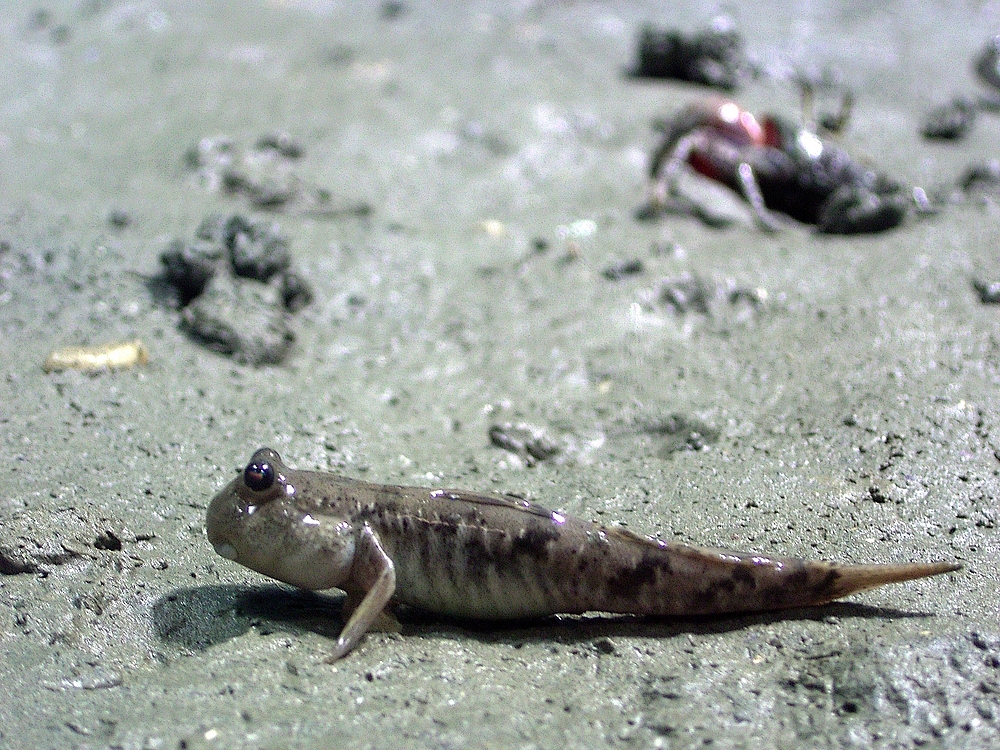
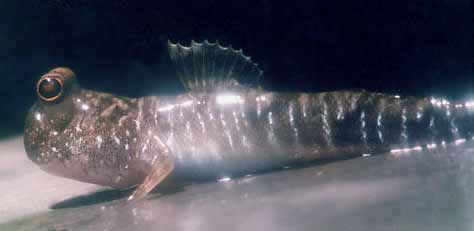
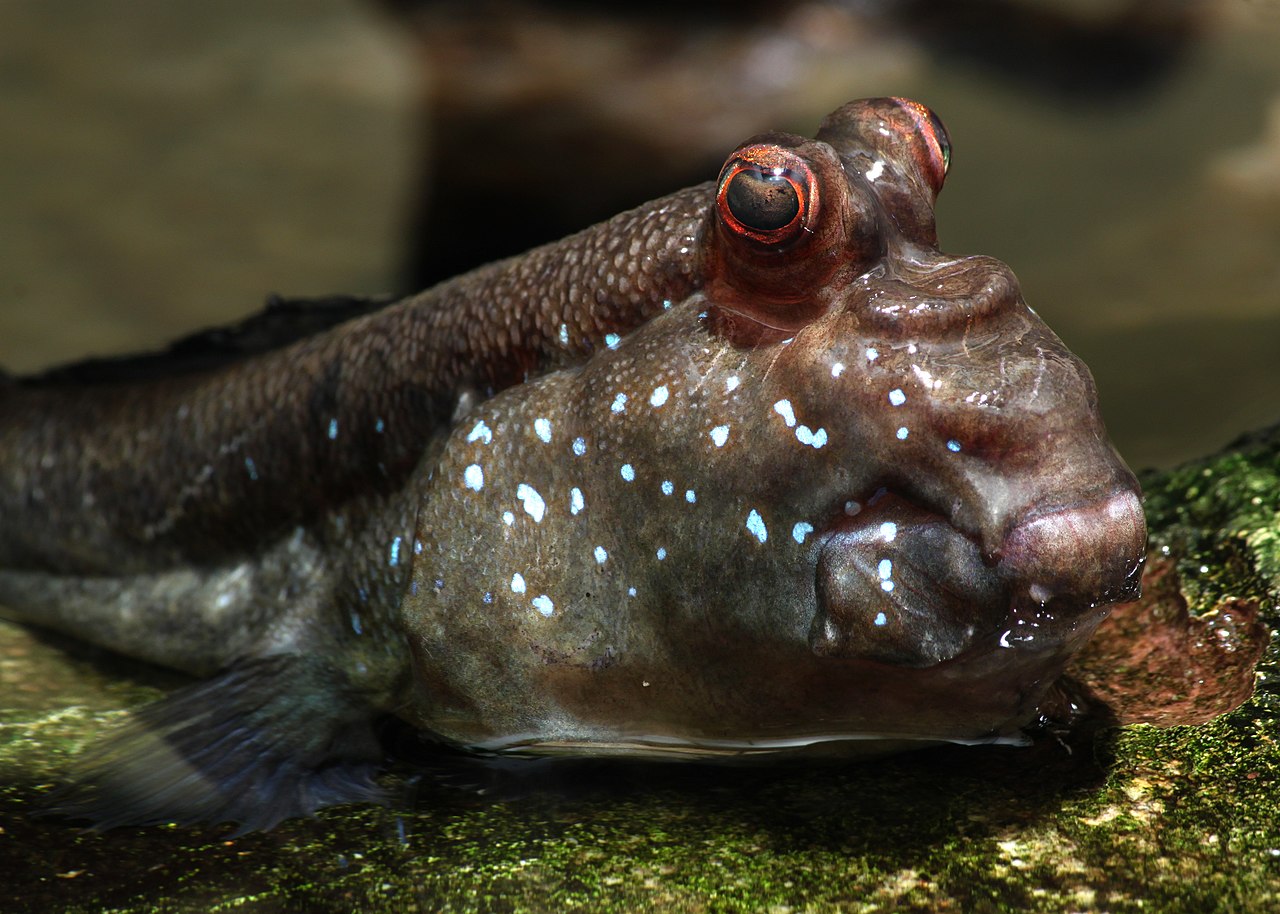
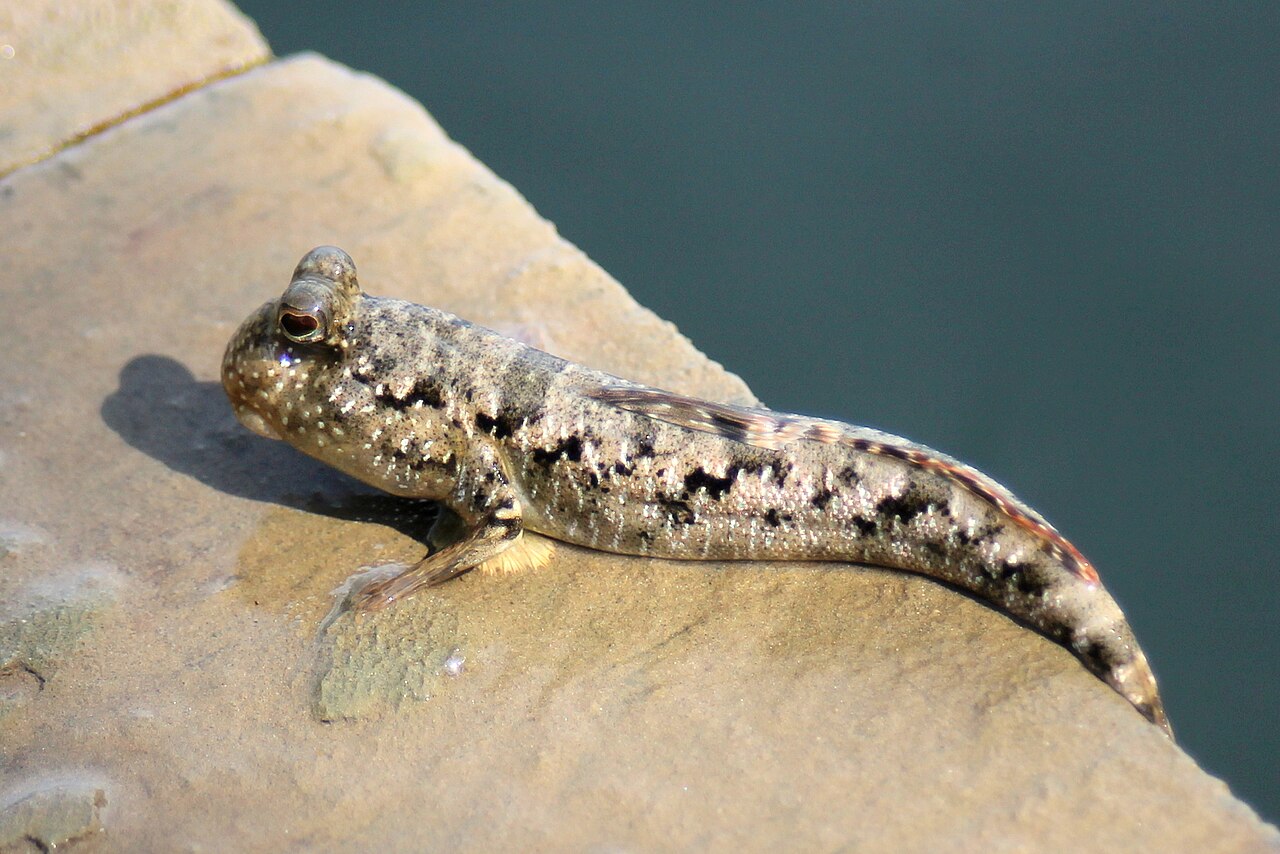
Mudskippers show a combination of anatomical traits that facilitate an amphibious lifestyle. Their robust, highly mobile pectoral fins act as limb-like supports that allow them to climb, hop and crawl on wet sediment. The eyes are elevated on the head and can move independently, giving a panoramic view above the surface. For gas exchange, mudskippers use a mix of strategies: they retain water in enlarged gill chambers to keep gill filaments moist, they may gulp air into the mouth and throat, and they can absorb oxygen through the skin and the linings of the mouth and throat. These features are often described as adaptations to life in intertidal habitats.
Behavior and ecology
Mudskippers are typically diurnal and show conspicuous activity when the ebbing tide exposes feeding grounds. They forage for small invertebrates, worms, crustaceans, algae and detritus by picking or sifting material on the surface. Many species construct and maintain burrows in the mud; these burrows provide shelter, a moist refuge at low tide and a site for spawning. Territorial behavior is common: males often defend burrow entrances and display to rivals and potential mates with raised fins, body postures, throat displays and short jumps. Visual signaling is important because acoustic and chemical cues are limited on exposed flats.
Reproduction and life cycle
Reproductive strategies vary by species, but burrow-based nesting is widespread. Eggs are frequently deposited in burrow chambers where a water pocket remains during low tide; in some species males guard and aerate the eggs by transporting water into the burrow. Juveniles often develop inside these protected microhabitats until they can emerge and feed on the surface. Life cycles are tied closely to tidal rhythms and local environmental conditions.
Habitat, distribution and notable groups
Mudskippers are most diverse in tropical and subtropical regions but some species also occur in temperate zones. Their range includes the Indo-Pacific region and parts of the Atlantic, including the western African coast (Atlantic and Africa are regions where a number of species are found). They are typically associated with mangroves, tidal flats, salt marsh edges and estuarine channels where soft sediments are present. Several genera are well known in field guides and ecological literature, such as Periophthalmus and Boleophthalmus, which illustrate a range of sizes and behaviors among mudskippers.
Interactions with people and uses
Humans encounter mudskippers in natural-history excursions, on guided tours of mangroves, and sometimes in local aquarium collections. They are not generally important commercial fishes but may be collected locally for food or for the aquarium trade in some areas. Because mudskippers are visible and localized, they sometimes serve as subjects in environmental education and ecotourism focused on coastal habitats.
Conservation and threats
Mudskipper populations depend on intact intertidal habitats. The main threats are loss and degradation of mangroves, coastal development, pollution and sedimentation that alter the quality of mudflats and estuaries. Conservation measures that protect mangrove stands, reduce pollution and maintain natural tidal processes help preserve mudskipper populations and the wider communities that share their habitat. In some places, mudskippers are used as informal indicators of coastal ecosystem health.
Evolutionary significance and research
Because they show intermediate behaviors and anatomical traits between fully aquatic fishes and terrestrial vertebrates, mudskippers attract interest from researchers studying the evolution of terrestrial locomotion and respiration. They provide accessible examples of how changes in fin function, sensory placement and respiratory physiology can support excursions onto land. Studies of mudskipper behavior, physiology and ecology contribute to broader understanding of how animals adapt to highly variable environments.
Key points
- Taxonomy: members of the goby family (Gobiidae), represented by several genera and many species.
- Habitat: mudflats, mangroves and tidal pools in tropical to temperate coastal zones of the Indo-Pacific and parts of the Atlantic, including coasts of Africa.
- Adaptations: powerful pectoral fins for terrestrial movement, elevated eyes, skin and buccal respiration and water-retaining gill chambers (adaptations to intertidal habitats).
- Behavior: active on exposed flats at low tide, territorial displays and burrow-based reproduction (territory defence is common).
As conspicuous residents of the intertidal zone, mudskippers remain a popular subject for naturalists and a useful living example of adaptations at the interface of land and sea. Observations of their behavior can be easily included in field studies of coastal ecosystems and conservation efforts that aim to protect mangroves and tidal flats for both biodiversity and human wellbeing. For additional background on gobies and related coastal fishes see regional field guides and authoritative summaries available through academic and conservation organizations (seaweed and substrate interactions provide important microhabitats).
Questions and answers
Q: What are mudskippers?
A: Mudskippers are a type of fish that can use their pectoral fins to "walk" on land.
Q: What fish family are mudskippers part of?
A: Mudskippers are part of a fish family known as gobies.
Q: What does it mean when it is said that mudskippers are amphibious fish?
A: It means that mudskippers can survive both in water and on land.
Q: Where are mudskippers found?
A: Mudskippers are found in places that are tropical, subtropical and temperate. They live near the shores of the Indo-Pacific and the Atlantic coast of Africa.
Q: How do most fish that live in intertidal habitats survive when the tide goes out?
A: Most fish that live in intertidal habitats hide under wet seaweed or in tidal pools to stay moist or wet when the tide goes out.
Q: What do mudskippers do when they are out of the water?
A: Mudskippers are active when they are out of the water. They eat and interact with each other, and defend their territories.
Q: What type of habitats are mudskippers adapted to?
A: Mudskippers are adapted to intertidal habitats, which are places where the tide of the ocean comes in and out.
Related articles
Author
AlegsaOnline.com Mudskipper: the amphibious goby of intertidal shores Leandro Alegsa
URL: https://en.alegsaonline.com/art/67346
Sources
- jan.ucc.nau.edu : Kinematics of aquatic and terrestrial escape responses in mudskippers.
- doi.org : 10.1111/j.1095-8649.1983.tb02912.x
- doi.org : 10.1038/34560
- doi.org : 10.1242/jeb.01361