
Salamander (order Caudata/Urodela)
Overview of salamanders (order Caudata/Urodela): biology, life cycle, diversity, ecology, regeneration, and conservation issues affecting these tailed amphibians.
Overview
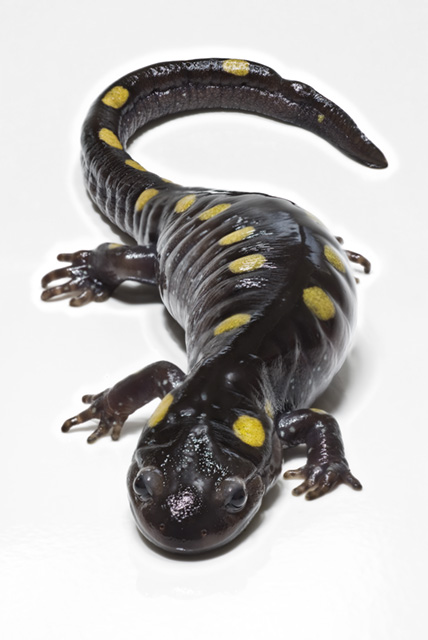
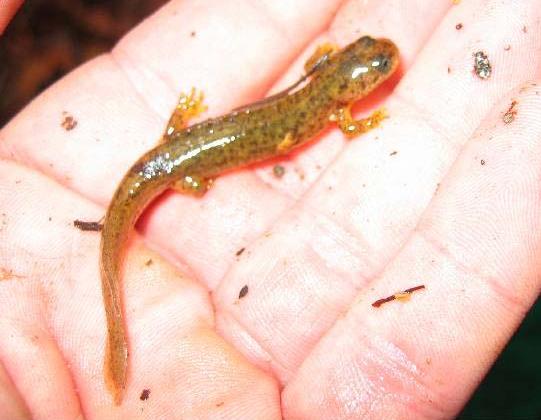
Salamanders are amphibians placed in the order Caudata (also called Urodela). They are characterised by an elongated body, a tail retained throughout life, and typically four limbs. There are several hundred described species — commonly cited estimates place the number of species at around 500 — distributed mainly in North America, Europe and Asia, with smaller numbers in Central America and parts of South America. Their overall appearance is often superficially similar to lizards, but salamanders are not reptiles and differ in skin, life cycle and physiology.
Image gallery
10 Images


Anatomy and physiology
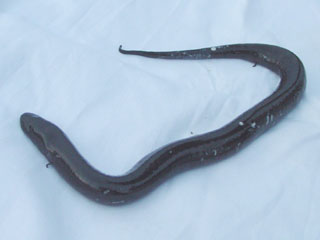
Salamanders have moist, glandular skin that in many species is important for gas exchange. Respiratory strategies vary among groups: some species possess lungs, others rely primarily on cutaneous (skin) and buccopharyngeal respiration, and a few retain external gills as adults. Entire families, such as the lungless salamanders, are notable for lacking lungs and depending on skin respiration. Many species are small and elongated; others, such as giant salamanders, reach much larger sizes and have distinct ecological roles.
Life cycle and reproduction
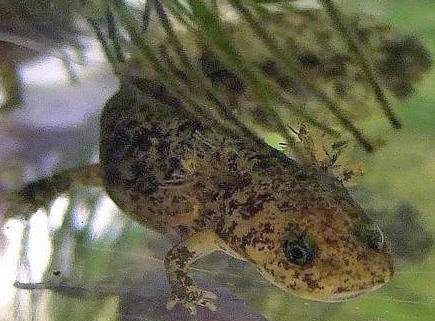
Most salamanders begin life as aquatic eggs or larvae. Larvae usually have external gills and a tail fin adapted for swimming. Many species undergo metamorphosis — a transformation from gilled aquatic larvae to a more terrestrial adult form — a process discussed in life-history literature as metamorphosis. Adults commonly occupy moist microhabitats such as leaf litter, logs, or areas adjacent to streams and ponds (moist habitats). Reproductive modes vary: some species lay eggs in water, others deposit eggs on land in damp locations, and some exhibit direct development where young hatch as miniature adults.
Aquatic forms and neoteny
Certain salamanders are primarily aquatic as adults. The common term for many semi-aquatic species is newts, which often have complex life cycles involving both aquatic and terrestrial phases. Some species exhibit neoteny, retaining juvenile features such as external gills into sexual maturity. A well-known example is the axolotl, which remains aquatic and gilled while breeding. The developmental phenomenon of delayed or absent metamorphosis is referred to as neoteny.
Diet and behaviour
Salamanders are mostly carnivorous. Diets typically include insects, worms, molluscs and, for larger species, small vertebrates. Many are nocturnal or crepuscular and rely on stealth and ambush to capture prey. They play important roles as both predators of invertebrates and as prey for larger animals, contributing to energy flow and nutrient cycling in forest and freshwater ecosystems.
Defence, colouration and predators
To deter predators, many salamanders produce skin secretions that are toxic or distasteful. Poisonous or unpalatable species commonly show conspicuous patterns or bright markings known as warning colouration to advertise their defence. Species lacking chemical defences often rely on cryptic patterns and behaviours for concealment and camouflage. Regeneration of injured tissues and appendages is an important survival trait for many species.
Regeneration and scientific importance
Salamanders are especially notable among tetrapods for their ability to regenerate complete limbs, tail parts and other tissues. This capacity varies by species and age but has made salamanders, particularly the axolotl and certain newts, important model organisms in developmental and regenerative biology. Research on salamander regeneration informs broader biomedical questions about wound healing, tissue patterning and potential applications for human medicine.
Distribution, diversity and classification
The order includes a range of families that reflect diverse ecologies: lungless salamanders, true salamanders and newts, giant salamanders, and others. Regional faunas differ: North America has a high diversity of species, especially in eastern forests, while East Asia contains distinct lineages including large, specialized species. For more comprehensive species lists and taxonomic accounts see curated species lists and family references.
Conservation
Many salamander species face threats from habitat loss, pollution, climate change, introduction of non-native predators, and emerging diseases. Amphibian declines worldwide have highlighted pathogens such as chytrid fungi and other infectious agents as serious concerns. Conservation actions include habitat protection, captive breeding and reintroduction programs, biosecurity measures to limit disease spread, and research into population trends and threats.
Human interactions and cultural notes
Salamanders influence human culture through folklore, art and natural history. They are valued in education and research, and their ecological roles make them indicators of environmental health. When observing or handling salamanders, it is important to avoid transferring oils or contaminants from hands to their sensitive skin and to follow local guidelines for wildlife encounters.
For general overviews consult resources on the order Caudata or under the alternative name Urodela, compare salamanders and lizards in field guides, review development in sources on metamorphosis, and consult lists of species and conservation status in specialist species lists. For identification and habitat guidance see regional resources covering moist habitats, profiles of newts, and accounts of model organisms such as the axolotl. Understand developmental terms like neoteny, and learn about defensive strategies described under warning colouration and camouflage.
Questions and answers
Q: What are salamanders?
A: Salamanders are amphibians in the order Caudata or Urodela.
Q: How many different species of salamanders are there?
A: There are about 500 different species of salamanders.
Q: What do adult salamanders look like?
A: Adult salamanders have four legs and a tail, and they resemble lizards.
Q: How do salamanders hatch?
A: Salamanders hatch as larvae from eggs in the water, and at that stage, they have gills that stick out.
Q: What is neoteny?
A: Neoteny is the process by which some salamanders retain gills into sexual maturity.
Q: What defense mechanism do salamanders have against predators?
A: Salamanders that are dangerous to eat will have warning coloration, but if they are not poisonous, they will usually have camouflage.
Q: What makes salamanders unique among tetrapods?
A: Salamanders are the only tetrapods capable of regenerating limbs and other body parts.
Related articles
Author
AlegsaOnline.com Salamander (order Caudata/Urodela) Leandro Alegsa
URL: https://en.alegsaonline.com/art/86398
Sources
- journals.uchicago.edu : "Initial diversification of living amphibians predated the breakup of Pangaea"
- ncbi.nlm.nih.gov : "Fossils, molecules, divergence times, and the origin of Salamandroidea"
- doi.org : 10.1073/pnas.1202491109
- pubmed.ncbi.nlm.nih.gov : 22460794
- springerlink.com : "Trichromatic color vision in the salamander (Salamandra salamandra)"