
Multituberculates — extinct rodent-like mammals with a long fossil record
Multituberculates were an extinct, diverse group of rodent‑like mammals with distinctive multi-cusped teeth. They persisted through much of the Mesozoic and Paleogene before disappearing in the late Eocene.
Overview
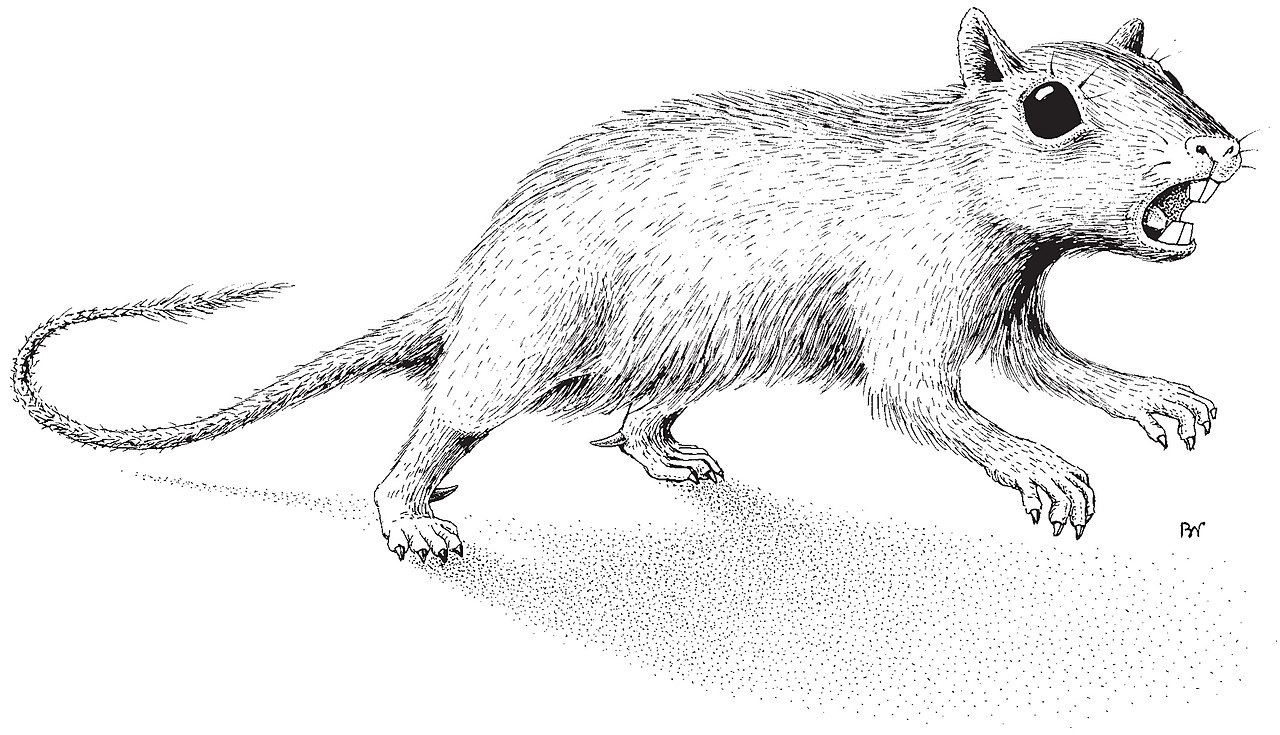
Multituberculates were an abundant and long-lived group of Mesozoic and early Cenozoic mammals that are often described as "rodent-like" because of convergent features in their teeth and skulls. Their fossil record spans a very long interval — commonly quoted as about 166 million years — and records many species of small to medium size on most continents. Although superficially similar to modern rodents in some respects, multituberculates belong to a distinct extinct lineage of mammals with unique dental and cranial specializations. For a general introduction to their rodent-like aspects see an overview of rodent-like forms.
Image gallery
8 Images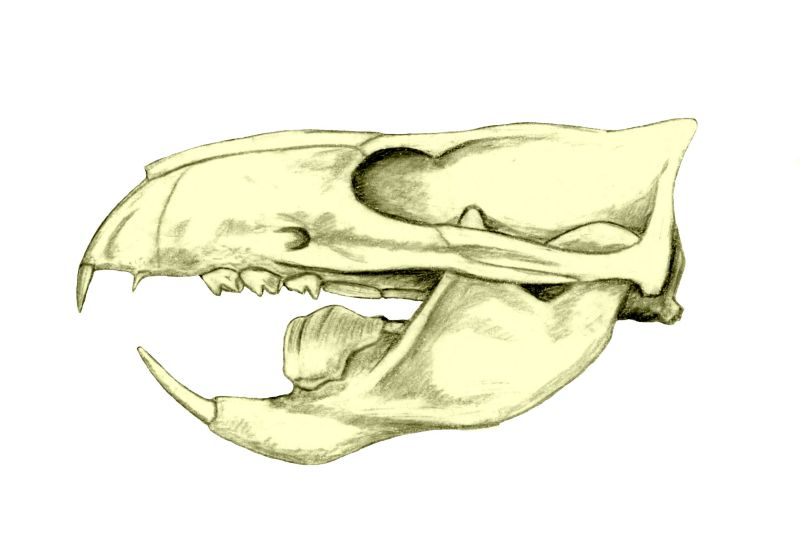





Anatomy and dentition
The group is best known for its characteristic molars and premolars bearing multiple cusps arranged in transverse rows, a trait that inspired the name "multituberculate." These teeth were well suited to processing plant material, seeds and other coarse foods. Many species had enlarged, chisel-like front teeth that functionally resemble the incisors of rodents and appear to have grown continuously in some lineages. The skull and jaw show adaptations for powerful biting and complex chewing motions, while postcranial bones indicate a range of locomotor habits from terrestrial digging to climbing among branches.
Diversity and ecology
At least two hundred species are described, with body sizes ranging from mouse-sized taxa to some rare, larger forms comparable to a beaver. Over their long history multituberculates occupied numerous ecological niches: leaf and seed eaters, generalist feeders, burrowers and arboreal climbers. Genera such as Ptilodus are frequently cited as squirrel-like climbers, while Taeniolabis is often mentioned among the larger-bodied taxa. Their repeated convergence with true rodents and with small marsupial and placental mammals illustrates how similar ecological pressures can shape unrelated mammal lineages.
Evolution and classification
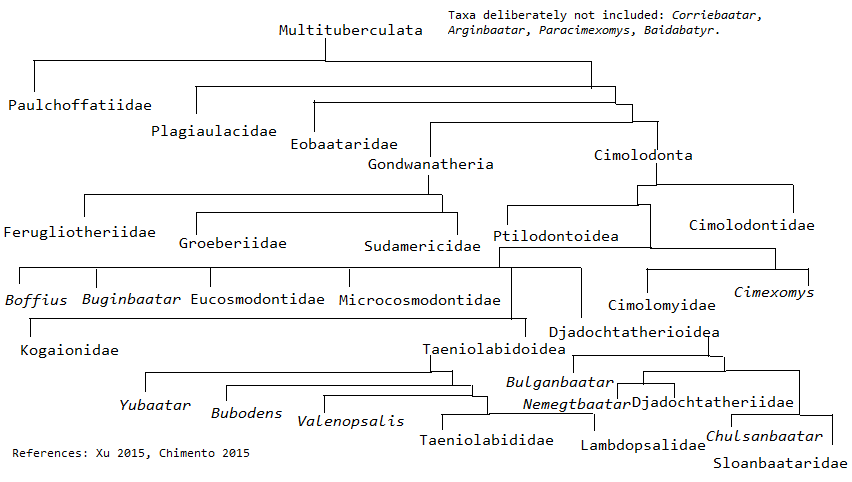
Multituberculates first appear in Mesozoic faunas and persist into the Paleogene, disappearing in the late Eocene. Their long tenure and distinctive anatomy have made their relationships to living mammals a subject of ongoing study. Many treatments place multituberculates outside the crown groups of living mammals, separate from the two major therian branches, the Theria that include both placentals and marsupials, and distinct from monotremes. Some modern phylogenetic and cladistic analyses favor a closer affinity to therians, but the exact placement remains uncertain and under active research.
Extinction and scientific significance
Multituberculates declined in diversity during the Paleogene and disappeared by the late Eocene. Their extinction has been attributed to a combination of factors, including climatic change, habitat shifts and ecological competition with emerging groups such as true rodents and other herbivorous mammals, although the relative importance of these factors is debated. Because of their long fossil record and specialised teeth, multituberculates are important for understanding mammalian dental evolution, convergent adaptations, and small-mammal communities across the Mesozoic–Paleogene transition.
Research and resources
Ongoing paleontological work continues to refine multituberculate taxonomy, functional interpretations and phylogenetic position. Readers seeking additional summaries and databases can consult general mammal resources and specialist paleontology literature: introductory pages on rodent-like forms, curated mammal databases, context on Eocene environments and extinction timing at late Eocene summaries, discussions of Theria and its components—placentals and marsupials—and technical treatments through cladistic analyses. These resources provide pathways to specialized papers, fossil illustrations and updated phylogenetic hypotheses.
Questions and answers
Q: What were the multituberculates?
A: The multituberculates were a group of rodent-like mammals.
Q: How long did multituberculates survive for?
A: Multituberculates survived for about 166 million years.
Q: How did multituberculates become extinct?
A: Multituberculates were outcompeted by rodents, becoming extinct during the late Eocene.
Q: How many species of multituberculates are known?
A: At least 200 species of multituberculates are known.
Q: What ecological niches did multituberculates occupy?
A: Multituberculates occupied many ecological niches, ranging from burrow-dwelling to squirrel-like tree-dwelling.
Q: Where are multituberculates usually placed in relation to living mammals?
A: Multituberculates are usually placed outside both the two main groups of living mammals, the Theria (placentals and marsupials), and monotremes.
Q: Are there any cladistic analyses that put multituberculates closer to Theria than to monotremes?
A: Yes, some cladistic analyses put multituberculates closer to Theria than to monotremes.
Related articles
Author
AlegsaOnline.com Multituberculates — extinct rodent-like mammals with a long fossil record Leandro Alegsa
URL: https://en.alegsaonline.com/art/67493
Sources
- species.wikimedia.org : Multituberculata
- faculty.washington.edu : "A possible late Cretaceous "haramiyidan" from India"
- doi.org : 10.1671/0272-4634(2006)26[488:APLCHF]2.0.CO;2
- books.google.com : Gondwana six: stratigraphy, edimentology, and paleontology
- doi.org : 10.1029/GM041p0207
- ucmp.berkeley.edu : "Introduction to Multituberculates: the "lost tribe" of mammals"
- books.google.com : p. 300
- books.google.com : p358
- books.google.com : p. 299