
Messerschmitt Bf 109: design, service history, and legacy
The Messerschmitt Bf 109 was Germany’s primary single-seat fighter of the 1930s–1940s, notable for its modern construction, many variants, extensive wartime service, and large production run.
Overview
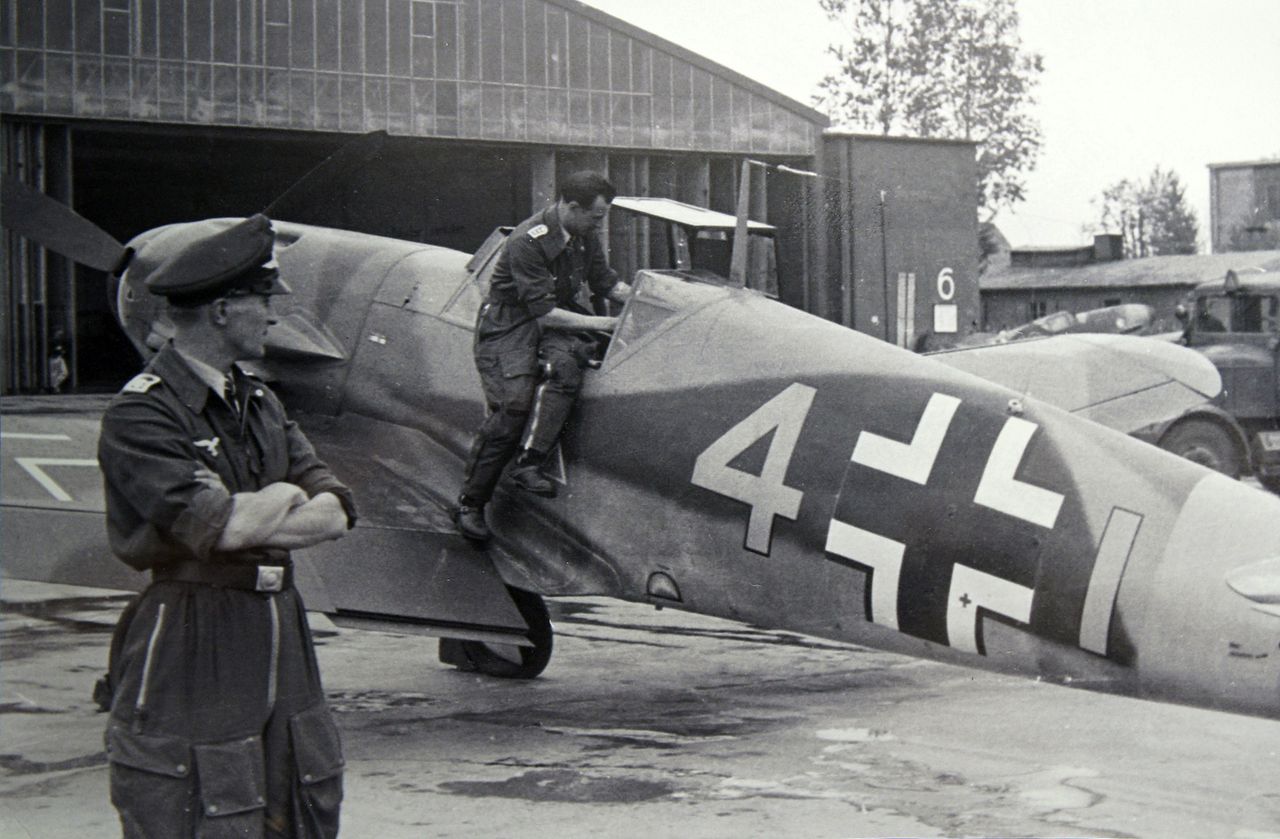
The Messerschmitt Bf 109, often called the Me 109, was a German aircraft that became one of the principal fighters of World War II. First flown in 1935, it entered operational service before the war and remained in front-line use throughout the conflict. Designed and produced by the firm associated with Messerschmitt, the type was adopted by the Luftwaffe and exported or licence-built for several other air arms. It is widely cited as one of the most-produced fighter types in history.
Image gallery
10 Images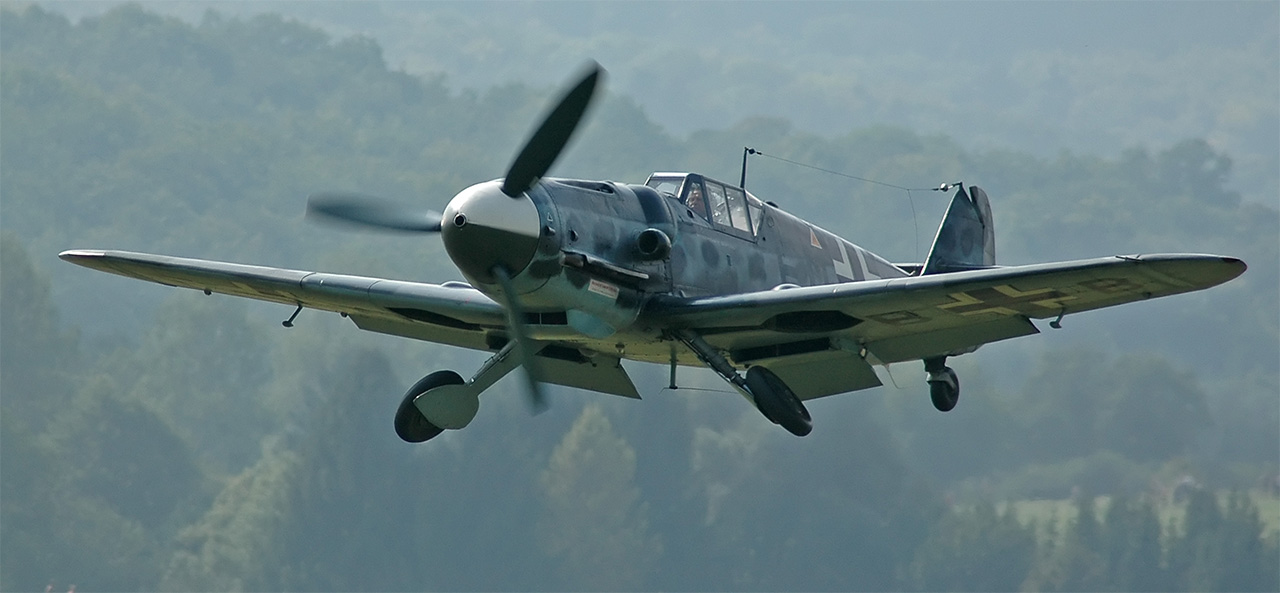



Design and characteristics
The Bf 109 introduced features that were modern for the mid-1930s: an all-metal monocoque structure, a closed cockpit, and retractable main landing gear. Power was supplied by liquid-cooled, inverted V12 engines (the Daimler-Benz DB series are the best-known examples), giving a clean nose profile and good aerodynamics; such powerplants are often described generally as a liquid-cooled inverted V12. Armament varied by version but commonly combined fuselage-mounted machine guns with one or more cannon firing through the propeller hub or in the wings.
Operational history
The Bf 109 saw its first combat experience in the late 1930s, including deployment during the Spanish Civil War, where Luftwaffe units gained operational lessons that influenced subsequent variants. During the broader war it performed as an interceptor, escort, and fighter-bomber on multiple fronts. Pilots appreciated its climb rate and high-speed performance; many of Germany’s highest-scoring fighter aces achieved most of their victories flying the Bf 109. It operated alongside other German fighters such as the Focke-Wulf Fw 190, and the two types were often compared in terms of weight, armament and handling.
Variants, production and roles
Throughout its production life the airframe was adapted into numerous variants to meet changing combat needs: short-range and long-range fighters, high-altitude versions, reconnaissance models and training conversions. Production continued from the mid-1930s into 1945 and, by common historical accounts, yielded tens of thousands of airframes. The flexibility of the basic design meant the Bf 109 served in many theatres and in multiple specialized roles.
Handling, problems and modifications
The Bf 109’s narrow-track undercarriage and relatively short fuselage produced some difficulties on the ground. Takeoff and landing accidents were a notable issue in early wartime service—contemporary records and later studies indicate a significant number of losses during ground handling, takeoff and landing phases, and this problem led to incremental modifications (including tailwheel changes) to reduce ground incidents and improve safety records. Pilots also commented on a relatively high landing speed compared with some contemporaries, which made carrier-free operations and improvised airstrips more hazardous.
Legacy and notable facts
The Bf 109 left a substantial legacy: it influenced fighter design through its integration of modern construction and engine installation, it was flown by many of the Luftwaffe’s leading pilots, and it remains a frequent exhibit in aviation museums and flying-restoration projects. Surviving aircraft, reproductions and preserved airframes are visible in collections worldwide, where they illustrate both the technological advances of the 1930s and the operational demands of wartime aviation. For further reading and technical summaries, see contemporary and modern sources that document its development, combat use and variations.
- Primary designer and manufacturer: Messerschmitt
- Early combat: Spanish Civil War
- Main operator: Luftwaffe
- Context: World War II
Questions and answers
Q: What was the Messerschmitt Bf 109?
A: The Messerschmitt Bf 109 was a fighter aircraft, commonly known as the Me 109, that was used by the Luftwaffe during World War II.
Q: When was the Me 109 first flown and who made it?
A: The Me 109 was first flown in 1935 and was made by the company Messerschmitt.
Q: What were some of the key features of the Me 109?
A: The Me 109 had an all-metal construction, a closed cockpit, retractable landing gear, and was powered by a liquid-cooled, inverted-V12 aero engine.
Q: How many airframes of the Me 109 were produced and when?
A: A total of 33,984 airframes of the Me 109 were produced from 1936 up to April 1945, making it the most produced fighter aircraft in history.
Q: What were some of the problems with the design of the Me 109?
A: The design of the Me 109 caused problems with takeoff and landing, leading to at least 10% of all Bf 109s being lost in accidents. A new fixed tailwheel helped to correct the problem.
Q: What other aircraft was used by the Luftwaffe together with the Me 109?
A: The Luftwaffe also used the FW 190, which had two machine guns and four cannons, compared to the Me 109's two machine guns and one cannon.
Q: How did the performance of the Me 109 compare to that of the FW 190?
A: Despite being 1500 kg lighter than the FW 190, the Me 109 was almost as fast and climbed faster, at a rate of 17 m/s compared to the FW 190's 15 m/s.
Related articles
Author
AlegsaOnline.com Messerschmitt Bf 109: design, service history, and legacy Leandro Alegsa
URL: https://en.alegsaonline.com/art/64109
Sources
- books.google.co.uk : Messerschmitt Bf 109: The Design and Operational History