
Messerschmitt (German aircraft manufacturer)
Messerschmitt was a major German aircraft maker, founded by Willy Messerschmitt, known for fighters like the Bf 109 and the Me 262; postwar it produced microcars and later merged into larger aerospace groups.
Messerschmitt was a prominent German aircraft manufacturer whose name is associated with some of the most recognizable military aircraft of the mid-20th century. Headquartered in Augsburg, the firm grew around the designs of engineer Willy Messerschmitt and operated under that name in several legal forms from the First World War era through the postwar reconstruction of German industry.
Image gallery
3 Images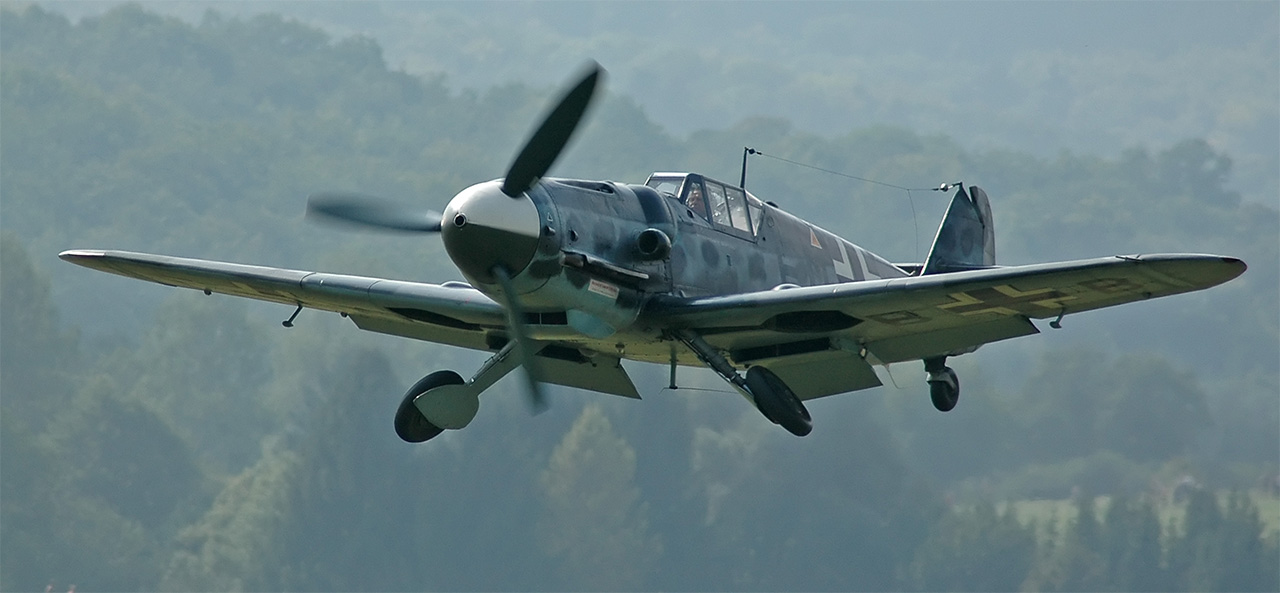


History and company identity
The business traces its roots to 1916 and was reorganized under the Messerschmitt name in 1938. Willy Messerschmitt was the principal designer and public face of the company. Aircraft produced during the 1930s and 1940s often carry designations beginning with Bf or Me: 'Bf' reflects an earlier company name (Bayerische Flugzeugwerke) and 'Me' the later Messerschmitt company, a distinction that helps identify the period of origin for specific models.
Notable aircraft and characteristics
Messerschmitt built a variety of types, from single-engine fighters to large transport gliders and early jet fighters. Its designs were notable for aerodynamic refinement, lightweight construction and, in the jet era, pioneering use of new propulsion. Important examples include:
- Bf 109: a single-seat fighter that became the Luftwaffe's primary fighter in the 1930s and 1940s.
- Bf 110: a twin-engine heavy fighter used in multiple roles.
- Me 321/Me 323: very large transport gliders and their powered derivatives.
- Me 262: the first operational jet-powered fighter, influential in postwar aeronautical development.
Wartime production and controversies
Messerschmitt was a major supplier of combat aircraft to Germany during World War II. Like many wartime industrial firms, its factories expanded rapidly to meet demand. Historical research and records document that the company used coerced and forced labor during the war, including workers from concentration camps and occupied territories; this aspect of the company's wartime activity is an important and sensitive part of its legacy (forced labor).
Postwar activity and legacy
After the war, with aviation production restricted in defeated Germany, the company and its engineers turned to civilian products for peacetime markets. Messerschmitt produced small microcars (the Kabinenroller series), bicycles and prefabricated housing among other consumer goods. In 1969 the firm merged with Bölkow and Blohm to form Messerschmitt-Bölkow-Blohm (MBB). Successor entities were later absorbed into larger national and European aerospace groups, ultimately becoming part of companies within what became the EADS/Airbus family. Messerschmitt's aircraft designs, both celebrated and controversial, remain a significant chapter in aviation history.
Related articles
Author
AlegsaOnline.com Messerschmitt (German aircraft manufacturer) Leandro Alegsa
URL: https://en.alegsaonline.com/art/64112