
Luxor Temple — ancient ceremonial temple in Thebes (modern Luxor)
Major ancient Egyptian temple complex in modern Luxor, principally built in the New Kingdom for Amun and family; key site in the Opet Festival and linked to Karnak by the Avenue of Sphinxes.
Overview
Luxor Temple is an ancient religious complex situated in the city now called Luxor. In pharaonic times the city was the capital region of Thebes. The sanctuary is commonly regarded as a temple rather than a mortuary shrine and its primary cult centered on the god Amun, his consort Mut and their son Khonsu. The site was constructed mainly during the period known as the New Kingdom, though it incorporated and replaced older structures and reused stonework from earlier dynasties. Today the monument stands within the modern urban fabric of Luxor and is one of the paired monumental precincts that form the UNESCO World Heritage area together with Karnak.
Image gallery
10 Images




Architecture and principal features
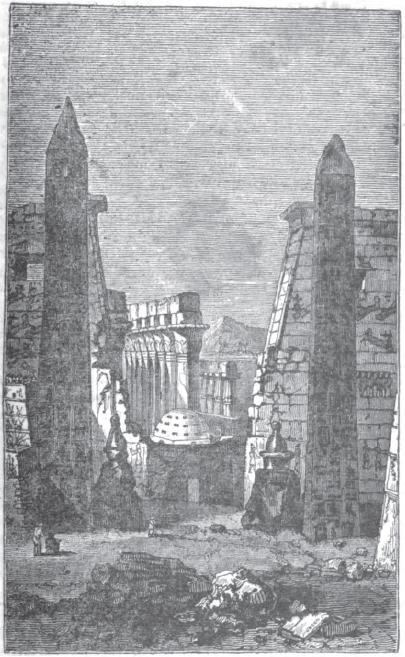
The temple complex presents a long axis of processional courts, pylons and inner sanctuaries aligned north–south rather than east–west. Major visible elements include a monumental pylon with seated colossi at the entrance attributed to Ramesses II, a large central courtyard attributed to Amenhotep III, and inner chapels and sanctuaries often reworked by successive rulers. A celebrated feature is the processional avenue lined with sphinxes that once connected the site to Karnak; modern excavations have exposed stretches of this route and sections of the original paving.
History and development
Although the present monuments date largely to the New Kingdom pharaohs, the temple stands on a site with older occupation and reused material possibly as far back as the Middle Kingdom. Amenhotep III is commonly credited with a major phase of construction, and later kings, including the 19th-dynasty ruler often identified as Ramesses II, added façades, statues and inscriptions. Over time the complex was adapted: Roman-period decoration, Coptic reuse, and the insertion of a later mosque, known as the Abu el-Haggag mosque, illustrate continuous occupation and reshaping of sacred space.
Religious role and ceremonies
Luxor Temple played a central role in state religion. It was a focal point of the annual Opet Festival, when the cult image of Amun was carried in a ceremonial barque from the great temple at Karnak to Luxor for ritual renewal of kingship. This festival linked the two sanctuaries and involved public processions, offerings and rites intended to strengthen the pharaoh's divine authority and the fertility of the land.
Later history, preservation and distinctions
Through millennia the site has seen continuous reuse: stone and decoration were repurposed for other buildings, and a mosque was built into one part of the complex, reflecting the layered religious history of the city. Archaeological work and conservation efforts in the 19th–21st centuries have aimed to document, stabilize and present the ruins while balancing modern urban life. Luxor Temple is distinct from nearby funerary complexes: it is a living-city cult center rather than a necropolis such as the mortuary temple of Hatshepsut at Deir el-Bahari or tomb fields that form the wider necropolis.
Visiting and further reading
- Plan to see both Luxor and Karnak to understand the ritual landscape and the route of the Opet procession.
- Look for inscriptions and statues added by successive pharaohs; many reflect renovation phases and religious politics.
- For introductory summaries and site plans see general guides to the temple and regional histories of the Theban area.
For specialist studies consult archaeological reports and museum catalogues; popular overviews that situate Luxor in the broader history of New Kingdom Egypt, of Amun worship and of later urban reuse give accessible context for visitors and students alike.
Related articles
Author
AlegsaOnline.com Luxor Temple — ancient ceremonial temple in Thebes (modern Luxor) Leandro Alegsa
URL: https://en.alegsaonline.com/art/60052