
Maeshowe: Neolithic chambered cairn on Orkney
Maeshowe (Orkney) is a well-preserved Neolithic chambered cairn noted for its winter‑solstice alignment, corbelled architecture and Norse runic inscriptions; part of the Heart of Neolithic Orkney World Heritage Site.
Overview
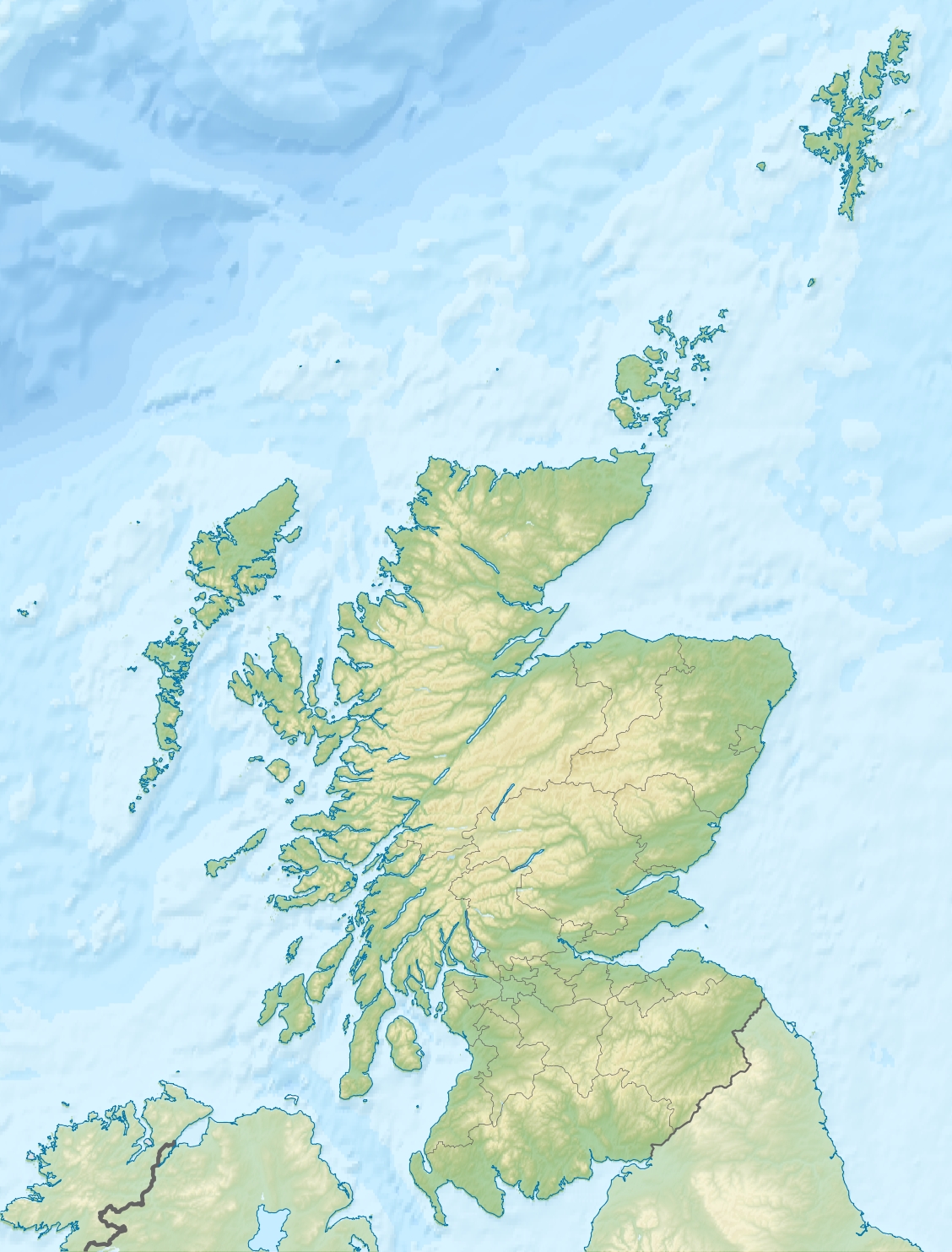
Maeshowe (Old Norse: Orkhaugr) is a large Neolithic chambered cairn and passage grave on the Mainland of Orkney, Scotland. Built in the late Neolithic (c. 2800 BCE), it is one of the best-preserved burial monuments of its type in northwestern Europe and a prominent element of the Heart of Neolithic Orkney World Heritage Site. The mound and internal tomb together illustrate funerary architecture, social practices and astronomical awareness among farming communities of prehistoric Orkney. For its location see Orkney maps and visitor information.
Image gallery
8 Images
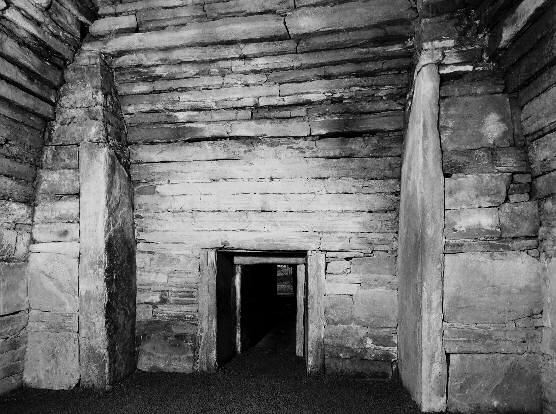



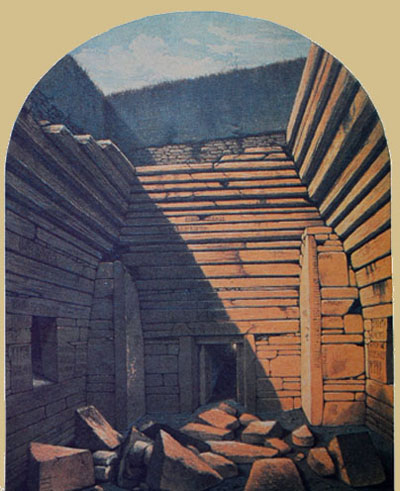
Architecture and layout
The monument consists of a substantial earthen and stone mound covering a corbelled stone chamber reached by a long, low passage. The passage is carefully aligned so that sunlight penetrates to the central chamber around the time of the winter solstice, a deliberate orientation shared with several other Neolithic monuments. The main chamber is roughly square with three smaller side cells or compartments opening off it. Construction features include upright orthostatic slabs, precisely fitted masonry and a corbelled roofing technique that creates a lofty internal vault.
Ancillary earthworks and setting
Maeshowe occupies a raised platform that was originally surrounded by a ditch and external bank; archaeological studies indicate that the ditch may at times have held water and that a stone circle once stood nearby. The cairn’s visible mound was historically higher and more rounded, resembling a low cone with a central depression; 19th‑century digging altered the original profile. Further contextual and landscape information on the Neolithic period is available at Neolithic Orkney resources.
History, excavation and the Vikings
The tomb was entered in the mid-19th century by antiquarians; in 1861 James Farrer excavated the mound, exposing the passage and chamber and inadvertently causing some damage. Earlier, in the 12th century AD, Norse visitors broke into the tomb and left a remarkable corpus of Old Norse runic graffiti carved on the inner stones. These inscriptions form one of the most important surviving collections of Viking-era runes in Britain and reveal incidental details of travel, names and graffiti-making by medieval Norse visitors. Further reading on the site's inclusion within the World Heritage inscription can be found at World Heritage documentation.
Significance and conservation
Maeshowe is valued both as an architectural achievement of the Neolithic and as a multi-period heritage site that preserves traces of later use by Norse peoples. It is protected and conserved as part of a broader ensemble that includes chambered tombs, standing stones and settlements. Conservation and visitor management balance access with the need to protect fragile masonry and ancient carvings; current guidance and visitor arrangements are summarized at site conservation and visiting information.
Key facts and notable features
- Type: Neolithic chambered cairn / passage grave with corbelled chamber.
- Approximate date: c. 2800 BCE (late Neolithic).
- Notable for: winter‑solstice alignment and extensive Norse runic graffiti from the 12th century AD.
- Part of the Heart of Neolithic Orkney World Heritage Site and subject to ongoing research and conservation: see heritage and research links.
Together, Maeshowe’s architecture, landscape setting and multi-era inscriptions make it a key monument for understanding prehistoric ritual landscapes in northern Britain and the cultural intersections that followed in the medieval period. Researchers continue to study its construction techniques, alignment and place within Neolithic Orkney to refine our picture of prehistoric life and belief.
Questions and answers
Q: What is Maeshowe?
A: Maeshowe is a burial mound in Orkney, Scotland with underground passage graves that was built during the Neolithic period, about 3000 years ago.
Q: What is the height and diameter of Maeshowe?
A: The mound used to be 11 meters in height, with a diameter of 30 meters.
Q: Who included Maeshowe in the World Heritage Site?
A: Maeshowe was included in the World Heritage Site, Heart of Neolithic Orkney.
Q: Why was the height of Maeshowe reduced?
A: The height of Maeshowe was reduced in 1861 when the mound was dug into by archaeologist James Farrer.
Q: What surrounds Maeshowe?
A: Maeshowe is surrounded by a ditch and a raised bank, and there was a large stone circle around the mound.
Q: What is the structure of the grave in Maeshowe?
A: The grave itself is a long narrow entrance opening into a large chamber with three smaller rooms that open into the main chamber.
Q: When was Maeshowe dug up and by whom?
A: Maeshowe had been dug up in the 12th century by the Vikings, and it has many Norse carvings on the rocks.
Related articles
Author
AlegsaOnline.com Maeshowe: Neolithic chambered cairn on Orkney Leandro Alegsa
URL: https://en.alegsaonline.com/art/60541
Sources
- academia.edu : "Documents in Maeshowe - Academia.edu"
- orkneyjar.com : "Maeshowe, Orkney's finest chambered cairn"