
Hatshepsut: Egyptian Pharaoh of the Eighteenth Dynasty
Hatshepsut (c.1507–1458 BC) was a female pharaoh of Egypt's 18th Dynasty, renowned for a long, prosperous reign, monumental building projects—especially Deir el-Bahri—and a celebrated expedition to Punt.
Overview
Hatshepsut, whose throne name and personal titulary mean “Foremost of Noble Ladies,” was a ruler of ancient Egypt's Eighteenth Dynasty. She was the daughter of Thutmose I and became the wife of her half-brother Thutmose II. After his death she served as regent for the young Thutmose III but gradually assumed the full powers and public role of a pharaoh. Modern scholarship generally accepts that she was the effective sovereign for about two decades, with ancient sources such as Manetho giving a reign of roughly twenty-two years.
Image gallery
10 Images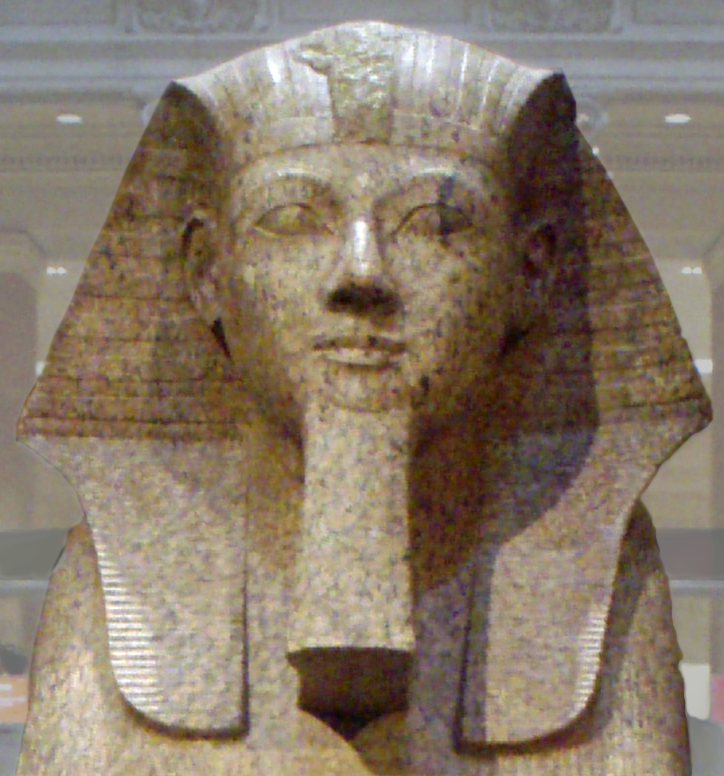




Reign and government
Hatshepsut legitimized her rule through religious and dynastic imagery. Her monuments often portray a divine birth narrative in which the god Amun endorses her kingship, and many royal inscriptions adopt the traditional formulas used by male rulers. On occasion she is depicted wearing male regalia, including the false beard and kilt, a practice intended to communicate her status as king rather than a queen-regent. Her reign is associated with relative stability, strong administration, and initiatives in trade and foreign relations rather than sustained military campaigns led by the pharaoh himself.
Achievements and monuments
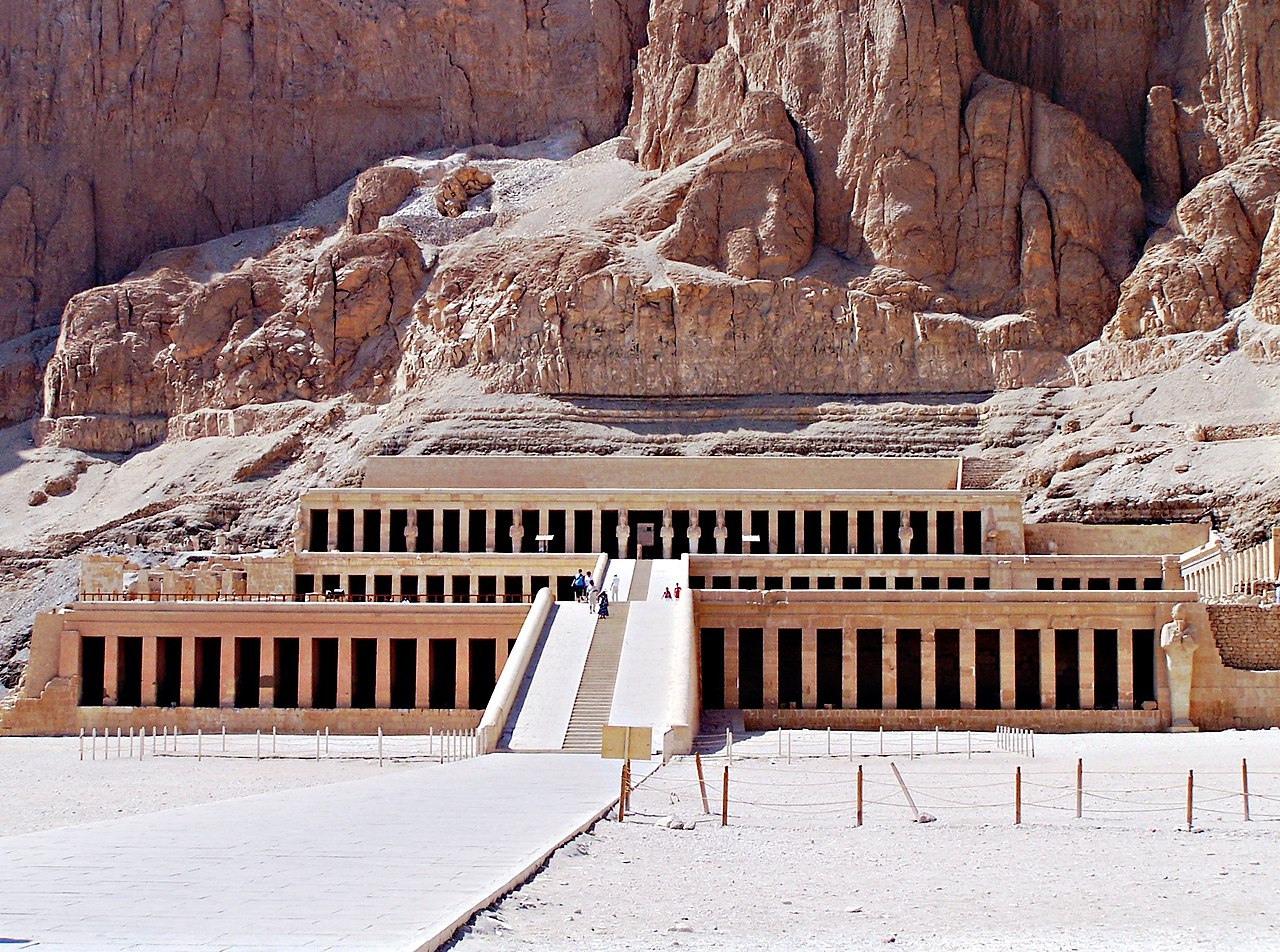
Hatshepsut is especially remembered for a concentrated program of construction and artistic patronage. Her most famous foundation is the mortuary temple at Deir el-Bahri, often called Djeser-Djeseru, which blends architecture with the cliff face of the Theban West Bank and remains a hallmark of New Kingdom design. She also commissioned obelisks, shrines, and additions to the temple of Amun at Karnak, and established many statues and reliefs throughout Egypt. The architect and court official Senenmut is frequently associated with her building projects and appears in several inscriptions.
- Mortuary temple at Deir el-Bahri: monumental terraces and relief programs
- Obelisks at Karnak: tall stone monuments celebrating royal and religious themes
- Reliefs and statuary: depictions of the Punt expedition and divine birth scenes
Expedition to Punt
One of the best-documented episodes of Hatshepsut’s reign is a commercial and diplomatic expedition to the Land of Punt, described in the reliefs at her mortuary temple. The campaign returned luxury goods—incense, myrrh, gold, exotic animals, and live frankincense trees—and helped replenish temple treasuries while reinforcing long-distance maritime and trading links in the Red Sea and beyond.
Legacy and historical reception
After her death, many of Hatshepsut’s images and cartouches were altered or removed from monuments, a phenomenon that scholars debate and attribute to later political and dynastic circumstances. Her reign was largely forgotten or obscured in later king lists, but surviving monuments and inscriptions revived interest during modern archaeological exploration. Today she is widely studied as one of the most successful and visible female rulers of ancient Egypt, notable for asserting royal authority, sponsoring major building works, and securing economic ties. Her life and reign continue to be important subjects for understanding gender, kingship, and statecraft in the New Kingdom.
For further reading on pharaonic titulary, royal family connections, and the chronology of the dynasty, see specialized works and museum accounts. Broader context about indigenous Egyptian institutions is available through general histories of the period (indigenous traditions and administration).
Selected references and studies often cited in scholarship include archaeological reports, temple inscriptions, and later classical compilations such as Manetho. Biographical notes on her father (Thutmose I), her husband and predecessor (Thutmose II), and her co-regent and successor (Thutmose III) help map the political landscape of her reign.
For online summaries and curated collections of artifacts, consult museum pages and academic portals that collect images, translations, and commentary (pharaoh records and temple catalogues are commonly referenced).
Questions and answers
Q: Who was Hatshepsut?
A: Hatshepsut was the fifth Pharaoh of the 18th dynasty of Ancient Egypt, meaning Foremost of Noble Ladies.
Q: Who was her father?
A: Her father was Thutmose I.
Q: Who was her predecessor?
A: Her predecessor was Thutmose II, who was also her brother and husband.
Q: Who was her successor?
A: Her successor was Thutmose III, her nephew, the son of Thutmose II by a lesser wife.
Q: Who was the effective ruler during her reign?
A: Hatshepsut was the effective ruler during her reign.
Q: How long did her reign last?
A: The length of her reign usually is given as twenty-two years.
Q: When did she become pharaoh?
A: She became pharaoh in about 1479 BC and died in 1458 BC.
Related articles
Author
AlegsaOnline.com Hatshepsut: Egyptian Pharaoh of the Eighteenth Dynasty Leandro Alegsa
URL: https://en.alegsaonline.com/art/42810
Sources
- dictionary.reference.com : "Hatshepsut"