
Thebes (Waset) — Ancient Egyptian City on the Nile
Thebes, called Waset in Egyptian and Thēbai in Greek, was a major ancient Egyptian city and religious capital on the Nile known for Karnak, Luxor and the nearby royal necropolis.
Overview
Thebes, known to its ancient inhabitants as Waset and to the Greeks as Thēbai, was one of the principal cities of pharaonic Egypt. Located on the east bank of the Nile in Upper Egypt (near modern Luxor, roughly 25.7° N, 32.645° E), it grew into a political, religious and artistic center at various points from the Middle Kingdom through the New Kingdom.
Image gallery
10 Images




Location and names
The city occupied the fertile floodplain on the Nile's eastern side while its great cemeteries and royal tombs lay across the river to the west. Ancient sources and modern maps refer to the site in different languages; see general site information at Thebes (ancient site) and a regional map at Mediterranean–Nile map. The river itself remains central to understanding Thebes: the Nile provided transport, resources and ritual meaning.
Historical development
Thebes emerged in importance during the Middle Kingdom and became especially prominent in the early New Kingdom when pharaohs made it the effective religious and sometimes administrative capital. As the cult of Amun rose in influence, local priesthoods and royal building programs expanded the city's temples and wealth. The city alternated between periods of central power and local autonomy over centuries.
Monuments and urban landscape
The heart of ancient Thebes included massive temple complexes on the east bank and a vast necropolis on the west. Major monuments include:
- Karnak — a sprawling temple complex dedicated chiefly to Amun.
- Luxor Temple — connected to Karnak by the Avenue of Sphinxes.
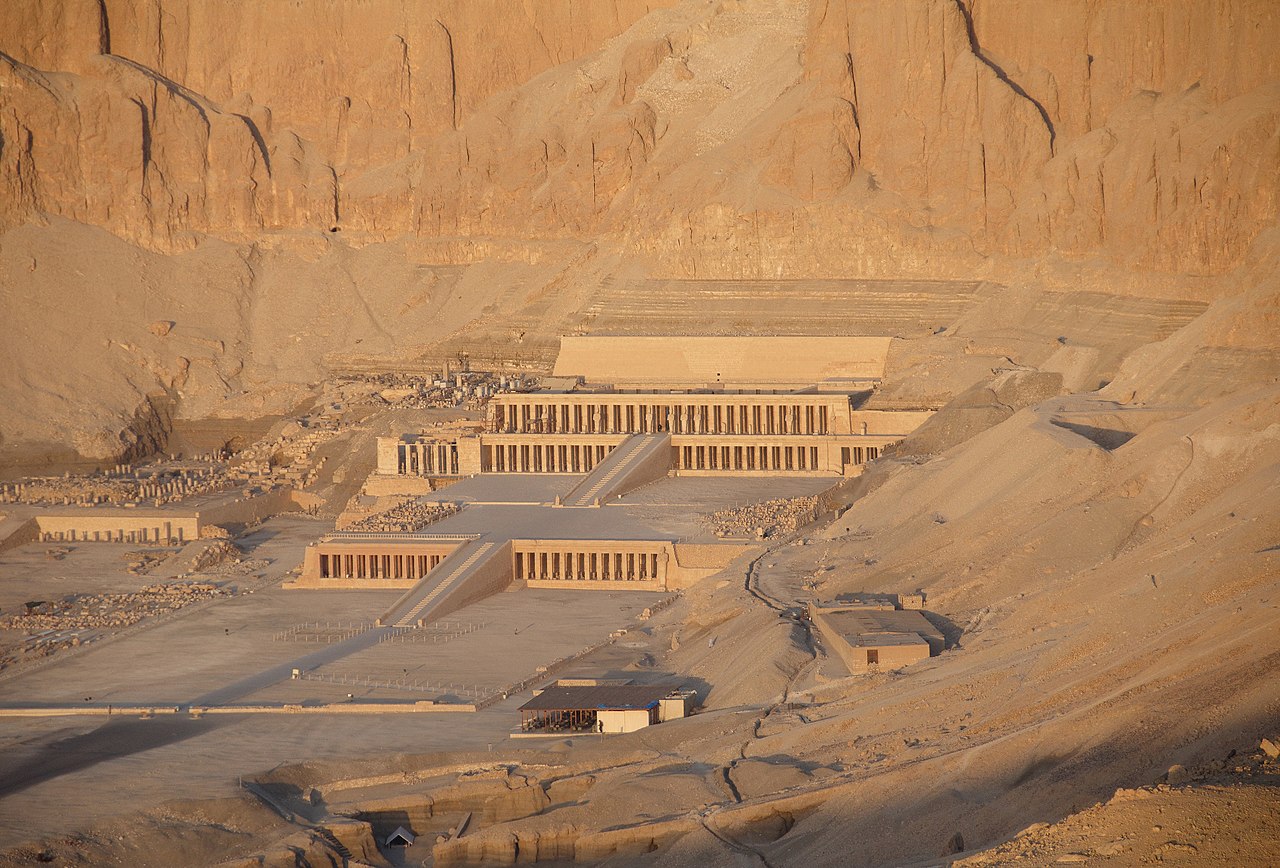
- Mortuary temples and tombs on the west bank, including Deir el-Bahri and the royal tombs in the Valley of the Kings and Valley of the Queens.
For administrative context, Thebes served as the capital of the fourth Upper Egyptian nome (Waset) in ancient provincial organization; see nome administration.
Cultural and religious significance
Thebes became the principal cult center of Amun-Ra; royal ideology, monumental art and temple ritual there shaped Egyptian religion and kingship. Its monuments preserve inscriptions, reliefs and architecture that are key to reconstructing Egyptian history and belief.
Modern study and preservation
Archaeological work since the 19th century has revealed much of Thebes' layout and finds are displayed worldwide. The archaeological area, often referred to as "Ancient Thebes with its Necropolis," is protected and discussed in conservation and heritage literature; for further information see heritage and conservation resources. Today the ruins are a major destination for scholars and visitors, centered near the modern city of Luxor.
Questions and answers
Q: What is Thebes?
A: Thebes was a city located in Ancient Egypt, specifically about 800 km south of the Mediterranean Sea.
Q: Where was Thebes located?
A: Thebes was located on the east bank of the river Nile, specifically at coordinates 25.7° N 32.645° E.
Q: What was Thebes' significance in Ancient Egypt?
A: Thebes was the capital city of Waset, which was the fourth Upper Egyptian nome.
Q: Was Thebes important in Egyptian history?
A: Yes, Thebes was a significant city in Egyptian history due to its status as a capital city and its location on the Nile river.
Q: How far away was Thebes from the Mediterranean Sea?
A: Thebes was located about 800 km south of the Mediterranean Sea.
Q: Was Thebes located on the east or west bank of the Nile river?
A: Thebes was located on the east bank of the Nile river.
Q: What was Waset?
A: Waset was the fourth Upper Egyptian nome (a type of administrative division) and Thebes was its capital city.
Related articles
Author
AlegsaOnline.com Thebes (Waset) — Ancient Egyptian City on the Nile Leandro Alegsa
URL: https://en.alegsaonline.com/art/99181
Sources
- commons.wikimedia.org : Luxor
- commons.wikimedia.org : Theban Necropolis