
Lhotse: the fourth highest mountain on Earth
Lhotse is the world’s fourth-highest peak, an 8,000-metre Himalayan massif on the Nepal–Tibet border known for its steep faces, close link to Everest and a notable 1956 first ascent.
Overview
Lhotse is one of the world's eight-thousanders and ranks fourth by elevation. Its commonly cited summit elevation is 8,516 metres; the mountain forms part of the Everest massif and is closely associated with Mount Everest to the north. For its global position and rank see more on world ranking, and for standard elevation references consult height data and related elevation sources.
Image gallery
10 Images


Geography and physical features
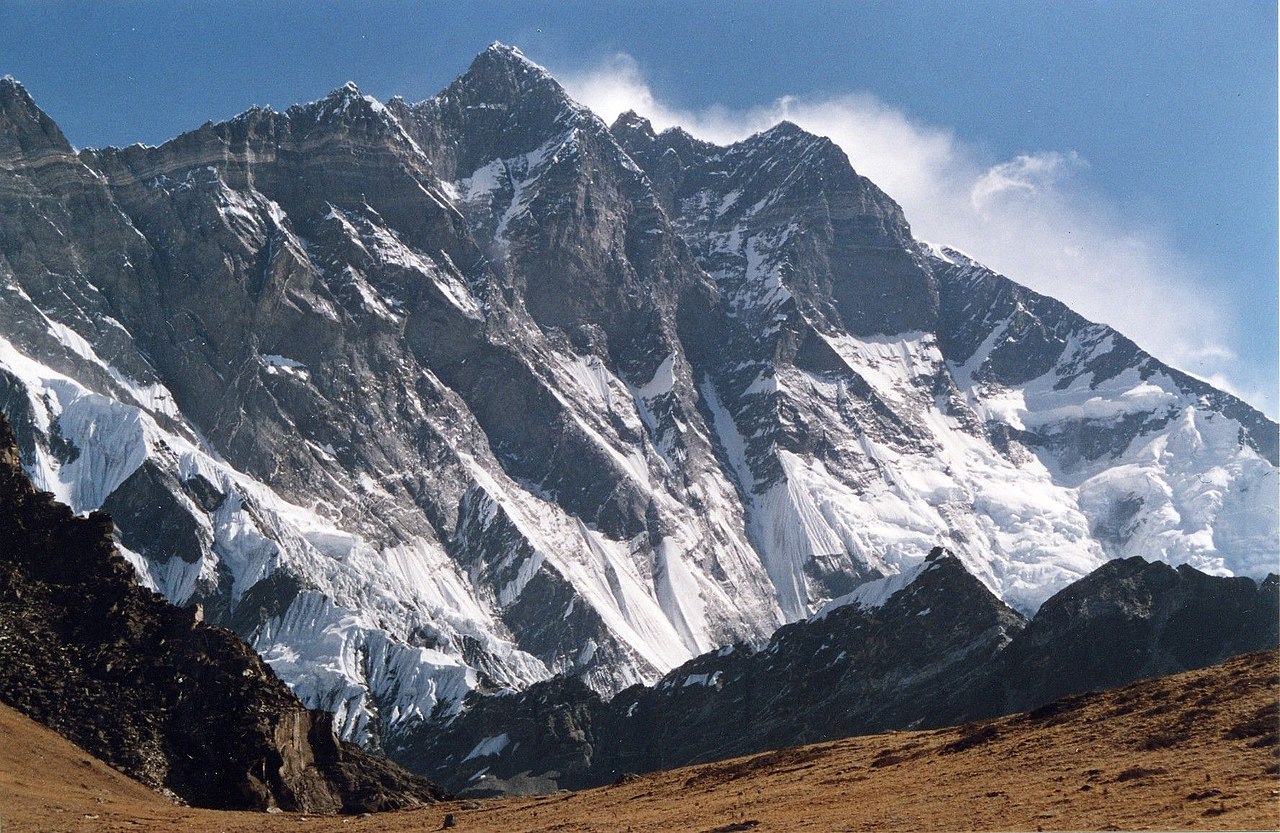
Lhotse rises above the Khumbu region and stands on the border between two political areas: the Tibetan Plateau and Nepal. The summit ridge lies at the frontier — information on the dividing line is available via border references, including mentions of Tibet and Nepal. The mountain is notable for a steep, glaciated wall on its northern and western faces and for sharing the South Col gullied approaches with nearby peaks.
Sub-summits and notable parts
- Principal summit (Lhotse Main) — the highest point and the one usually meant by the name Lhotse.
- Subsidiary summits — smaller peaks on the same massif often referred to collectively as Lhotse Middle and Lhotse Shar.
- Key features — steep faces, extensive icefalls and routes that link to the Everest climbing corridor.
Climbing history
The first recorded ascent of Lhotse's main summit was achieved by a Swiss expedition in 1956. Since then it has attracted technical climbing teams and guided commercial expeditions because of its proximity to popular Everest approaches. Detailed accounts of early and notable ascents are summarized in historical climbing records and mountaineering literature.
Routes, challenges and mountaineering significance
The standard route shares part of the approach used for Everest's south side; climbers typically negotiate large glaciated faces and high-altitude camps before reaching the summit. Lhotse is respected for its sustained steep sections and objective hazards such as avalanches and serac fall. Its location makes it a frequent objective for climbers acclimatizing in the Khumbu region and for teams choosing an alternative to Everest. For route descriptions and practical guidance see general climbing resources and route reports at summit and route guides.
Importance and distinctions
Lhotse combines high altitude, dramatic relief and a role within the Everest massif that gives it both geographical importance and mountaineering prominence. It is simultaneously a national landmark for Nepal and a feature of the Tibetan Himalayan landscape, noted in cartographic and expedition records throughout the twentieth and twenty-first centuries.
Related articles
Author
AlegsaOnline.com Lhotse: the fourth highest mountain on Earth Leandro Alegsa
URL: https://en.alegsaonline.com/art/57671
Sources
- britannica.com : Details about Lothse
- commons.wikimedia.org : Lhotse
- wikidata.org : wikidata.org/wiki/Q168702
- d-nb.info : 4035559-7
- id.loc.gov : sh85076383
- viaf.org : 244072042
- worldcat.org : 244072042