
Arjuna: Principal Hero of the Mahabharata and Central Figure in the Bhagavad Gita
Arjuna, the third Pandava in the Mahabharata, is famed as an unparalleled archer, disciple of Drona, and the interlocutor in the Bhagavad Gita. Overview of his life, deeds, teachings, and cultural legacy.
Overview
Arjuna is one of the principal protagonists of the ancient Indian epic the Mahabharata. Celebrated for his skill with the bow and for his pivotal dialogue with Krishna in the Bhagavad Gita, Arjuna figures prominently in the narrative of the Pandava brothers and the great Kurukshetra war. He is remembered both as a warrior and as a moral agent who faces doubt, duty and spiritual instruction.
Image gallery
10 Images



Birth and Family
Traditional accounts describe Arjuna as the third of the five Pandava brothers. He is the son of Kunti and, by birth narrative, of the god of rain and king of gods, sometimes identified with Indra. Arjuna's principal wives include Draupadi and Subhadra; other marriages in the epic include Ulupi and Chitrāngadā. His children, among others, include Abhimanyu and Babruvahana, whose stories continue parts of the epic's lineage and regional traditions.
Training and Abilities
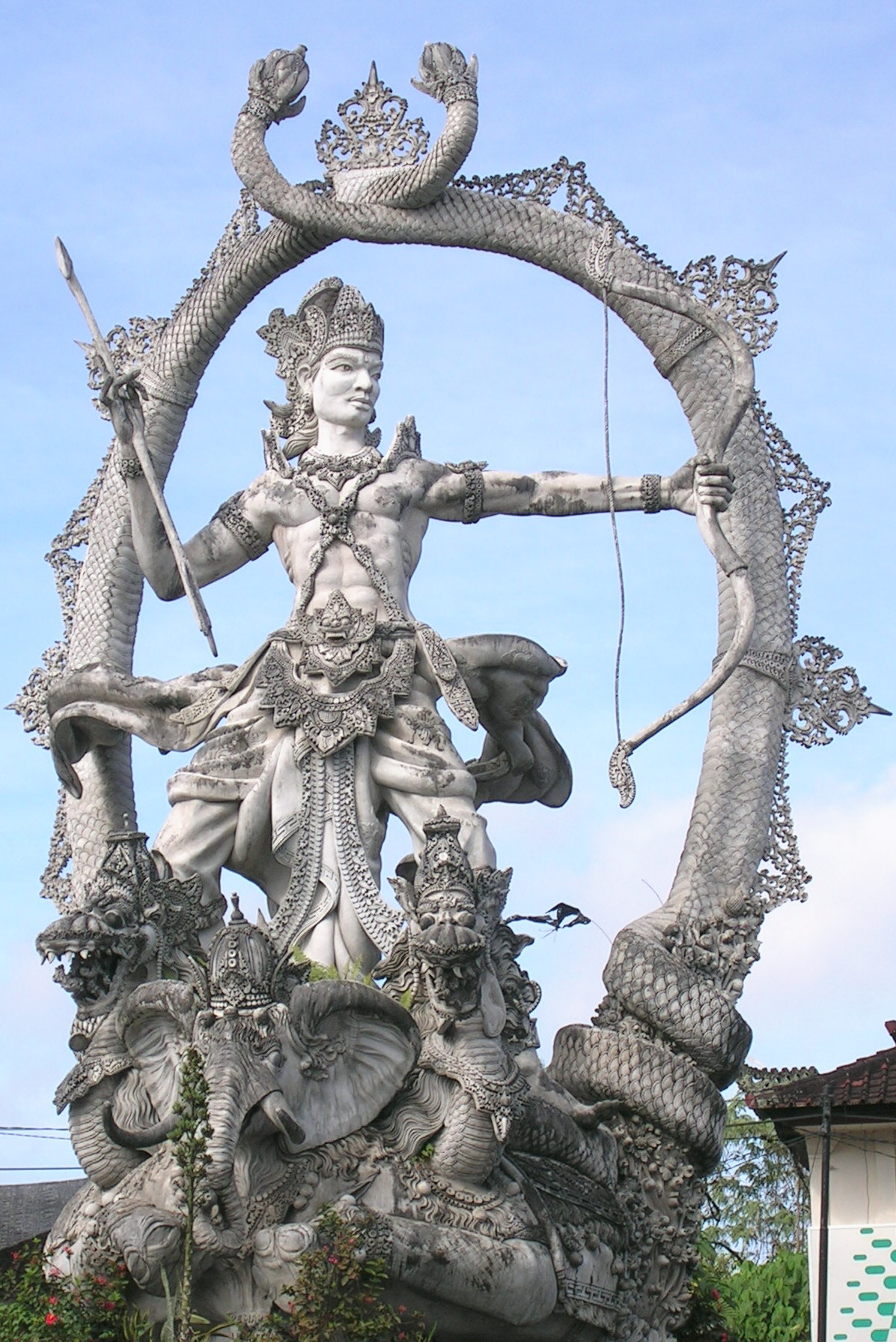
At the court of Dronacharya Arjuna received instruction in warfare, statecraft and the ritual arts. The text emphasizes his exceptional marksmanship and composure in battle; later tradition names his principal weapon the Gandiva bow. He is commonly portrayed as master of archery, horsemanship and the use of celestial arms. Alongside martial training, he is shown as schooled in matters of governance and ritual learning, combining religion, science and military arts into a broad education.
Key Episodes
- Swayamvara and marriage: Arjuna wins Draupadi's hand at her swayamvara by accomplishing the contest required by her father.
- Exile and disguise: During exile he undertakes many adventures and spends a year living incognito, an episode that includes teaching and disguise in some versions of the narrative.
- Kurukshetra and the Bhagavad Gita: On the battlefield Arjuna experiences a moral crisis and refuses to fight; the ensuing counsel from Krishna is presented as the Bhagavad Gita, a text addressing duty (dharma), action (karma), devotion (bhakti) and knowledge (jnana).
- Warrior feats: As a leading general he engages many important opponents and plays a decisive role in major combats described in the epic.
Later Life and Regional Traditions
After the war, the epic and its regional retellings recount further adventures involving Arjuna and his descendants. Episodes such as conflicts with rival kings, the fate of his son Abhimanyu, and encounters with descendants like Babruvahana appear in later books and local traditions. Different regions have preserved variant stories that expand or reinterpret Arjuna's character.
Legacy and Cultural Impact
Arjuna remains a cultural archetype of the skilled yet questioning warrior. His figure appears in classical literature, theater, dance, temple sculpture and modern media across South and Southeast Asia. Scholars study him both as a legendary-epic hero and as a focal point for discussions about ethics, martial excellence and spiritual teaching. For introductory study consult translations and scholarly introductions to the Mahabharata and focused commentaries on the Bhagavad Gita for context on Arjuna's role and the philosophical issues his dialogue with Krishna raises.
Readers interested in social, ritual and artistic responses to Arjuna's story will find a wide range of secondary literature and performances that trace how his image has been adapted and reinterpreted over centuries. The epic's complex narrative encourages cautious reading: many episodes survive in variant forms and later interpolations, and interpretations differ across traditions.
Related articles
Author
AlegsaOnline.com Arjuna: Principal Hero of the Mahabharata and Central Figure in the Bhagavad Gita Leandro Alegsa
URL: https://en.alegsaonline.com/art/5592
Sources
- sacred-texts.com : "Mahadeva praising Arjuna"
- doi.org : 10.1093/acref/9780198610250.001.0001
- oup.com : UK public library membership