
Arno (river in Tuscany, Italy)
The Arno is the principal river of Tuscany, flowing from the Apennines through Florence and Pisa to the Tyrrhenian Sea; noted for its cultural role and periodic, sometimes devastating floods.
Overview
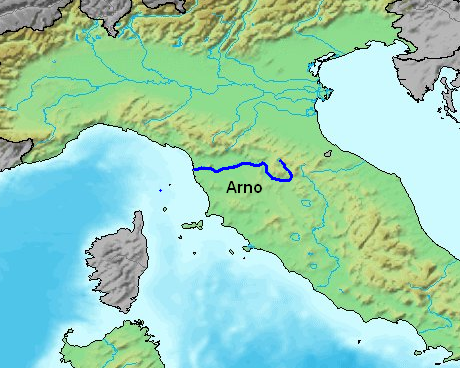
The Arno is the main river of the Tuscany region of central Italy. Rising in the Apennine hills, it courses westward across the Tuscan plain and reaches the Tyrrhenian Sea near Pisa. The river has shaped human settlement, transport and culture in the region for centuries.
Image gallery
10 Images




Characteristics and course
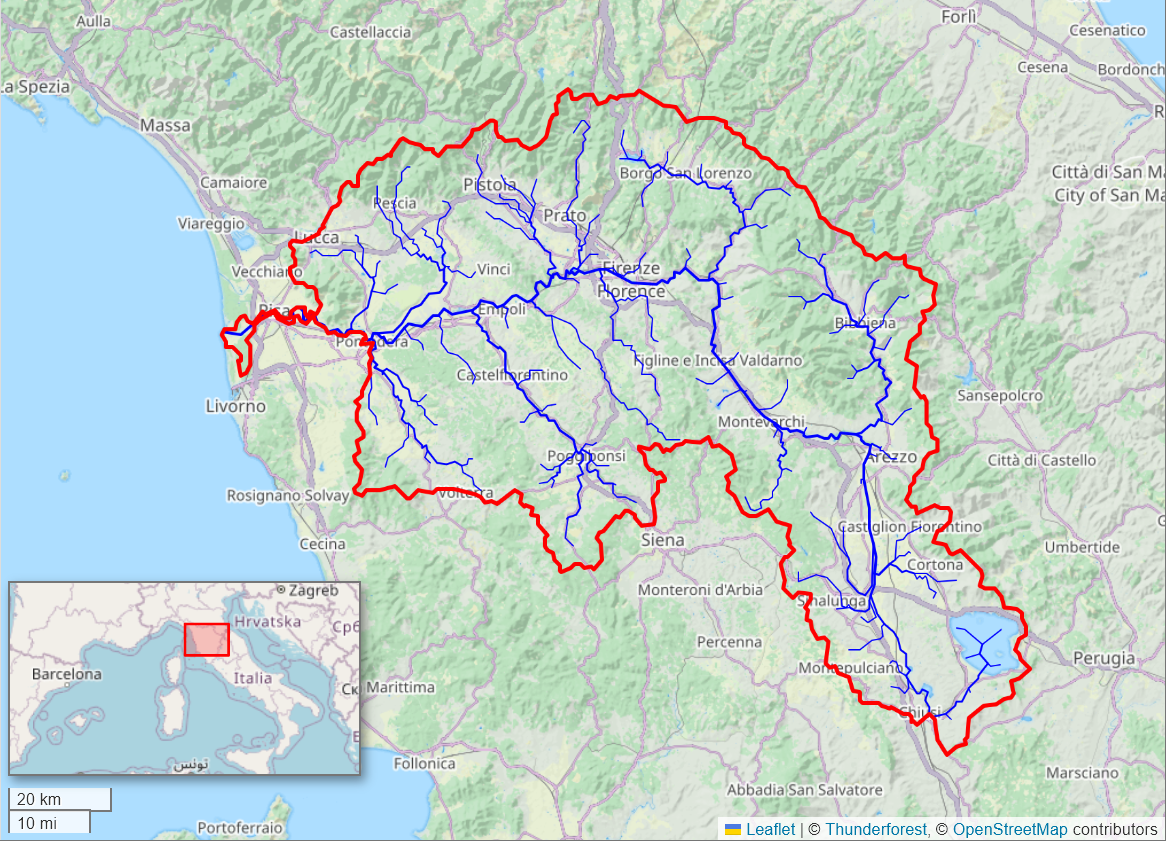
Its source is in the Casentino area of the Apennines and the river flows through several notable towns, most prominently Florence and Pisa. Along its route the Arno receives tributaries such as the Sieve and the Bisenzio. The channel crosses varied terrain: mountain valleys, agriculturally rich plains and an alluvial coastal stretch before the mouth.
History and cultural importance
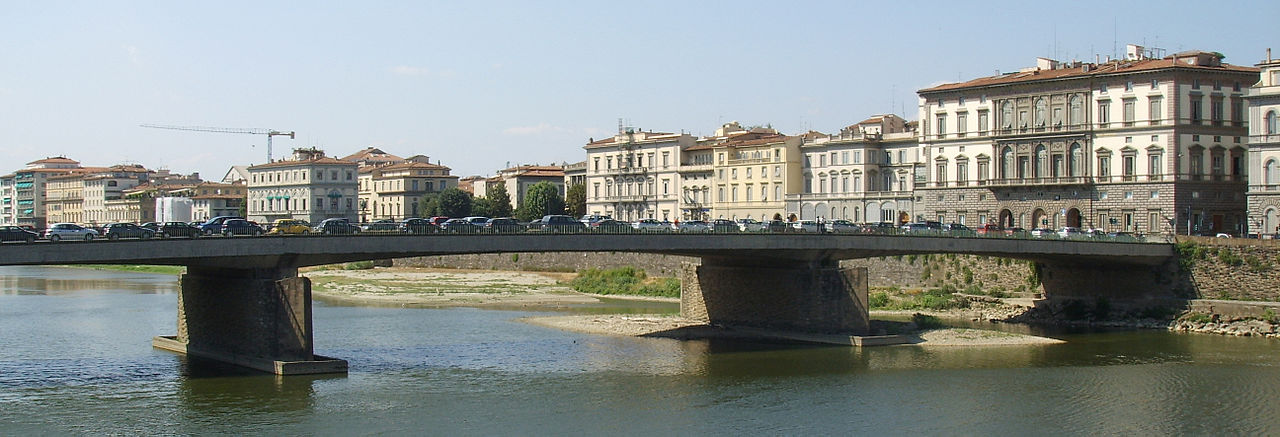
The Arno has been central to Tuscan history. Cities on its banks prospered through water-powered mills, irrigation and local trade. Florence's bridges and riverside quays contributed to the city's artistic and economic life; the famous Ponte Vecchio spans the Arno in Florence and is a major cultural landmark. Flooding has also marked the river's history, most tragically in 1966 when Florence suffered widespread damage to art and architecture.
Uses and environment
Today the Arno supports irrigation, limited navigation, hydroelectric plants and urban water supplies. Its basin sustains agriculture and diverse ecosystems, though urbanization and pollution are ongoing concerns addressed by regional management efforts.
Notable facts and distinctions
- The river links several of Tuscany's principal cities and is often associated with the region's identity.
- Repeated floods have prompted extensive riverbank works, reservoirs and monitoring schemes.
- For further technical or geographic information see general references on the river and on Tuscany.
Because of its combination of natural, historical and cultural significance, the Arno remains one of central Italy's most notable waterways.
Tags
Related articles
Author
AlegsaOnline.com Arno (river in Tuscany, Italy) Leandro Alegsa
URL: https://en.alegsaonline.com/art/5786