
Abhimanyu — Young warrior of the Mahabharata
Abhimanyu, son of Arjuna and Subhadra, is celebrated in the Mahabharata for his courage in breaching the Chakravyuha formation and for his tragic death; his legacy continued through his son Parikshit.
Abhimanyu is a central youthful figure in the Indian epic the Mahabharata. Born to the Pandava prince Arjuna and Subhadra (sister of Krishna), he is remembered for exceptional martial skill, daring, and a short life that became a pivotal and mournful episode in the great war of Kurukshetra. Tradition presents him as a precocious warrior whose death affected the course and moral tone of the conflict.
Image gallery
6 Images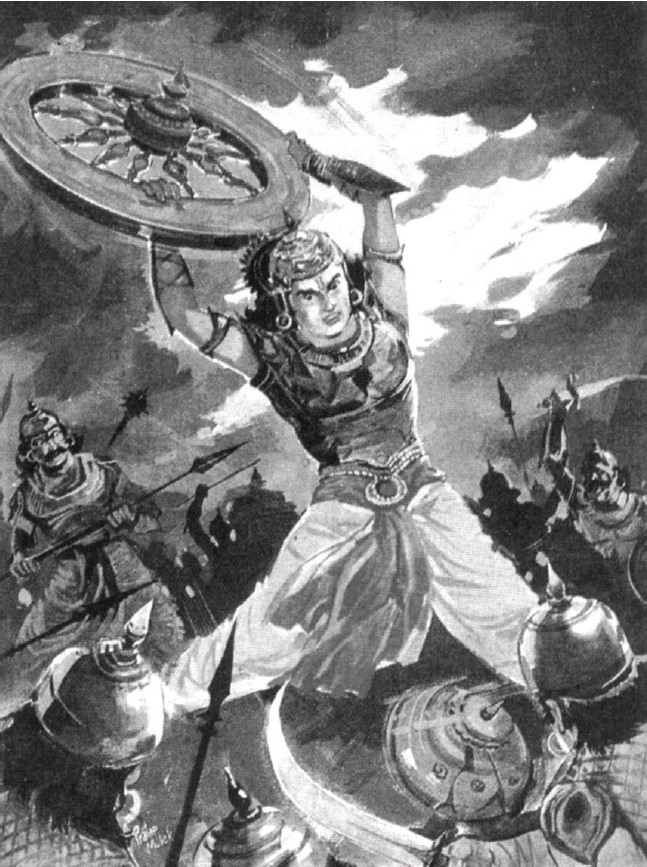


Birth, family and early training
Abhimanyu is described as the son of Arjuna and Subhadra and the husband of Uttara. He is commonly portrayed as very young—often called a youth or adolescent in retellings—yet trained in traditional weapons and chariot warfare by masters at the Pandava court and by his father. A well known episode in the narrative says that while in his mother’s womb he overheard the description of the military formation called the Chakravyuha but did not learn how to exit it; this motif is used in later passages to explain the tactical circumstances of his death.
The Chakravyuha and the fateful day
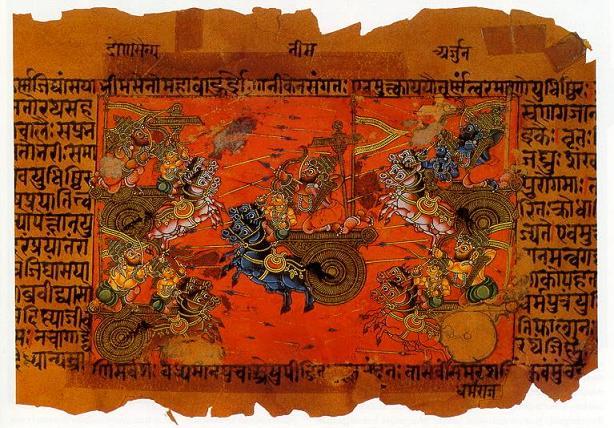
On the thirteenth day of the Kurukshetra war the Kaurava forces adopted the Chakravyuha, a complex concentric battle formation. When Arjuna and a significant portion of the Pandava army were engaged elsewhere, Abhimanyu volunteered to penetrate the formation. He entered with great skill and broke deep into the ranks, defeating several seasoned warriors. However, the epic emphasizes that he became isolated because other Pandava fighters were unable to follow him into the arrangement; Jayadratha is widely credited in tradition with preventing timely reinforcement.
Accounts stress that Abhimanyu was overwhelmed not in single combat but by a combined effort of multiple senior Kaurava warriors who attacked him together. Many narrations characterise his death as both heroic and tragic: he fought until being cut off and outnumbered, and his killing raised questions in many retellings about the ethics of warfare when several combatants overwhelm a solitary young warrior.
Aftermath and legacy
- Lineage: fathered Parikshit by Uttara; Parikshit later continued the Pandava line and became king.
- Symbolism: Abhimanyu is commonly held up as an emblem of youthful valour, sacrifice, and filial devotion in South Asian cultural memory.
- Ethical debate: The circumstances of his death are often cited in discussions about the rules of combat and moral conduct in war as depicted in epic literature.
Abhimanyu’s episode has been retold in numerous regional traditions, classical commentaries, stage performances, poems, films and television series. His story functions in the Mahabharata as a narrative turning point that intensifies the grief and resolve of the Pandavas and sets in motion events that shape the war’s later phases. His short life and dramatic end continue to be invoked in literary, religious and popular contexts when themes of duty, courage and the human cost of conflict are examined.
Questions and answers
Q: Who was Abhimanyu?
A: Abhimanyu was the son of Arjuna, a great person in the Mahabharata and a young warrior in the war.
Q: What did Abhimanyu know about the Chakravyuh?
A: Abhimanyu knew partially about the Chakravyuh, only the entry strategy but not how to get out of it.
Q: Why did Abhimanyu fall in the war?
A: Abhimanyu fell in the war because he got trapped in the Chakravyuh and did not know how to get out of it.
Q: Did Abhimanyu's uncles try to save him?
A: Yes, Abhimanyu's uncles tried to save him from the Chakravyuh.
Q: How did Abhimanyu's uncles try to save him?
A: Abhimanyu's uncles tried to save him by following him through the Chakravyuh, but after each obstacle, they were left behind.
Q: Who ruled after Yudhistra?
A: Parikshit, the son of Abhimanyu, ruled over after Yudhistra.
Q: How did Abhimanyu's death affect the Mahabharata war?
A: Abhimanyu's death had a significant impact on the Mahabharata war as he was a young and skilled warrior who had the potential to change the course of the battle.
Tags
Related articles
Author
AlegsaOnline.com Abhimanyu — Young warrior of the Mahabharata Leandro Alegsa
URL: https://en.alegsaonline.com/art/432