
Knossos — Bronze Age palace complex on Crete
Knossos is the principal Bronze Age archaeological site on Crete, best known for its Minoan palace, frescoes, and the discovery of the Linear A and Linear B scripts.
Overview
Knossos is the largest Bronze Age archaeological complex on the island Crete and lies within the modern urban area of Heraklion. Long occupied in prehistory, the site became a major center in the second millennium BC and is often described as the leading city of the Minoan civilization. Its scale and complex architecture have led some scholars to call it one of Europe's earliest urban centers.
Image gallery
10 Images





Palace layout and notable features
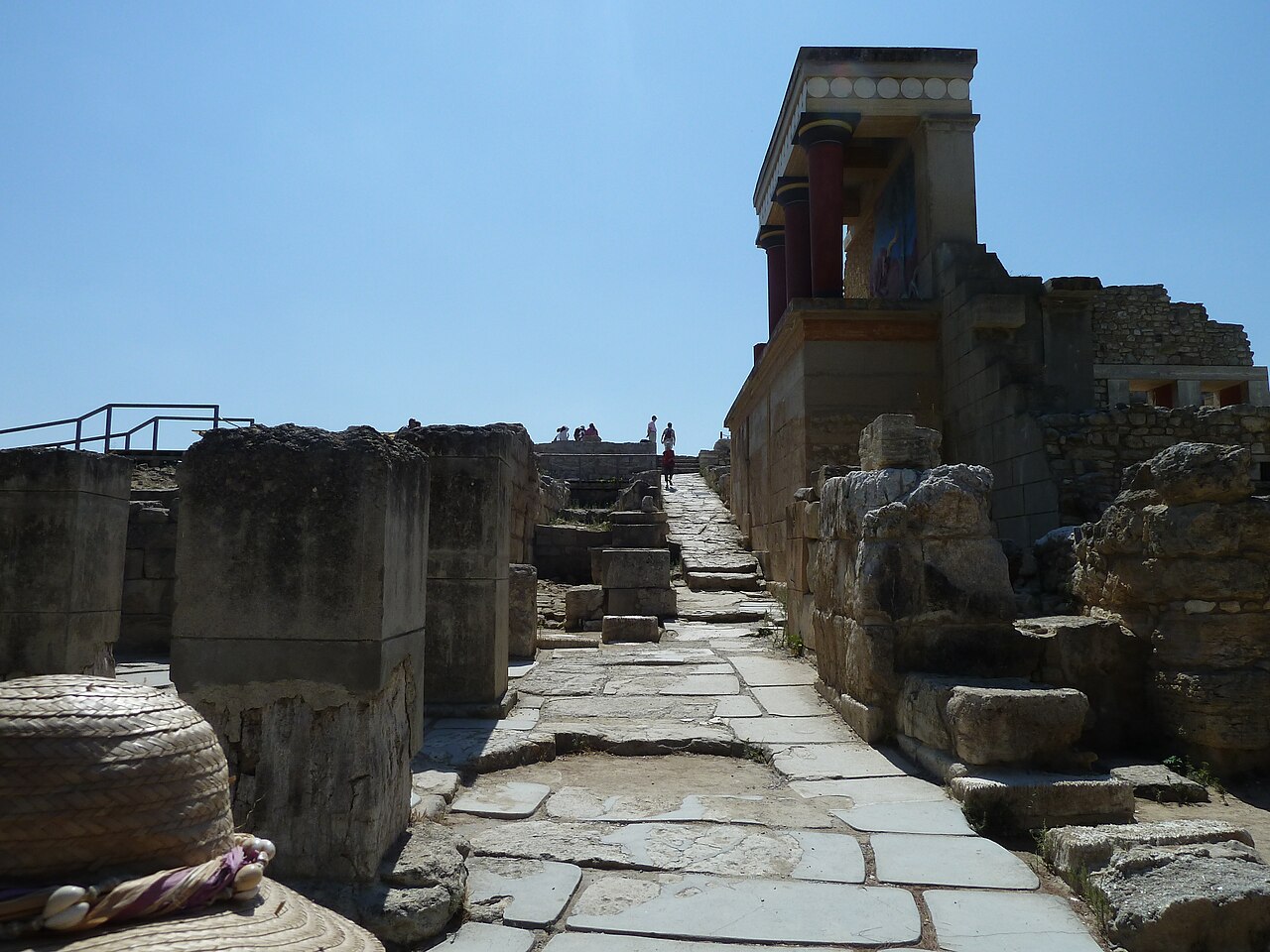
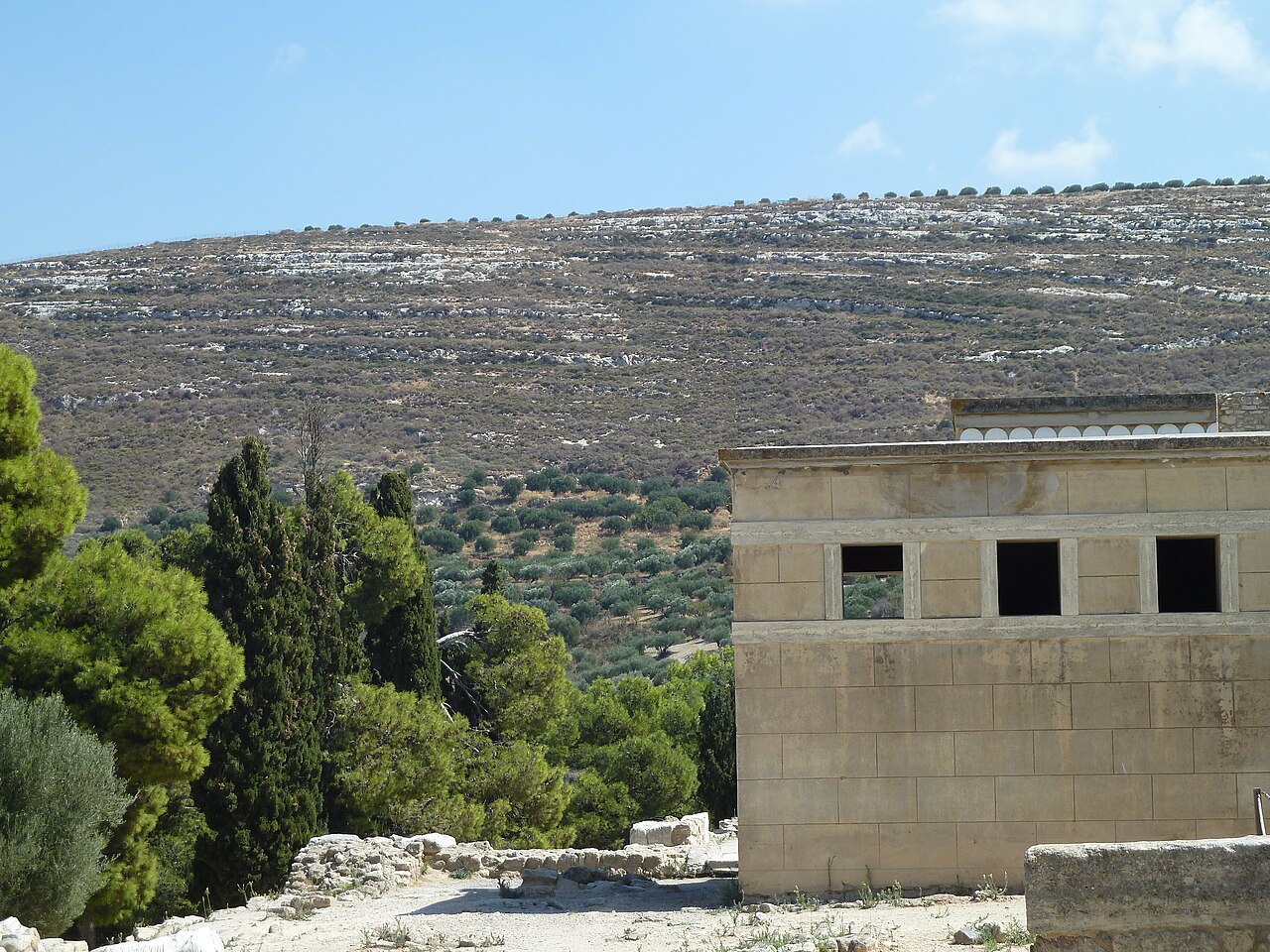
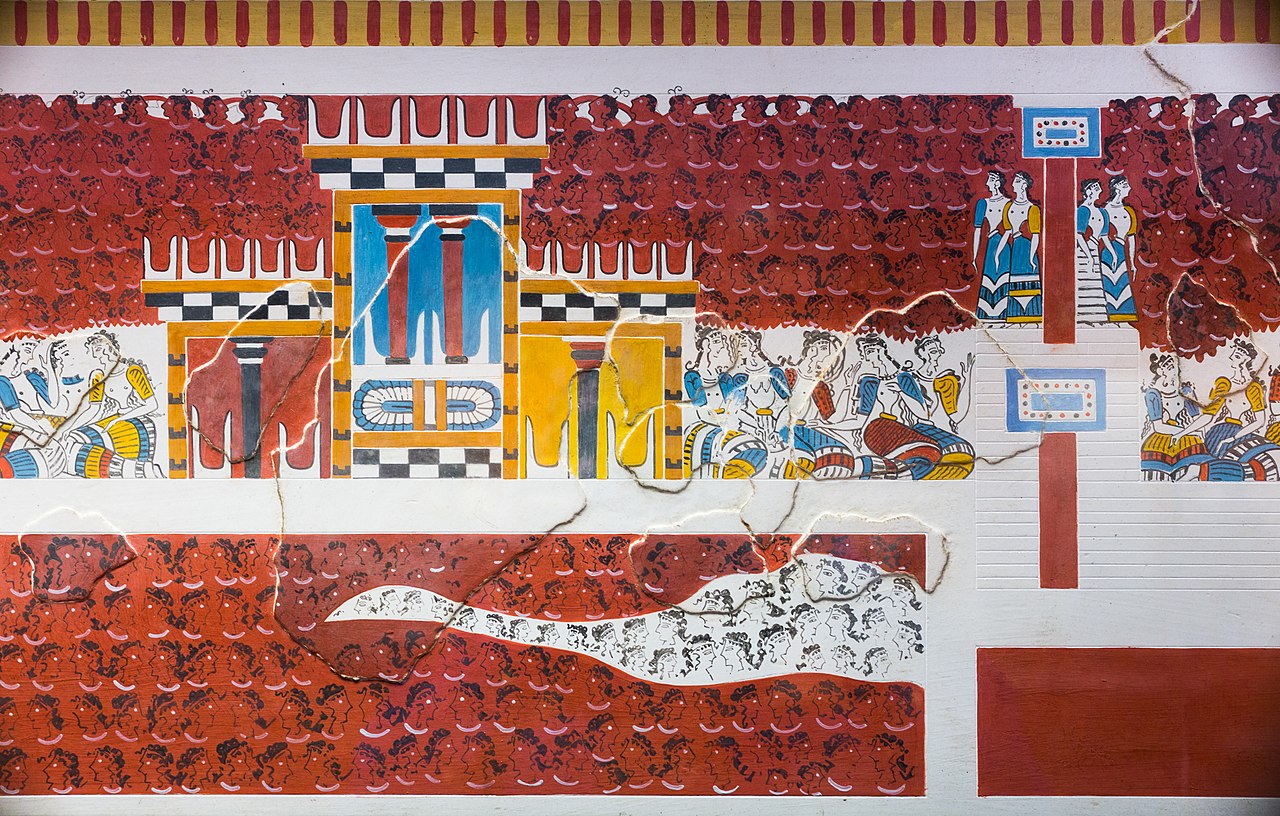
The central structure at Knossos is the so‑called palace, a sprawling multi‑storey complex built around a large central court. Surviving remains and reconstructions show a dense arrangement of residential quarters, administrative rooms, storage magazines with large pithoi, workshops, lightwells, staircases and ceremonial spaces such as a throne room. Colorful frescoes decorated many walls and depict religious, marine and ceremonial themes.
- Central court: a focal open area used for processions and gatherings.
- Magazines: long storage corridors for grain and oil kept in large jars.
- Throne area and shrines: suggest both administrative and ritual functions.
- Art and frescoes: naturalistic scenes, bulls and processional imagery.
Discovery, excavation and reconstruction
Major excavations at Knossos began in 1900 under Sir Arthur Evans, who worked at the site for several decades. His work revealed extensive building phases and earlier Neolithic occupation beneath the Bronze Age levels. Evans published detailed plans and carried out partial reconstruction of walls, columns and frescoes; his use of reinforced concrete and interpretative restorations remains controversial among archaeologists because some reconstructions reflect Victorian ideas as much as ancient reality. Modern archaeological scholarship has both built on and revised Evans's chronologies and interpretations. Excavation reports and later studies provide more cautious reconstructions of the site's appearance and use.
Writing systems and languages
Two distinct scripts were found at Knossos. One, known as Linear A, survives mostly on administrative clay tablets and is not yet deciphered; it is associated with the island's indigenous language. The other, Linear B, was later shown to record an early form of Greek and its decipherment illuminated Mycenaean administrative control in parts of Crete. Both scripts are often grouped under the general label ancient scripts discovered in the palace archives.
Myth, later coins and cultural significance
Classical and later traditions linked Knossos with the legendary King Minos and the mythic Minotaur and Labyrinth. Roman coins struck locally sometimes bore inscriptions such as 'Knosion' and images recalling the Minotaur, showing how the site's identity persisted in later imagination. These symbolic associations have influenced modern reception of Knossos in literature, tourism and archaeology.
Chronology, abandonment and legacy
Knossos shows long continuity from Neolithic occupation into the Bronze Age; underlying deposits attest to Neolithic settlement before the palace phases. The palace complex experienced at least two major building phases during the Middle and Late Bronze Age; it was reduced in importance and finally abandoned before the end of the Late Bronze Age. The precise causes of decline are debated—possible factors include earthquakes, fire, internal social change and external pressure from mainland Mycenaeans—so the site's final desertion remains an open question. Knossos remains central to the study of Aegean prehistory and continues to be a key site for understanding Bronze Age trade, administration and art. Later finds and continuing fieldwork keep refining the picture of life at this important center.
For accessible summaries and introductory resources see archaeological guides and museum materials linked to Knossos excavations and collections at major museums and universities. Crete today preserves the site as a major tourist and research destination.
Further reading on excavation methodology, the interpretation of Minoan religion, and the technical aspects of the scripts is available in specialist literature and site reports. Scholars working on Knossos continue to debate reconstruction ethics, the role of Knossos within the wider Aegean, and the relationship between the material record and ancient myths.
For comparative contexts and archaeological databases see institutional publications and project pages that discuss Knossos within the broader framework of Aegean Bronze Age studies: site summaries, iconographic studies, and epigraphic catalogues of Linear B tablets.
Note: the quality and interpretation of evidence from Knossos have evolved since the first excavations; readers are encouraged to consult up‑to‑date publications and museum catalogues for the latest findings and debates.
Related articles
Author
AlegsaOnline.com Knossos — Bronze Age palace complex on Crete Leandro Alegsa
URL: https://en.alegsaonline.com/art/54011