
Crete: geography, history, culture and legacy
Crete, the largest Greek island, is a crossroads of Mediterranean cultures. Its geography, Bronze Age Minoan civilization, later rulers, agriculture and modern culture shaped regional history and identity.
Overview
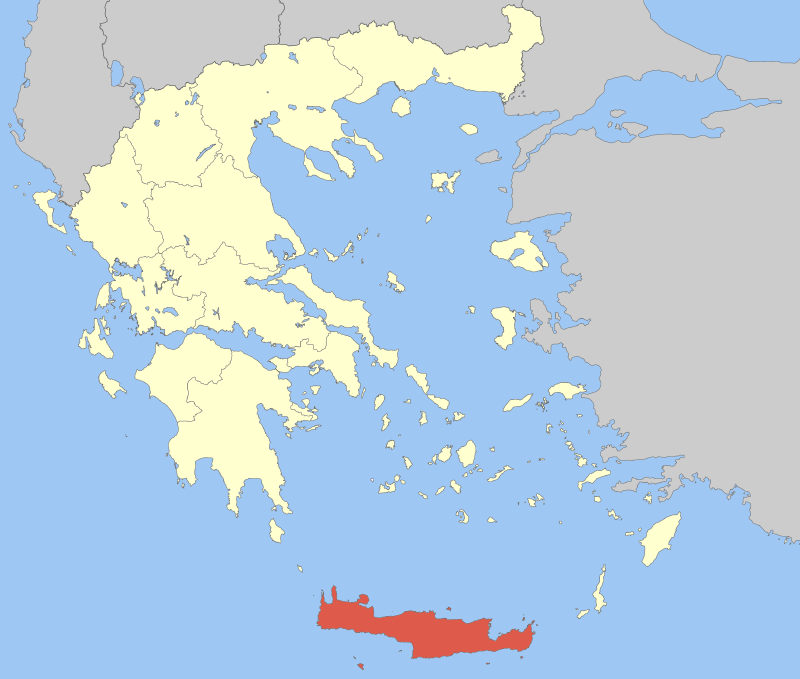
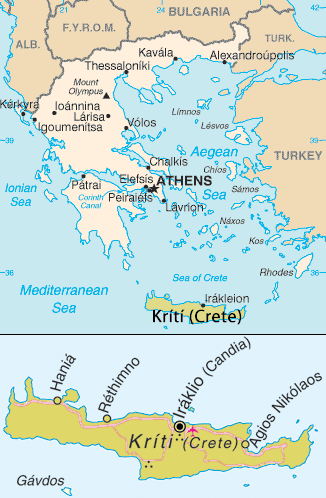
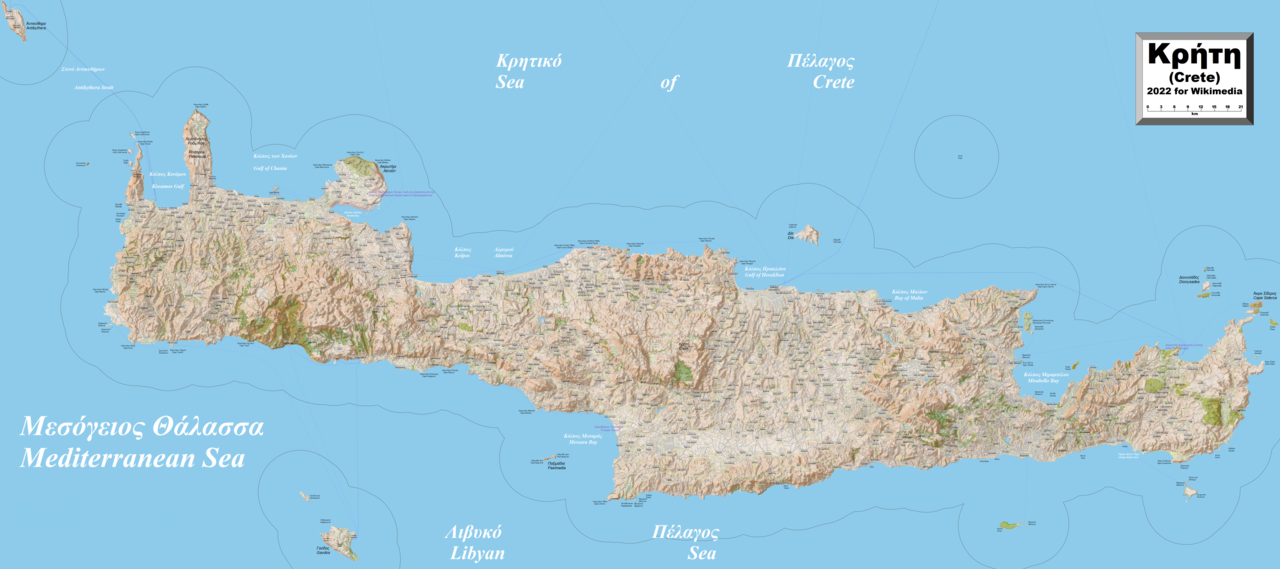
Crete is the largest island in Greece and occupies a key position between the Aegean Sea and the wider Mediterranean. Its long coastline, rugged mountains and fertile plains have supported human settlement for millennia. The island's location made it a maritime crossroads: people, goods and ideas passed through Crete from the eastern Mediterranean to the western basin.
Image gallery
10 Images





Geography and natural resources
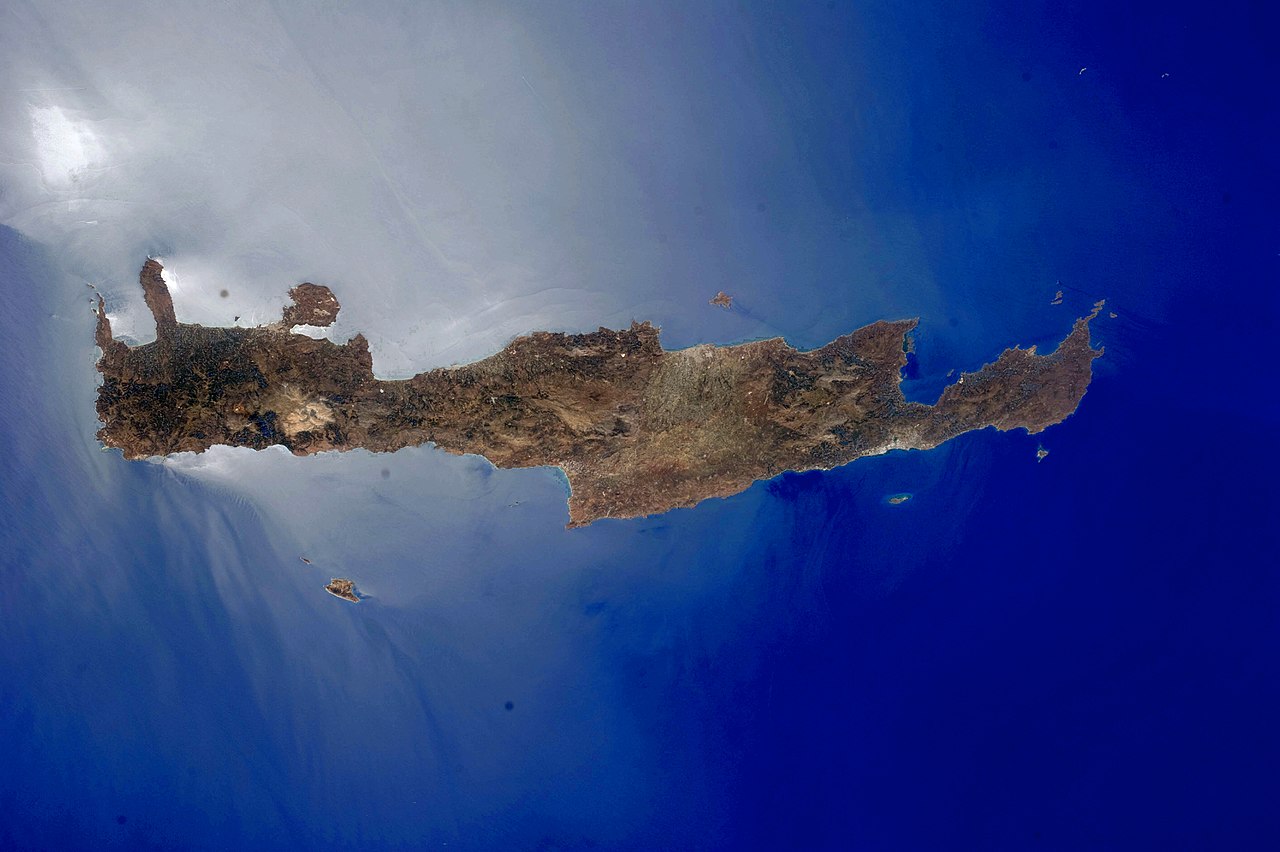
Crete combines coastal lowlands with interior mountain ranges. Springs and seasonal rivers supply irrigated valleys where olives, grapes, wheat and vegetables flourish; wild crocus species also grow on parts of the island and have been a traditional source of saffron. The climate is typically Mediterranean — warm, dry summers and mild, wetter winters — which, together with varied soils, supported early intensive agriculture and continues to underpin modern farming and tourism.
Early civilization and cultural exchange
The island was home to one of Europe's earliest advanced societies during the Bronze Age, often referred to as the Minoan civilization. Minoan settlements are noted for large complex palaces, sophisticated crafts, vibrant pottery, and extensive maritime trade. Archaeological finds show regular contact with contemporary powers to the east and south, and Crete absorbed and adapted foreign techniques, materials and motifs while also exporting its own goods and artistic styles.
Historic contacts and later rule
Over many centuries Crete was part of shifting political and commercial networks. It received influences and goods from ancient Egypt and other eastern Mediterranean cultures, learned metallurgical and monetary practices from neighbouring peoples, and adopted alphabetic writing through contacts with maritime traders. In later times the island came under the control of classical Greeks, the Roman Empire, Byzantine authorities, Arab rulers, Venetian maritime states and Ottoman administrators, before becoming part of the modern Greek state. These phases left layers of architecture, language, religion and law that can still be traced in place names, ruins and cultural traditions.
Economy, culture and everyday life
Traditional Cretan life combined agriculture, pastoralism and seafaring. Olive oil, wine and cereals were staples; craft production and coastal trade augmented local economies. Cretan music, cuisine and customs have preserved distinctive elements — vocal forms, stringed instruments, family-centered festivals and a diet rich in olive oil, vegetables and seafood — while also showing the imprint of centuries of exchange. Today tourism plays a major role alongside farming and small-scale industry.
Legacy and significance
Crete's archaeological sites, museums and living traditions make it important for the study of Mediterranean history. The island illustrates how geography and resources fostered early social complexity, how maritime exchange spread technologies and ideas, and how successive waves of influence reshape a region without erasing earlier identities. Crete remains a place where landscape, settlement and culture testify to long-term continuity and change.
Further links
- Island group and political status
- Aegean Sea context
- Mediterranean connections
- Comparisons with other fertile regions
- Soil and agriculture
- Climate and seasonal patterns
- Water resources and springs
- Flora: crocus and wild plants
- Saffron and traditional uses
- Dyeing, food and medicine
- Contacts with Egypt
- Trade in textiles and ornaments
- Metallurgy and monetary practices
Questions and answers
Q: What is Crete?
A: Crete is the largest of the Greek islands.
Q: What separates the Aegean Sea from the rest of the Mediterranean Sea?
A: Crete separates the Aegean Sea from the rest of the Mediterranean Sea.
Q: Why did the Cretans have less time fighting to live?
A: The Cretans had less time fighting to live because of their rich soil, warm climate, and plenty of water.
Q: What did the Cretans make from the wild crocus flowers?
A: The Cretans collected saffron from the wild crocus flowers which was used in yellow dye, in food, and in medicine.
Q: What did the Cretans receive from the Egyptians?
A: The Cretans received rich cloth and jewels from the Egyptians.
Q: What did the Cretans learn from the Hittites?
A: The Cretans learned how to use iron from the Hittites.
Q: What did the Cretans receive from Phoneicia?
A: The Cretans received the alphabet which is used today from Phoneicia.
Related articles
Author
AlegsaOnline.com Crete: geography, history, culture and legacy Leandro Alegsa
URL: https://en.alegsaonline.com/art/24145
Sources
- oxfordbibliographiesonline.com : "Ancient Crete" in Oxford Bibliographies Online: Classics, offers a scholarly guide to the academic literature on this topic.