
Writing system (script)
A writing system is a structured set of symbols used to record language. This article explains types, components, history, uses, and technical issues such as orthography and digital encoding.
A writing system, often called a script, is a conventional set of visual signs used to represent the words and sounds of a language. At its simplest, a writing system maps elements of spoken language—sounds, syllables, or whole words—to marks on a surface. For a concise introduction see writing system. A written form is distinct from the spoken language it records: the same script may be used for many languages, and many languages can be recorded in different scripts.
Image gallery
3 Images

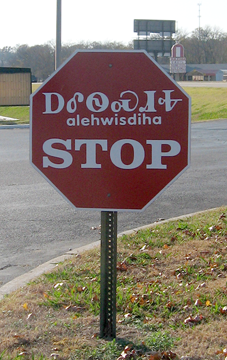
Components and common types
Writing systems differ in what their individual symbols represent and how those symbols combine. Major categories include:
- Alphabets: symbols generally represent phonemes (sound units); the Latin alphabet used for English is a widespread example—see alphabet.
- Syllabaries: each sign stands for a syllable, such as the kana of Japanese.
- Logographic systems: symbols represent words or morphemes, as in Chinese characters.
- Abjads and abugidas: consonant-centered systems or syllable-based scripts with vowel marking, found across many languages.
Beyond graphemes, a script's graphic inventory includes punctuation, numerals, diacritics, and special symbols; punctuation and typographic marks are discussed at punctuation, while marks that modify letters are described at diacritics. See also a general overview of types at writing systems classification.
History and development
Writing emerged independently in several regions as societies needed record keeping, administration, and literature. Early systems began as pictorial or ideographic marks and evolved greater abstraction and phonetic representation. Over time, scripts change by simplification, the adoption of foreign signs, religious and political influence, and by technology such as printing and digital communication.
Uses, importance, and social effects
Writing systems enable the preservation and transmission of knowledge, law, religion, literature, and scientific ideas across time and space. Choice of script can affect literacy rates, education policy, national identity, and minority language rights. Scripts also play roles in art, calligraphy, and graphic design.
Practical and technical considerations
Orthography is the set of conventions that govern how a language is written in a particular script: spelling, capitalization, and punctuation. In the digital era, character encoding standards (for example, Unicode) allow diverse scripts to be used on computers and the internet. Directionality (left-to-right, right-to-left, or vertical writing) and line-breaking rules are further practical features that vary between scripts. The study of writing systems intersects linguistics, history, anthropology, and computer science.
Distinguishing a script from a language is essential: many languages share a script, and some languages have multiple writing systems. Understanding a script involves its physical signs, its linguistic mapping, its historical development, and its social functions.
For further reading and resources about specific scripts and their properties, consult specialist surveys and typological references: overview, classifications, or introductions to individual families such as the Latin alphabet and its spread. Additional practical guidance on punctuation and diacritical practice may be found through punctuation and diacritics.
Related articles
Author
AlegsaOnline.com Writing system (script) Leandro Alegsa
URL: https://en.alegsaonline.com/art/109239