
Khazars: Khazaria, a medieval Eurasian steppe polity and trading hub
Medieval Turkic polity (6th–10th centuries) that ruled Khazaria on the Volga–Don steppe, controlled trade routes between East and West, served as a buffer state, and is noted for religious diversity and debated legacy.
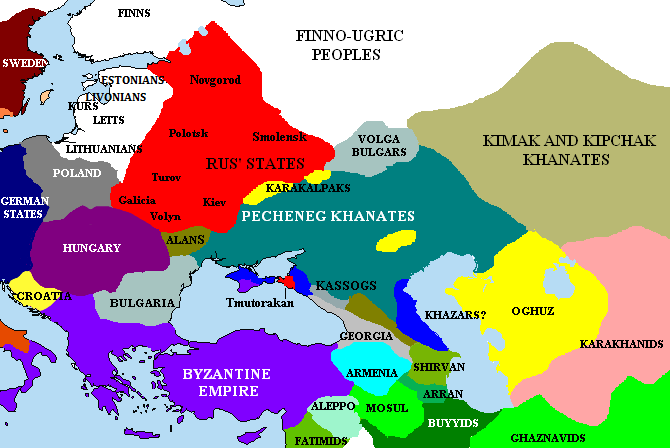
The Khazars were a Turkic-speaking, semi-nomadic people who established the polity known as Khazaria on the north‑eastern margins of the Eurasian steppe. Emerging from post‑Western Turkic realignments, Khazaria consolidated between the 6th and 10th centuries CE into a multiethnic and multilingual state that controlled a wide corridor from the Volga–Don steppes to the northern Black Sea littoral, including parts of Crimea and the Caucasus. Its strategic position placed it between major powers such as the Byzantine Empire, the steppe confederations, and the growing principalities of the Kievan Rus'.
Image gallery
10 Images



Organization and society
Khazar political structure reflected a blend of nomadic and sedentary institutions. Accounts indicate a dual leadership model with a largely ceremonial supreme ruler (often called a khagan) and a military‑administrative leader (commonly referred to in sources as a bek). The population was socially diverse: Turkic steppe elites and warrior groups coexisted with settled farmers, artisans, merchants, and subject peoples from neighbouring regions. Urban centres and fortified river ports supported administrative control and commercial activity.
Economy and trade
Khazaria prospered as an international trading hub and a pivot on routes that linked the Far East, the Islamic world and northern Europe. The state benefited from the flow of goods along branches of the Silk Road and from riverine trade on the Volga and Don. Commodities associated with Khazar trade included furs, slaves, grain and manufactured luxury items. Control of river routes and key ports enabled taxation, tribute and tolls that underpinned state revenue and sustained networks of merchants from different cultural and religious backgrounds.
Military and diplomacy
Khazar military power rested on a mobile cavalry tradition suited to steppe warfare, supplemented by fortified towns and control of navigable rivers. Diplomatically the Khazars alternated between alliances and conflict with neighbours: at various times they allied with the Byzantines against southern challengers and negotiated with the Umayyad Caliphate and other Islamic polities to secure trade and borders. Their diplomatic role often made them a buffer state between rival empires and migrating steppe peoples.
Religion and culture
Religious life in Khazaria was plural and dynamic. Traditional steppe beliefs such as Tengrism and shamanic practices coexisted with communities of Christians, Muslims and Jews in urban centres and caravanserais. Medieval sources and later scholarship report that sections of the ruling elite adopted Judaism in the early medieval period; historians debate the timing, extent and motives of this change and caution that most of the population retained a variety of faiths. Material culture and coin finds show influences from Byzantium, the Islamic world and wider Turkic traditions, reflecting Khazaria's role as a cultural crossroads.
Capitals, archaeology and sources
Primary historical knowledge about the Khazars comes from Byzantine, Arabic and Old Rus' sources, together with archaeological fieldwork. Medieval travellers and commentators, including Arab geographers, provide contemporary descriptions of Khazar society and urban centres. Archaeology has uncovered fortifications, burial sites, and artefacts that illustrate both nomadic and urban lifestyles. The principal river port and administrative centre traditionally associated with Khazar rule is often identified in sources as Itil (Atil), a major node on Caspian and Volga commerce, although precise archaeological identification and chronology remain subjects of study.
Decline and legacy
Khazaria's political decline occurred in the second half of the 10th century, when military campaigns from the rising Kievan Rus' curtailed Khazar control of trade routes and territories; by the end of the 10th century many Khazar institutions had been disrupted and populations dispersed or assimilated. Over subsequent centuries, descendants and neighbouring peoples absorbed surviving Khazar groups. Various later claims link Khazar ancestry to a number of populations—including frontier groups such as the Cossacks, Turkic North Caucasian peoples like the Kumyks, modern Kazakhs, and some Jewish communities, notably hypotheses about connections to Ashkenazi Jews. Mainstream scholarship treats these claims cautiously and emphasizes complex regional ethnogenesis rather than simple direct descent.
Historiography and modern debates
Interest in the Khazars has been sustained by their unusual position in medieval geopolitics and by the reported conversion of part of the elite to Judaism. Modern debates engage historical, archaeological and genetic evidence while warning against politicized or oversimplified readings of the past. Scholarly consensus recognizes Khazaria as an important example of how steppe polities could integrate nomadic and urban institutions and shape medieval Eurasian trade and diplomacy.
Further reading and resources
- Overview of Khazar history and regional context: regional summaries and studies that place Khazaria in the wider Turkic world (Turkic peoples).
- Trade and diplomacy connections linking Tang China, the Chinese markets, and the medieval Middle East.
- Sources on interactions with the Umayyad Caliphate, the Byzantine world, and relations dating back to confrontations with the Sasanian realm (Sasanian-era relations).
- Comparative studies of steppe belief systems and shamanic practice: links with Hunnic and other Turkic traditions.
This article summarizes mainstream historical views: Khazaria illustrates the adaptability of steppe polities and their capacity to shape commerce, diplomacy and cultural exchange across medieval Eurasia. For primary texts, specialist archaeological reports and up‑to‑date syntheses consult academic editions and major research libraries.
Related topics: Turkic peoples, the medieval Middle East, and Sasanian-era relations.
Questions and answers
Q: Who were the Khazars?
A: The Khazars were a semi-nomadic Turkic people who formed an empire called Khazaria in Russia from the 6th to 10th century CE.
Q: Where did the Khazars come from?
A: The Khazars came from the Western Turkic Khaganate of the Eurasian steppe, after it was conquered by Tang China.
Q: What was special about Khazaria?
A:Khazaria was an international trading center and an important place on the Silk Road that linked China, the Middle East, and Kievan Rus'. It also helped Byzantine defend itself from the Sasanian Persian empire.
Q: What religion did most of the ruling class practice?
A: Most of the ruling class may have practiced Tengrism, which was also popular among Huns and other Turkic peoples. Abrahamic religions were also popular.
Q: How did this alliance between Byzantine Empire and Khazaria end?
A:The alliance between Byzantine Empire and Khazaria ended around 900 when Kievan Rus replaced them in 965-969.
Q: Do some people think that Cossacks, Muslim Kumyks, Kazakhs, or Ashkenazi Jews descended from the Khazars?
A: Yes, some people think that Cossacks, Muslim Kumyks, Kazakhs or Ashkenazi Jews descended from the Khazars while others disagree with this opinion.
Tags
Related articles
Author
AlegsaOnline.com Khazars: Khazaria, a medieval Eurasian steppe polity and trading hub Leandro Alegsa
URL: https://en.alegsaonline.com/art/53221
Sources
- jwsr.pitt.edu : "East-West Orientation of Historical Empires"
- worldcat.org : 1076-156X
- escholarship.org : "Expansion and Contraction Patterns of Large Polities: Context for Russia"
- doi.org : 10.1111/0020-8833.00053
- jstor.org : 2600793
- britannica.com : "Khazar | people"