
Turkic peoples
A broad ethnolinguistic group whose members speak Turkic languages, spread across Central Asia, Siberia, the Caucasus, Anatolia and parts of Eastern Europe and the Middle East.
Overview
The Turkic peoples are an ethnolinguistic grouping whose members speak one of the Turkic languages and who share historical, cultural and linguistic ties. The label covers many distinct ethnic groups rather than a single nation. Individuals described as Turkic may be known locally by different ethnonyms; the term "Turk" is used in some contexts but not universally for all Turkic groups.
Image gallery
10 Images

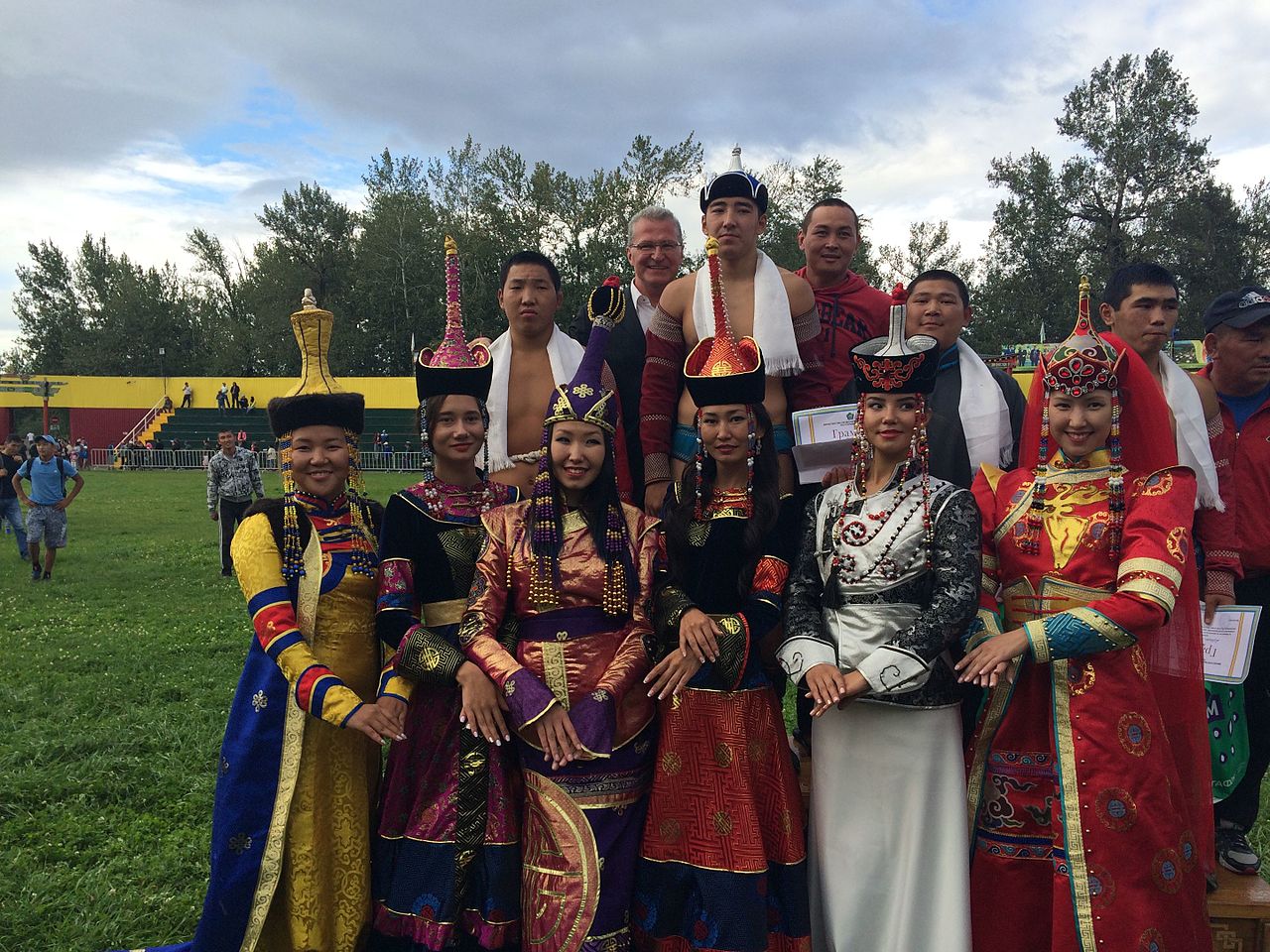


Distribution and modern states
Turkic-speaking populations are concentrated in Central Asia and Anatolia but live across a wide area from Siberia to eastern Europe. Contemporary states with large Turkic majorities include Kazakhstan, Uzbekistan, Azerbaijan, Turkey, Kyrgyzstan and Turkmenistan. Significant Turkic communities also exist throughout Central Asia, in parts of the Caucasus, within the Middle East and across Eastern Europe.
Languages and mutual intelligibility
The Turkic languages form a family of related languages and dialects with shared grammatical features and vocabulary; they are commonly referenced as the Turkic language family. Degree of mutual intelligibility varies: closely related languages or dialects may be mutually understandable, while more distant members require learning. Language borrowing, historical contact, and modern nation-state policies have influenced how these languages are written and taught.
History and origins
Historically, many Turkic groups trace origins to steppe regions of Central and Inner Asia. Over centuries, migrations, confederations and state formations resulted in the spread of Turkic languages and cultures across vast territories. These movements intersected with other peoples and empires, producing a complex historical tapestry rather than a single linear story.
Culture, economy and religion
Cultural practices among Turkic peoples are diverse: some communities maintained nomadic pastoral traditions for long periods, while others developed urban and agricultural societies. Religions practiced include Islam, various forms of traditional belief and, in some regions, other major faiths. Musical, literary and artisanal traditions are important markers of identity across Turkic groups.
Notable distinctions and contemporary relevance
Important distinctions among Turkic peoples include linguistic subgroup, regional history and state affiliation. In the modern era, Turkic identity is expressed in national politics, cultural revival movements and international cooperation between states and communities. For further reading, consult linguistic surveys and regional histories available through general overviews and specialized links such as those above.
Questions and answers
Q: What is a Turkic person?
A: A Turkic person is someone who speaks a language belonging to the Turkic family, and mainly comes from independent states such as Kazakhstan, Uzbekistan, Azerbaijan, Turkey, Kyrgyzstan and Turkmenistan.
Q: Where do most Turks live today?
A: Most Turks today live in Central Asia, Siberia, the Caucasus area, the Middle East and Eastern Europe.
Q: What are some of the countries that Turks come from?
A: Turks mainly come from Kazakhstan, Uzbekistan, Azerbaijan, Turkey, Kyrgyzstan and Turkmenistan.
Q: Are there any similarities between different Turkic languages?
A: Yes - many of the words used in different Turkic languages are similar or even identical which means that people speaking different varieties of these languages can often understand each other during communication.
Q: How did the group of peoples known as 'Turkic' get their name?
A: The group of peoples known as 'Turkic' got their name because they speak languages belonging to the Turkic family.
Q: Is it true that most people in Central Asia are Turks? A: Yes - most people in Central Asia are Turks.
Related articles
Author
AlegsaOnline.com Turkic peoples Leandro Alegsa
URL: https://en.alegsaonline.com/art/102097
Sources
- researchgate.net : "Transeurasian ancestry: A case of farming language dispersal"
- ncbi.nlm.nih.gov : "The Genetic Legacy of the Expansion of Turkic-Speaking Nomads across Eurasia"
- doi.org : 10.1371/journal.pgen.1005068
- worldcat.org : 1553-7390
- ncbi.nlm.nih.gov : 4405460
- pubmed.ncbi.nlm.nih.gov : 25898006
- journals.plos.org : "Y-chromosomal analysis of Greek Cypriots reveals a primarily common pre-Ottoman paternal ancestry with Turkish Cypriots"
- doi.org : 10.1371/journal.pone.0179474
- worldcat.org : 1932-6203
- ncbi.nlm.nih.gov : 5473566
- pubmed.ncbi.nlm.nih.gov : 28622394
- britannica.com : "Turkic peoples | History & Facts"