
Kingdom of Armenia (Antiquity)
Ancient Armenian state on the Armenian Highlands, prominent under the Artaxiad and later Arsacid dynasties, expanded by Tigranes the Great and shaped by Hellenistic, Roman and Persian influences.
Overview
The Kingdom of Armenia in antiquity refers to a succession of Armenian polities that controlled parts of the Armenian Highlands from the first millennium BC through late antiquity. It developed from local dynastic rule and satrapies under larger empires into an independent monarchy that at times exercised influence from the Mediterranean to the Caspian. The realm is best known for two great dynastic phases: the Artaxiad (beginning in the 2nd century BC) and the later Arsacid (Arshakuni) line, which ruled while Armenia navigated pressure from Rome and Parthia/Persia.
Territory and administration
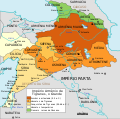
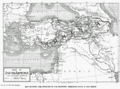
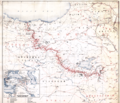
At its core the kingdom occupied the volcanic plateaus and mountain ranges of what is now eastern Turkey, the Republic of Armenia and parts of neighboring Iran and the South Caucasus. Its borders waxed and waned; under ambitious rulers the state extended westward and toward the Mediterranean, while at other times compacted around the Armenian highlands. Administratively it combined older satrapal traditions inherited from Achaemenid and local practice with Hellenistic institutions introduced after Alexander’s successors. Capitals shifted over time—well-known seats included Artaxata and later Tigranocerta, founded by one of its most famous kings.
History and major phases
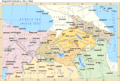
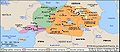
Before becoming an independent kingdom, Armenian territories were governed under larger imperial structures, often by local dynasts. In the 2nd century BC an Artaxiad dynasty consolidated power and created a more centralized monarchy. The high point of expansion came under Tigranes II (often called Tigranes the Great), who in the 1st century BC carved out an empire that reached toward the Mediterranean and incorporated client kingdoms. This expansion brought Armenia into direct conflict with Rome; following Roman intervention the kingdom became a buffer and client state alternately aligned with Rome or the Parthian/Arsacid rulers of Iran. In the 1st century AD the Arsacid house established a longer-running dynasty that presided over a realm balancing classical, Iranian and local elements until the fractures of late antiquity.
Culture, language and religion
Armenian culture in antiquity reflected a fusion of indigenous highland traditions with Hellenistic, Iranian and Near Eastern influences. The Armenian language, an independent branch of the Indo-European family, was in daily and elite use; Greek functioned as a cultural and diplomatic lingua franca in many circles. Religiously the population practiced forms of pagan worship characteristic of the region, with syncretic gods and ritual customs; Zoroastrian influence appears in royal and elite ideology. A decisive later development—after the classical period—was the official adoption of Christianity by the kingdom in the early 4th century, a change that transformed Armenian identity and institutions.
Importance and legacy
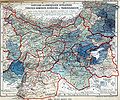
The ancient Kingdom of Armenia served as a political and cultural bridge between East and West: it mediated commerce, ideas and artistic styles between Hellenistic cities, Persian courts and Caucasian peoples. Its strategic position made it central to Roman–Persian rivalry for centuries. Architecturally and artistically, the kingdom left monuments, urban plans and an archaeological record that testify to its mixed influences. The later memory of ancient Armenian polities shaped medieval Armenian states and modern national narratives concerning historical frontiers and cultural continuity.
Distinctive features and notable facts
- Dynastic continuity: local royal houses claimed descent from earlier Armenian nobility and adapted foreign court models to native traditions.
- Geopolitical role: Armenia often acted as a buffer state between Rome and Iran, with shifting alliances and periodic occupations.
- Cultural synthesis: Hellenistic, Iranian and indigenous elements combined to create distinctive art, coinage and court ceremonial practices.
- Enduring legacy: the kingdom’s institutional and cultural developments influenced later Armenian principalities and the medieval Bagratid kingdom.
The study of the ancient Kingdom of Armenia relies on a mix of classical authors, Armenian historical tradition, epigraphic materials and archaeology. While many details remain debated among scholars, the broad outline is clear: ancient Armenia was a resilient highland kingdom whose rulers, culture and strategic location made it a significant actor in the politics of the eastern Mediterranean and Near East.
Questions and answers
Q: What was the name of the Armenian kingdom?
A: The Kingdom of Armenia.
Q: How is it sometimes referred to?
A: It is sometimes called the Armenian Empire.
Q: When did it rule in the Ancient Near East?
A: From 321 BC to 428 AD.
Q: How many royal dynasties ruled during its history?
A: Three royal dynasties ruled during its history - Orontid (321 BC–200 BC), Artaxiad (190 BC–12 AD) and Arsacid (52 AD–428 AD).
Q: Who were the first dynasty to rule in Armenia?
A: The Orontid dynasty were the first to rule in Armenia, from 321 BC to 200 BC.
Q: Who was the last dynasty to rule in Armenia?
A: The Arsacid dynasty were the last to rule in Armenia, from 52 AD to 428 AD.
Q: What language did they speak in ancient Armenia?
A: They spoke Armenian in ancient Armenia.
Related articles
Author
AlegsaOnline.com Kingdom of Armenia (Antiquity) Leandro Alegsa
URL: https://en.alegsaonline.com/art/53586