
Kármán line — boundary between Earth's atmosphere and outer space
The Kármán line is the conventional boundary of space, set at 100 km above sea level. It’s used for records, legal definitions and to distinguish aerodynamic flight from orbital flight.
Overview
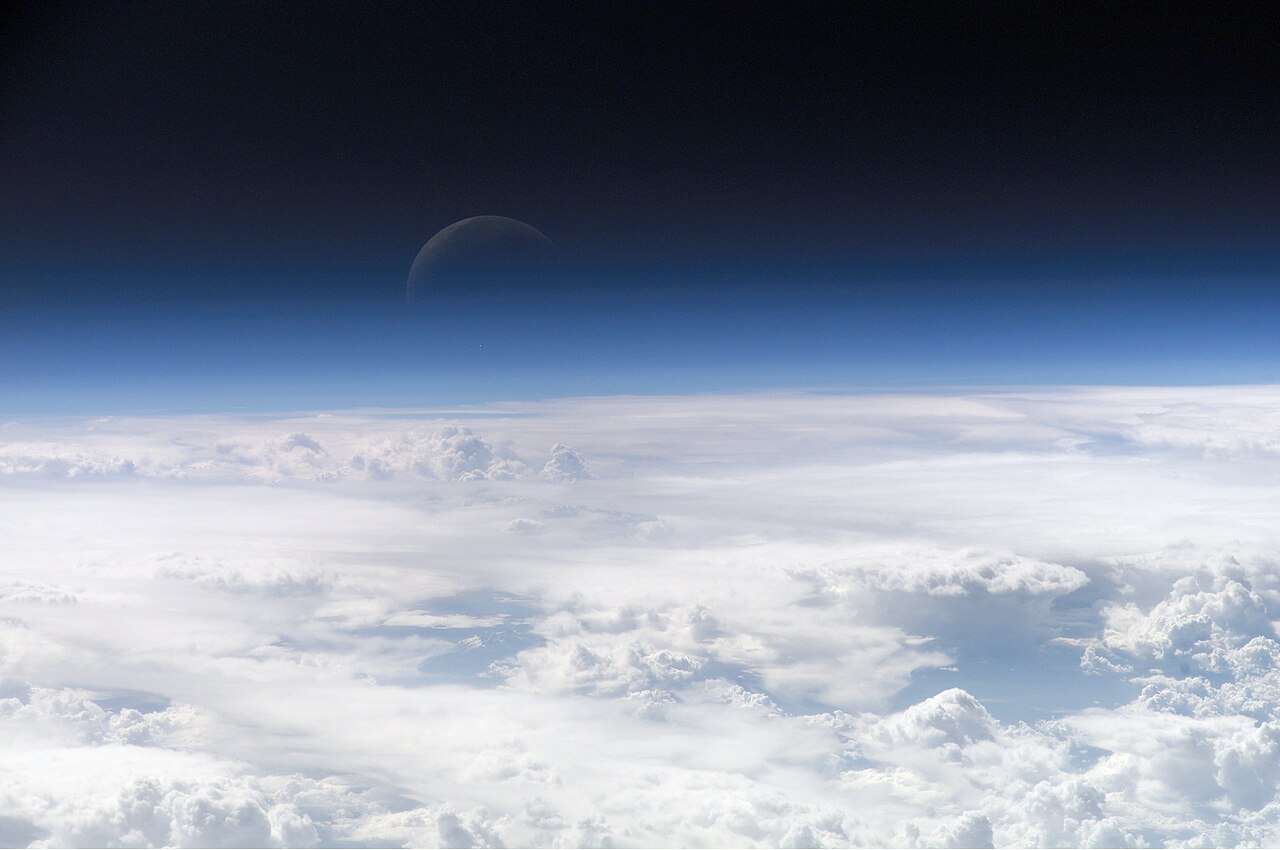
The Kármán line is the generally accepted altitude that marks the transition from Earth’s atmosphere to outer space. By international convention this boundary is placed at 100 kilometres (about 62 miles) above mean sea level. The definition is widely used for record keeping and classification of flights and spacecraft, though it remains a practical convention rather than a sharp physical frontier. See the concept of altitude and the broader idea of space for related terms.
Image gallery
7 Images



Physical basis and environment
The rationale behind the Kármán line is aerodynamic: at sufficiently high altitudes the atmosphere is so thin that conventional wings cannot produce enough lift to support an aircraft at suborbital speeds. Theodore von Kármán estimated that around this height an aircraft would need to travel at near-orbital speeds to remain aloft, making aerodynamic flight impractical. The line sits inside the upper atmosphere where the thermosphere begins to dominate the local physical conditions; temperature and solar radiation characteristics change markedly relative to lower layers. For context, the line is often described as the informal border between aeronautical and astronautical regimes.
History and naming
The name honors Theodore von Kármán, a noted Hungarian-American scientist who contributed foundational work in aeronautics and astronautics and who first articulated the idea of such a transition altitude. He considered where aerodynamic lift becomes ineffective compared with orbital dynamics, an insight that influenced later proposals for an international standard. The Fédération Aéronautique Internationale (FAI), the international body for aeronautics and astronautics records and standards, adopted the 100 km mark as the conventional line for achievements and records; see their scope on aeronautics.
Alternative definitions and legal context
Not everyone uses the same numerical boundary. Some national organizations and agencies have applied different thresholds for awarding astronaut status or for operational purposes—for example, a 50-mile (≈80 km) criterion has been used historically by some U.S. entities. International space law (including treaties and customary practice) recognizes activities in outer space but does not specify an exact vertical delimitation. Because the atmosphere thins gradually, any fixed line is partly arbitrary and serves administrative, technical and symbolic roles rather than marking a discontinuous physical change.
Uses, examples and practical importance
Designating a boundary like the Kármán line has several practical effects. It helps determine whether a flight is aeronautical or astronautical for records and awards; it guides regulatory and licensing distinctions; and it is a useful reference when discussing reentry, orbital decay, and atmospheric drag. Examples include suborbital rockets that cross the line on brief trajectories, satellites whose perigees dip into denser layers and experience significant drag, and experimental aircraft that reach altitudes near the transition. Key technical concepts related to these phenomena include aircraft performance, orbital velocity, and lift.
Notable facts and distinctions
- The Kármán line is conventionally set at 100 km but it is not a physical barrier; atmospheric density decreases continuously with height.
- Temperature and radiation characteristics change in the upper atmosphere; the line lies within the region where the thermosphere begins to dominate and where temperature profiles and solar effects differ from lower layers.
- The concept connects to von Kármán’s original calculations about flight regimes and his professional identity as a Hungarian-American engineer and physicist who studied the limits of aerodynamic flight (flight theory).
- Because definitions vary, bodies that adjudicate records or confer astronaut status may reference either the 100 km line or other thresholds; the distinction matters for historical records and legal interpretation.
For further reading, consult authoritative technical sources and the standards maintained by international organizations about atmospheric layers, spacecraft operations and aeronautical records. Many introductory explanations and the formal positions of record‑keeping organizations are accessible through official pages and technical references (altitude, space, aeronautics). Additional context about vehicle behaviour and upper-atmosphere physics is available in specialized literature on aircraft dynamics and orbital mechanics (orbital velocity).
Related articles
Author
AlegsaOnline.com Kármán line — boundary between Earth's atmosphere and outer space Leandro Alegsa
URL: https://en.alegsaonline.com/art/52374
Sources
- fai.org : "The 100 km Boundary for Astronautics"
- books.google.com : Handbook of space engineering, archaeology, and heritage