
Thermosphere — Earth's high-altitude, heat-absorbing atmospheric layer
The thermosphere is the upper atmospheric layer above the mesosphere where solar X-rays and extreme ultraviolet heat and ionize sparse gases, forming the ionosphere and affecting satellites, radio signals and space weather.
Overview
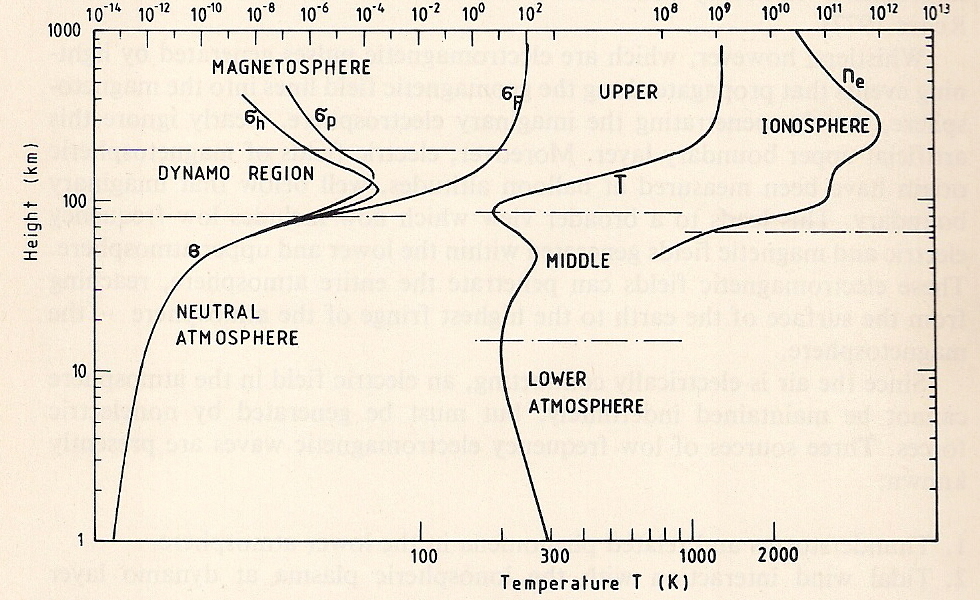
The thermosphere is the fourth major layer of Earth's atmosphere, lying above the mesosphere and below the exosphere. It grades upward into the near-vacuum of space and overlaps with the ionosphere, a region containing abundant electrically charged particles. The thermosphere absorbs energetic solar radiation and particles, producing very high average kinetic temperatures of the sparse gas, while its low density means that those temperatures do not correspond to perceptible heat.
Image gallery
7 Images




Boundaries and vertical structure
There is no single fixed altitude for the thermosphere's boundaries; the lower boundary is commonly placed near the end of the mesosphere and the top blends into the exosphere. The exact altitudes vary with solar activity, latitude and season. Within the thermosphere, the composition changes with height: lighter atomic species become more common and molecular species decline as dissociation and photoionization increase.
Energy sources and temperature
The primary energy input to the thermosphere is shortwave solar radiation, especially X-rays and extreme ultraviolet (EUV) photons, which are absorbed by individual atoms and molecules. Solar extreme ultraviolet and X-ray fluxes vary with the 11-year solar cycle and with short-term events such as solar flares, producing corresponding changes in thermospheric temperature and density. Although measured kinetic temperatures can reach many hundreds or even over a thousand degrees Celsius on active-sun days, the scarce gas provides little heat transfer to objects.
Ionization and the ionosphere
Ionizing solar radiation removes electrons from neutral atoms and molecules, creating layers of ions and free electrons known collectively as the ionosphere. These ionized regions affect the propagation of radio waves: high-frequency signals may be refracted or reflected, enabling long-distance shortwave radio communication. Historic studies named some portions of the ionosphere the Kennelly–Heaviside layer, and modern descriptions use layered designations (D, E, F regions) that vary with time of day and solar conditions. Ionizing processes and energetic particle precipitation are often grouped under the concept of ionizing radiation acting on the upper atmosphere.
Phenomena and effects
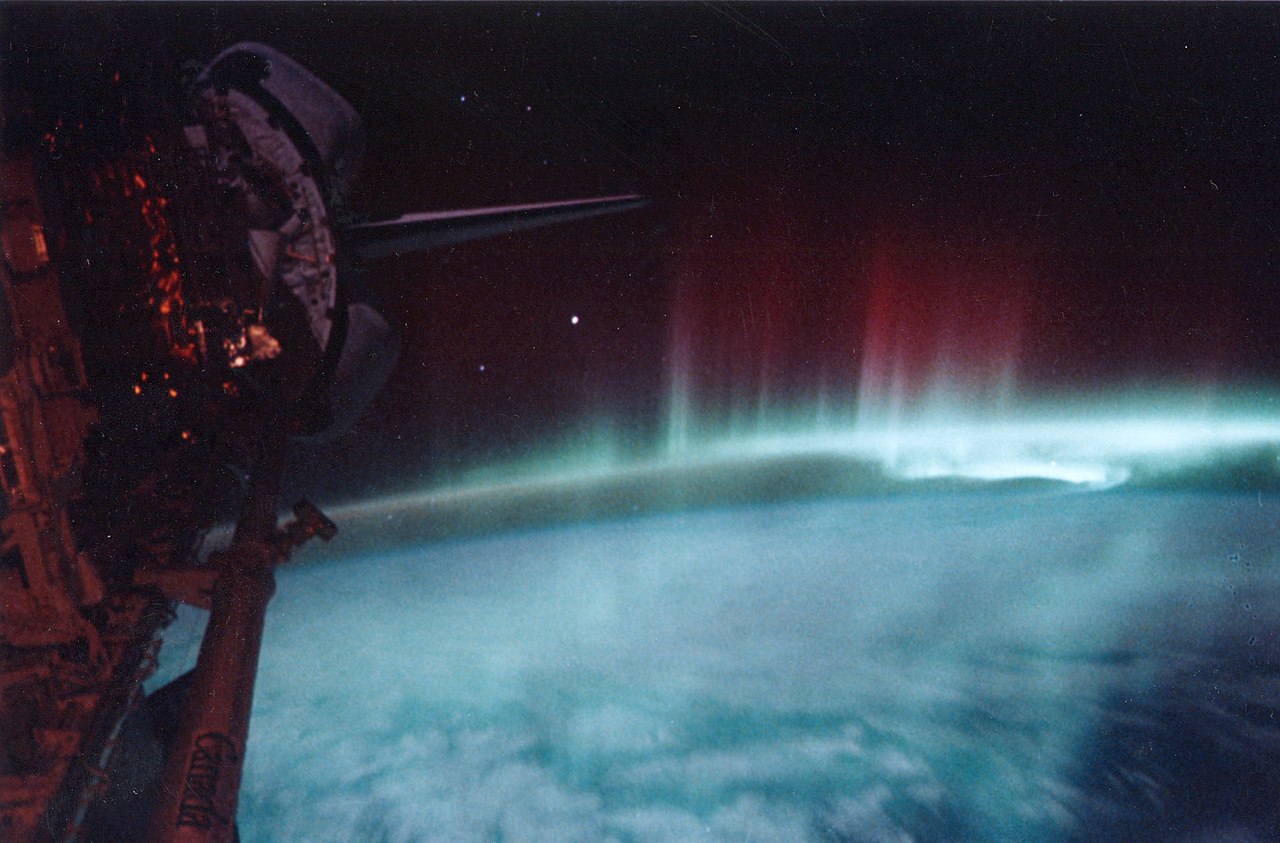
- Auroral displays occur when energetic charged particles guided by Earth's magnetic field interact with thermospheric gases, producing visible light and specific emission lines.
- Atmospheric drag in the lower thermosphere affects the orbits of low Earth orbit satellites and determines decay rates; changes in thermospheric density during geomagnetic storms can increase drag suddenly.
- Plasma irregularities and ionospheric disturbances can degrade satellite communications, navigation signals and ground-based radio links.
Measurement, modelling and operational relevance
Knowledge of the thermosphere comes from a mix of ground-based remote sensing, rocket measurements and satellite-based instruments that monitor composition, temperature, density and ionization. Models and indices of solar and geomagnetic activity are used to predict thermospheric response because it is important for mission planning, reentry calculations and radio operations. Observational programs monitor X-ray and EUV fluxes to provide inputs to operational density models and space weather forecasts.
Human and technological interactions
Low Earth orbit platforms, including the International Space Station and many communication satellites, operate within or near thermospheric altitudes and are affected by its variable environment. Engineers account for atmospheric drag, atomic oxygen corrosion and ionospheric effects on radio and navigation systems. Understanding thermospheric variability remains a practical priority for satellite operators, radio services and agencies that produce space weather guidance.
Further reading
For background on the layer below, see the mesosphere, and for the region above consult summaries of the exosphere. General discussions of radiative drivers and measurements can be found under topics such as X-rays, extreme ultraviolet, and studies of atmospheric density. For the ionized component and its effects on communications see materials on ionizing radiation, shortwave radio propagation and historical accounts of the Kennelly–Heaviside layer.
Related articles
Author
AlegsaOnline.com Thermosphere — Earth's high-altitude, heat-absorbing atmospheric layer Leandro Alegsa
URL: https://en.alegsaonline.com/art/99314