
John Moses Browning — American firearms designer
John M. Browning (1855–1926) was a prolific American designer whose innovations in pistols, rifles, shotguns and machine guns shaped civilian and military small arms worldwide.
Overview
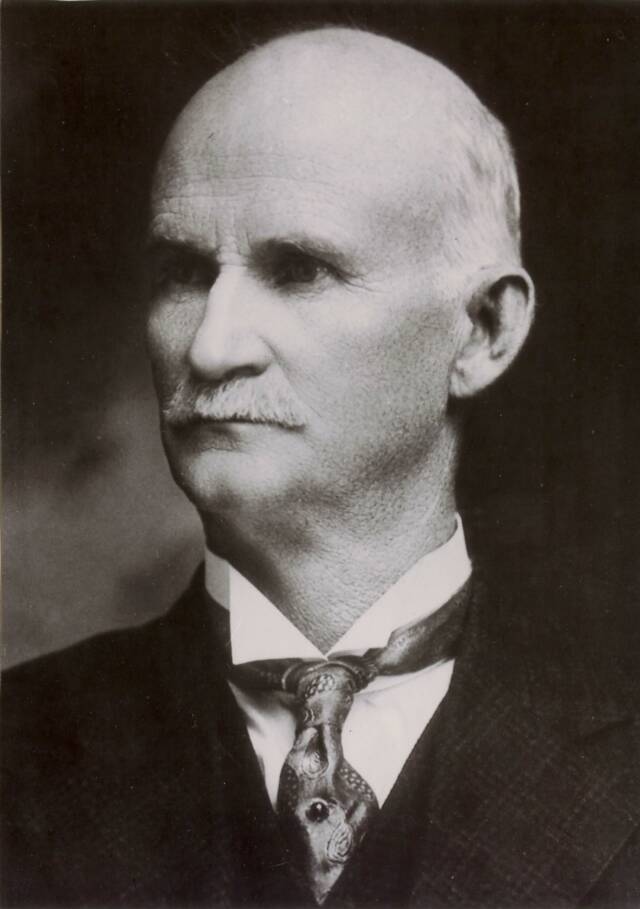
John Moses Browning (January 23, 1855 – November 26, 1926) was an influential firearms designer and inventor. Over a career that spanned the late 19th and early 20th centuries he produced numerous mechanisms and models adopted by both armed forces and civilian users. Born in Ogden, Utah, Browning combined practical shop skills with careful mechanical innovation. He died while traveling in Belgium in 1926; contemporary accounts attribute his death to heart failure.
Image gallery
5 Images



Early life and influences
Browning grew up in a frontier environment where hunting and self-reliance were common. He was raised in a household that practiced Mormon faith and was the son of a polygamous family; his mother was his father's second wife. From an early age he worked in his father's workshop, learning metalwork, woodworking and how to adapt mechanisms to practical use. That hands-on apprenticeship shaped his method of iterative testing and simple, robust design.
Career and collaborations
Browning's output included designs for shotguns, pistols, rifles and automatic weapons. He collaborated and licensed work to major manufacturers in the United States and Europe, which allowed his ideas to be produced at scale and to be refined by industrial partners. Notable early projects included repeating shotguns; later work encompassed service pistols and heavy automatic weapons. He maintained active contacts with firms that produced his designs for military and commercial markets.
Technical innovations
Browning developed and refined several important operating principles: long-recoil and short-recoil systems for semi-automatic firearms, improved locking and extraction systems, and reliable feeding mechanisms. His emphasis on reducing the number of moving parts while ensuring dependable function under adverse conditions became a hallmark of his approach and influenced generations of gun designers.
Notable models and types
- Early and influential repeating shotguns such as the Winchester Model 1887 and the Model 1897, which were widely used in both civilian life and in conflicts at the turn of the century.
- The Browning Auto-5, one of the first commercially successful long-recoil-operated semi-automatic shotguns, known for its distinctive humpback receiver.
- Pistols, most famously the M1911, a single-action, semi-automatic sidearm adopted by the U.S. military and influential worldwide.
- Automatic and crew-served weapons, including designs and contributions in the field of machine guns, such as the BAR (Browning Automatic Rifle), the heavy water-cooled M1917, the air-cooled M1919, and the enduring .50 caliber M2 machine gun.
Impact and legacy
Browning's designs had a lasting effect on small-arms development. Several of his firearms or direct descendants remained in service with the US military and with other armed forces for many decades. Beyond individual models, his insistence on reliability, simplicity and manufacturability shaped how later designers approached small-arms engineering. Museums, collectors and active shooting communities study Browning's work to understand both the mechanical innovations and the historical role of his designs.
Recognition and study
Although Browning worked largely as an independent inventor and experimental designer rather than a public figure, his influence is widely acknowledged in histories of military technology and in studies of industrial design. Technical histories, factory archives, and museum collections preserve examples of his finished weapons and working drawings; scholars and enthusiasts continue to analyze his contributions to mechanical design and mass production of reliable firearms.
For further reading and archival material consult specialized collections and institutional sources that document late 19th- and early 20th-century small-arms development. The following links reference terms and institutions associated with Browning's life and work: American, firearms, numerous, armed forces, civilian, Ogden, Utah, Belgium, heart failure, Mormon, son, workshop, second wife, Model 1887, Model 1897, Auto-5, M1911, machine guns, BAR, M1917, M1919, M2, US military.
Related articles
Author
AlegsaOnline.com John Moses Browning — American firearms designer Leandro Alegsa
URL: https://en.alegsaonline.com/art/50740
Sources
- youtube.com : Tales of the Gun: John Browning