
M1918 Browning Automatic Rifle
The M1918 Browning Automatic Rifle (BAR) is an American magazine-fed automatic rifle/light machine gun designed by John Browning. It served as a squad automatic weapon from World War I through Korea.
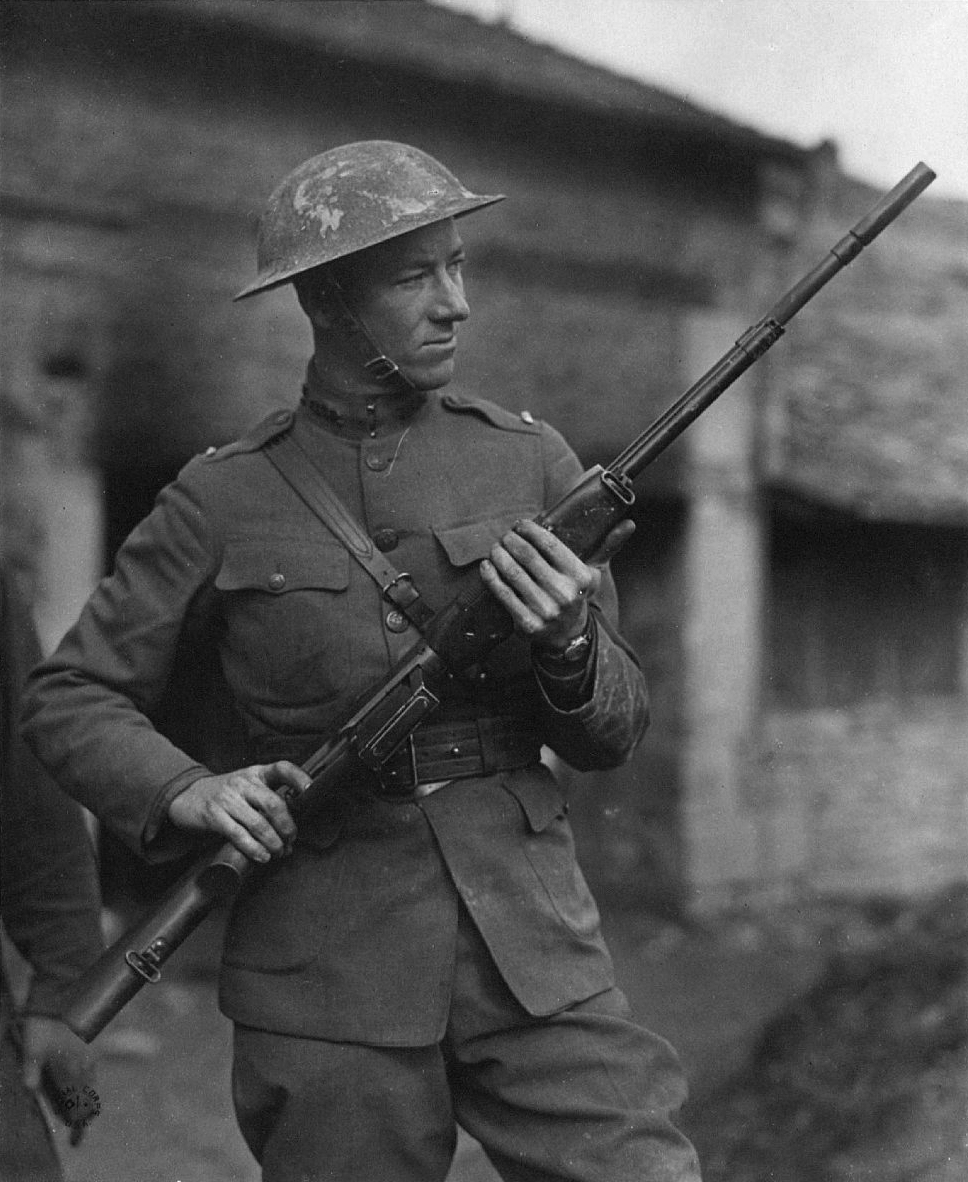
The M1918 Browning Automatic Rifle (commonly called the BAR) is a U.S. small-arms design that blended elements of an automatic rifle and a light machine gun. Conceived by firearms designer John M. Browning in 1917 and adopted in 1918, the BAR was intended to give infantry units a portable source of sustained fire. It remained a prominent squad automatic weapon through the first half of the 20th century and served in multiple conflicts.
Image gallery
10 Images



Overview and role
The BAR is best described as a shoulder‑fired, magazine‑fed automatic rifle that could also be employed in a light machine‑gun role. It fired full‑power service cartridges (the U.S. models used the .30‑06 Springfield round) from a detachable box magazine and was capable of fully automatic or, in later models, selective fire. Designed to be carried and advanced with the infantry, its tactical niche was to provide mobile suppressive fire for small units.
Design features and variants
- Action and feeding: gas‑operated, long‑stroke system feeding from a 20‑round box magazine.
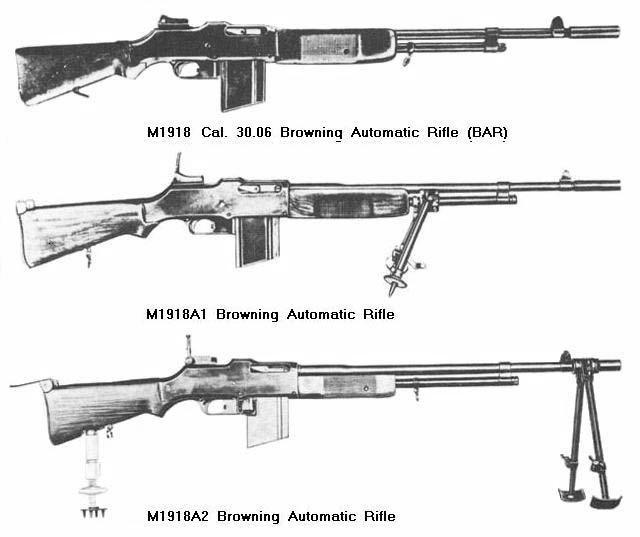
- Portability: intended as a man‑carried automatic weapon; later service models added a bipod and fire‑rate controls to improve sustained fire from fixed positions.
- Variants: the basic M1918 evolved into upgraded patterns (including the M1918A2) with altered rates of fire, improved sights, and other refinements. Several foreign and specialized versions were also produced or copied.
History and development
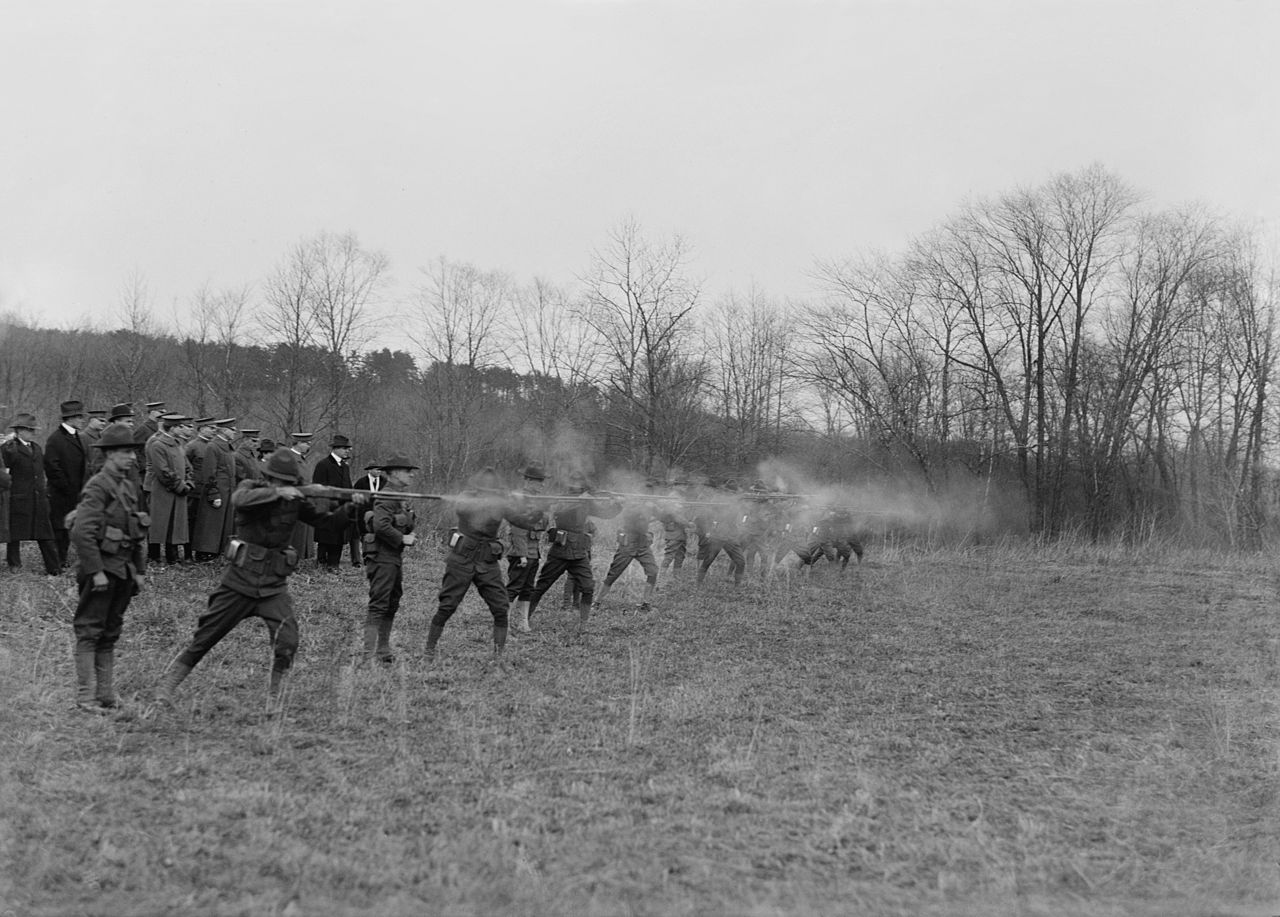
Browning designed the weapon late in World War I to replace older, heavier squad support weapons and to enable "walking fire" — advancing troops firing from the hip or the shoulder. That concept was motivated by trench‑warfare tactics of the time, though in practice units most often employed the BAR from supported positions using a bipod or rest to increase accuracy and control. The BAR saw operational use beginning in World War I and became a standard automatic weapon in later conflicts.
Service and tactical use
Commanders used the BAR in flexible roles: as a mobile suppressive tool during assaults, as defense against counterattacks, and to add automatic fire to rifle squads without the logistics burden of heavier machine guns. Its portability allowed a single soldier to bring sustained fire to bear, but the relatively small magazine and the heat and recoil generated by prolonged bursts limited its effectiveness as a continuous-fire weapon compared with belt‑fed machine guns. During the mid‑20th century it saw extensive combat use in World War II and the Korean War before being superseded by newer squad automatic weapons.
Notable distinctions and legacy
The BAR occupies a transitional place between World War I era automatic rifles and later general‑purpose machine guns. Its combination of portability and full‑power cartridge helped define the concept of a squad‑level automatic weapon. Collectors and historians note its iconic appearance and its influence on subsequent infantry weapon design. For more general reading on related categories, see discussions of automatic rifles, automatic rifles and light support weapons, and light machine guns. Background on weapons that preceded or inspired its adoption is available under topics like the Chauchat and early machine gun developments, while operational doctrine for mobile fire is sometimes described as walking fire. Technical or restoration resources and parts references may be found at specialized sites (parts and manuals).
Questions and answers
Q: What is the Browning Automatic Rifle (BAR)?
A: The Browning Automatic Rifle (BAR) was a group of American automatic rifles and light machine guns.
Q: Who designed the M1918 BAR?
A: The M1918 BAR was designed by John Browning in 1917.
Q: What weapons did the BAR replace?
A: The BAR replaced the French Chauchat and the M1909 Benet-Mercie machine guns.
Q: How was it intended to be used?
A: It was intended to be carried by soldiers that were moving forward, put over the shoulder on a strap and fired from the hip, which was called "walking fire". This technique was thought to be needed for trench warfare.
Q: How did it usually end up being used?
A: Usually, however, it ended up being used as a light machine gun and fired from a bipod.
Q: What countries used this weapon?
A: The BAR was used by the United States and several other countries.
Q: Was walking fire effective during trench warfare?
A: Walking fire was thought to be an effective technique during trench warfare, but usually it ended up being used as a light machine gun instead.
Related articles
Author
AlegsaOnline.com M1918 Browning Automatic Rifle Leandro Alegsa
URL: https://en.alegsaonline.com/art/60211