
John N. Mather: Contributions to Singularity Theory and Hamiltonian Dynamics
Biography and overview of John N. Mather, an American mathematician noted for work in singularity theory, Hamiltonian mechanics and dynamical systems, with career highlights and legacy.
John N. Mather (June 9, 1942 – January 28, 2017) was an American mathematician whose research influenced several areas of modern dynamical systems and singularity theory. He spent most of his career on the faculty at Princeton University and is widely cited for introducing techniques and concepts that connect variational methods, topology and Hamiltonian mechanics.
Image gallery
1 Image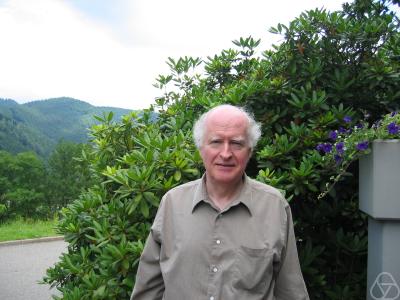
Overview of work
Mather's research addressed deep questions about the stability and structure of smooth maps and the long-term behavior of conservative dynamical systems. He developed frameworks that made it possible to analyze invariant sets, action-minimizing orbits and measures in Lagrangian and Hamiltonian systems. His name is commonly associated with a body of results often referred to in the literature as Mather theory, which relates to what is sometimes called Aubry–Mather theory in twist maps and variational dynamics.
Main themes and contributions
- Singularity theory and stability: foundational results clarifying when smooth mappings are structurally stable under perturbations.
- Hamiltonian and Lagrangian dynamics: variational approaches to invariant measures and minimizing orbits that reveal global structures in phase space.
- Connections between topology and dynamics: use of topological and measure-theoretic tools to study long-term motion in conservative systems.
Mather's papers combined technical precision with conceptual innovation, producing tools used by researchers studying classical mechanics, celestial mechanics and modern ergodic theory. His methods helped bridge pure mathematics and applications in physics by showing how minimization principles determine observable orbits.
Education and career
Born in Los Angeles, California, Mather studied mathematics at leading American institutions. He pursued advanced studies at both Princeton and Harvard, later returning to Princeton as a member of the faculty where he carried out much of his research and mentoring. His professional life was closely associated with the mathematical community at Princeton and with collaborations across institutions.
Legacy and significance
John N. Mather left a lasting impact on the theory of dynamical systems. Many contemporary approaches to Hamiltonian chaos, action-minimizing sets and the persistence of invariant structures trace back to ideas he introduced or developed. He is remembered not only for specific theorems but for shaping how mathematicians think about the interplay between variational methods and dynamics.
For further reading and archival material, see resources about his life, collected papers and expository accounts of his theories. His birthplace and academic affiliations are often cited in biographical notes: Los Angeles, California, educational links at Princeton and Harvard, and longstanding work at Princeton University. Biographical summaries and memorials appear in professional newsletters and notices (mathematician profile, biographical note), and many surveys discuss his role in singularity theory and Hamiltonian mechanics. His death was reported from Princeton, New Jersey on January 28, 2017, at age 74 (obituary references).
Related articles
Author
AlegsaOnline.com John N. Mather: Contributions to Singularity Theory and Hamiltonian Dynamics Leandro Alegsa
URL: https://en.alegsaonline.com/art/50745
Sources
- commons.wikimedia.org : John N. Mather
- math.princeton.edu : "The Department Mourns Professor John N. Mather *67, 1942–2016"