
Ion thruster: electric propulsion for spacecraft
An ion thruster is a form of electric propulsion that accelerates charged particles to produce thrust. It provides low continuous thrust with high fuel efficiency, making it useful for long-duration space missions.
Overview
An ion thruster is a class of electric propulsion used on spacecraft that creates thrust by accelerating ions—atoms or molecules that carry an electric charge—and expelling them at high velocity. Unlike chemical rockets that release large amounts of energy quickly, ion thrusters produce a small continuous force over long periods. Their chief advantage is high propellant efficiency, commonly expressed as specific impulse, which makes them well suited for missions where conserving mass and sustaining long burns are important.
Image gallery
8 Images



How it works and main types
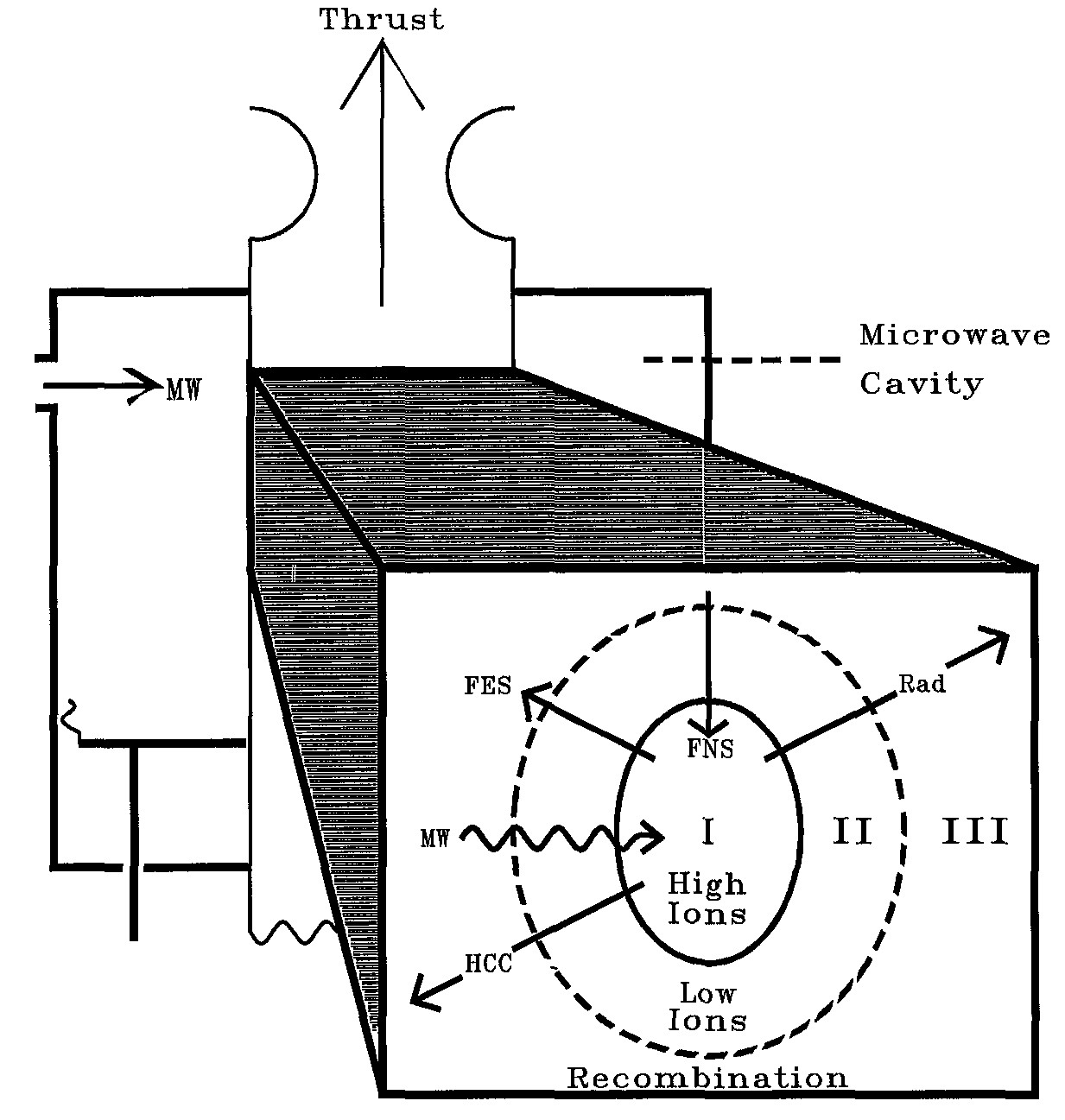
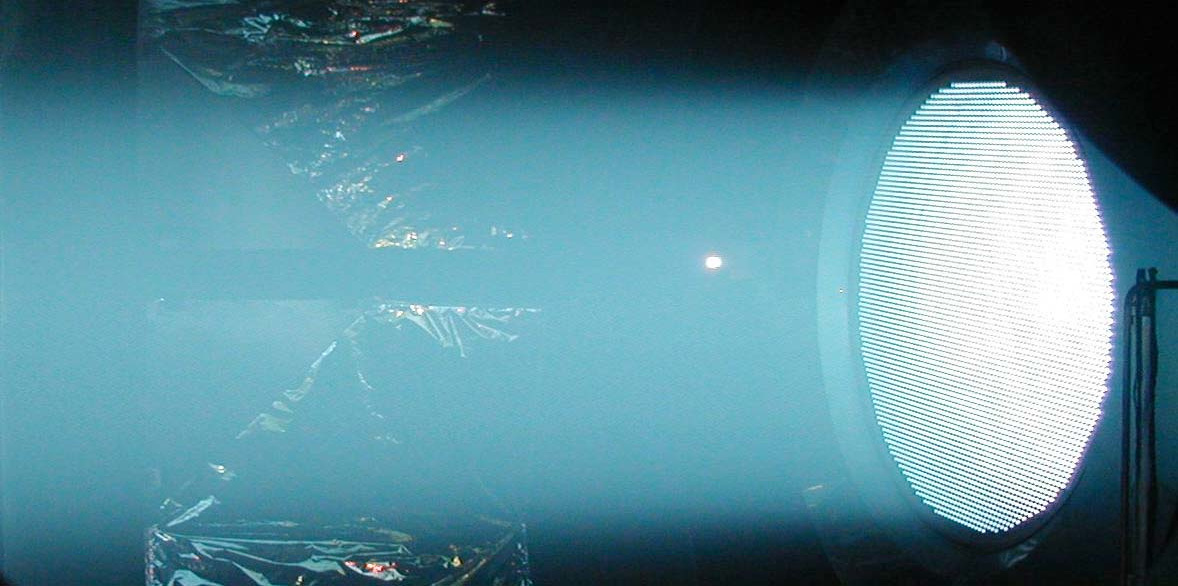
Operation begins with a neutral gas propellant (often xenon in modern designs) that is ionized by electron bombardment or other ionization methods. The positively charged ions are then accelerated by strong electric fields formed between grids or by magnetically influenced electric fields. The two major practical families are:
- Gridded ion thrusters — use grids at different potentials to pull ions through and accelerate them to high exhaust velocities.
- Hall-effect thrusters — confine electrons with a magnetic field to create an electrostatic field that accelerates ions; they tend to be simpler and more compact for certain power levels.
All designs require a source of electrical power (solar arrays, radioisotope generators, or compact reactors) and systems to neutralize the outgoing ion beam so the spacecraft does not acquire a net electrical charge.
History and development
Ideas for electrostatic propulsion date back to early 20th-century work on charged-particle acceleration, and laboratory devices were developed in the mid-1900s. Practical flight applications matured in the late 20th and early 21st centuries as power generation, propellant handling, and materials technology improved. These improvements allowed ion systems to move beyond experimental demonstrations to routine use on communications satellites and deep-space probes.
Uses, examples, and importance
Ion thrusters are primarily used where efficient long-duration thrusting outweighs the need for high instantaneous acceleration. Typical applications include stationkeeping for satellites, orbit raising for geostationary platforms, and deep-space propulsion for interplanetary probes. Notable missions have demonstrated their capabilities: for example, the NASA Dawn spacecraft used ion propulsion to visit the asteroid Vesta and then the dwarf planet Ceres, performing long continuous thrusting maneuvers that would have been impractical with chemical propulsion alone.
Advantages, limitations, and operational considerations
Advantages include much higher specific impulse than chemical rockets and very efficient use of propellant, enabling significant delta-v with relatively small propellant mass. Limitations include low thrust levels, making them unsuitable for launches from planetary surfaces or for rapid maneuvering, and dependence on substantial electrical power. Practical constraints also include propellant choice, erosion of grids or channel walls over long operations, and the need for careful thermal and power management.
Further reading and resources
For technical references, mission reports, and manufacturer information, see the list below. These links are provided as placeholders for further exploration of design principles, flight heritage, and current research:
- Electric propulsion overview
- Ionization methods and electron sources
- Magnetic confinement and Hall-effect thrusters
- Specific impulse and performance metrics
- Role of ion propulsion in space missions
- Atmospheric limitations and launch requirements
- Power systems for electric propulsion
- Nuclear power options for deep-space thrusters
- NASA mission archives
- Case study: Dawn spacecraft
- Dawn mission technical summary
- Vesta encounter details
- Scientific findings at Vesta
- Ceres encounter details
- Scientific findings at Ceres
Related articles
Author
AlegsaOnline.com Ion thruster: electric propulsion for spacecraft Leandro Alegsa
URL: https://en.alegsaonline.com/art/47977