
Dawn (spacecraft)
NASA's Dawn was a pioneering unmanned mission that used ion propulsion to orbit and study the protoplanets Vesta and Ceres in the main asteroid belt.
Dawn was an unmanned NASA mission designed to investigate two of the largest bodies in the main asteroid belt. Built to travel farther and change orbits more flexibly than conventional chemical spacecraft, Dawn used an innovative ion propulsion system to enter orbit around both the asteroid Vesta and the dwarf planet Ceres. The mission is notable for being the first spacecraft to orbit two separate extraterrestrial bodies and for returning high-resolution data about protoplanetary processes.
Image gallery
10 Images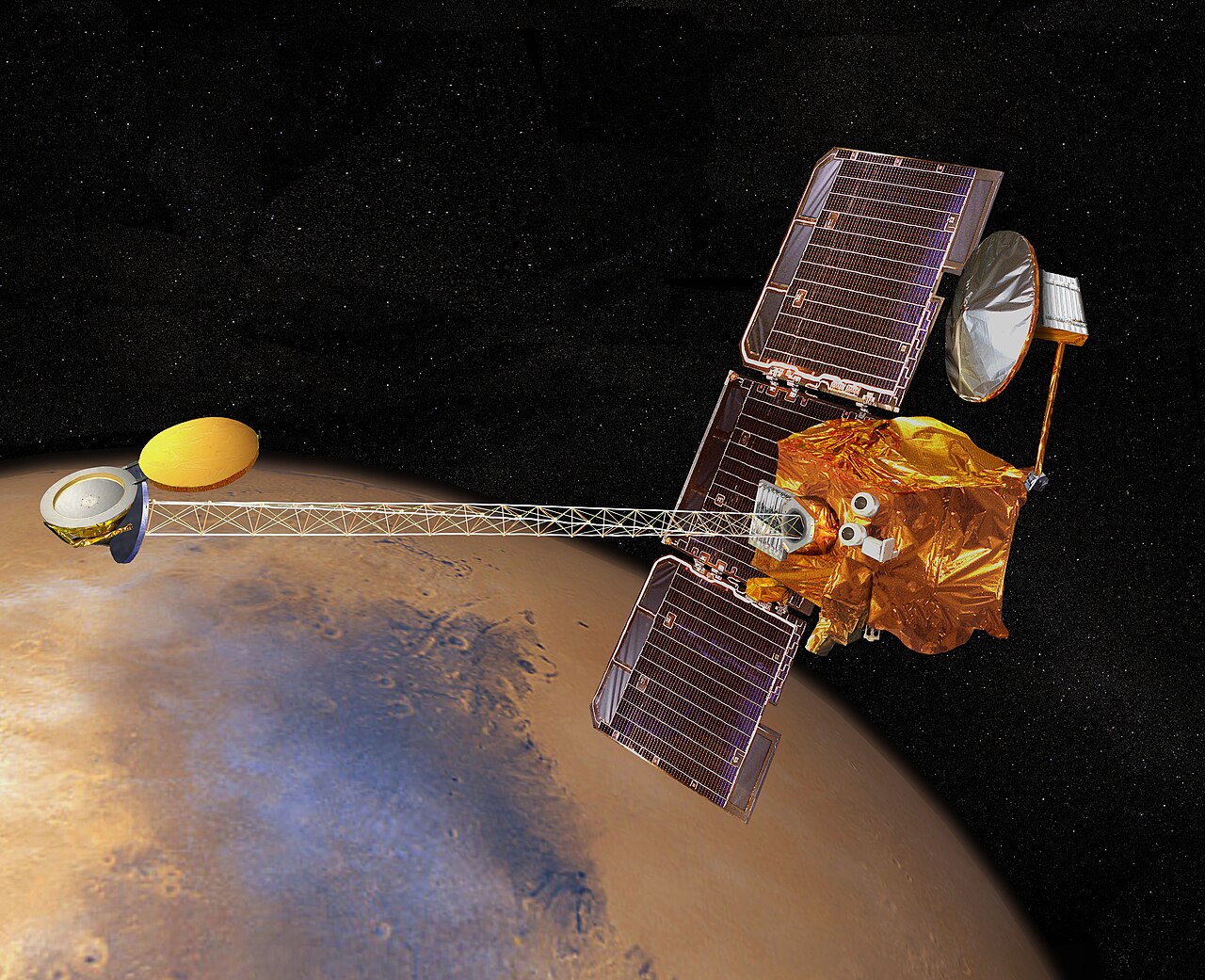




Design and instruments
Dawn's propulsion relied on electrically accelerated xenon ions, providing high efficiency and enabling extended maneuvering. The spacecraft carried a compact science payload tailored to geology and composition studies: a pair of framing cameras for detailed imaging, a visible and infrared spectrometer for mineral mapping, and a gamma ray and neutron detector to measure elemental abundances. These instruments allowed scientists to probe surface composition, internal structure, and signs of water or past geologic activity.
Mission timeline
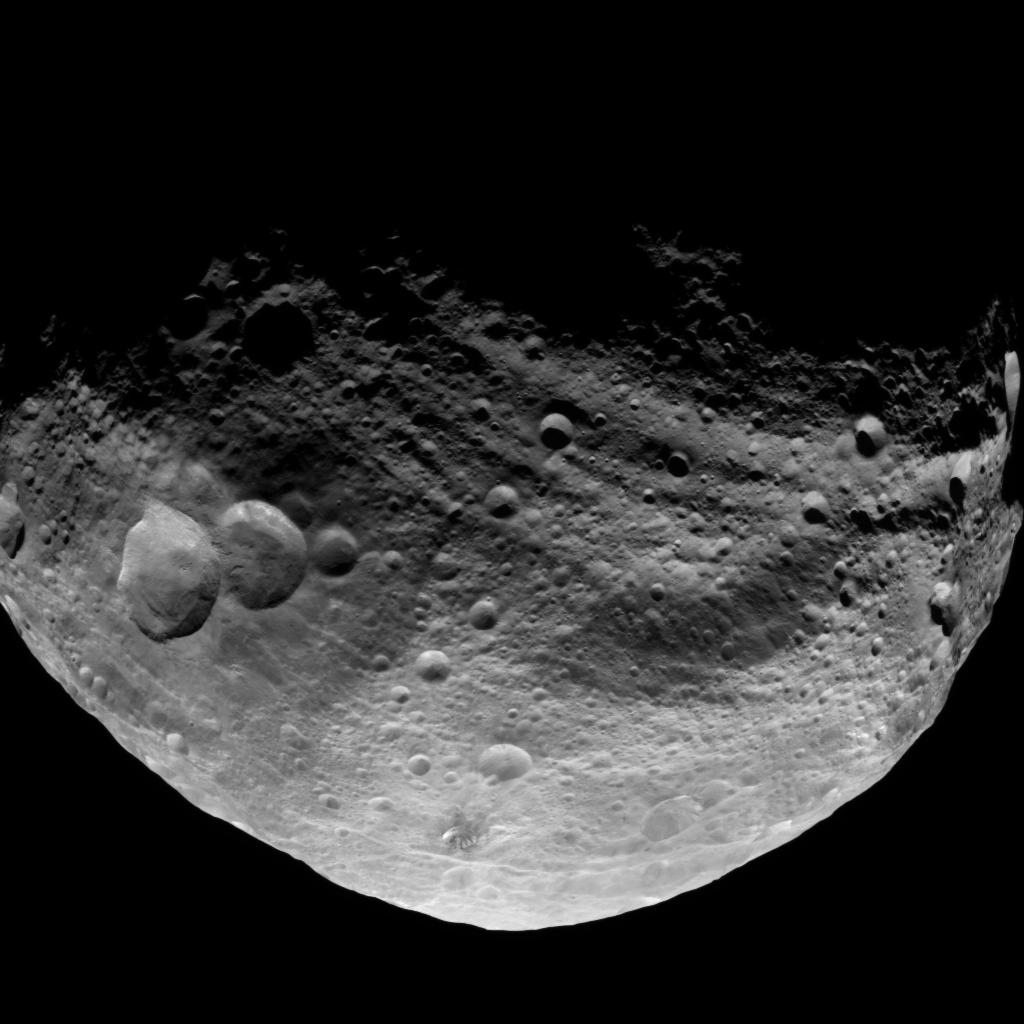
The mission launched on September 27, 2007 from Cape Canaveral on a Delta II rocket and performed a gravity-assist flyby of Mars in early 2009 to refine its trajectory. After that assist, Dawn cruised to the asteroid belt and entered orbit around Vesta in mid-2011. It mapped Vesta's diverse terrains and large impact basins before departing in 2012 to begin the transfer toward Ceres. Dawn achieved orbit around Ceres in March 2015 and studied its unusual bright surface features and signs of volatile-driven geology.
Key findings and scientific importance
- Dawn confirmed that Vesta is a differentiated protoplanet with a layered interior and basaltic surface, evidence of early melting and magmatic activity.
- At Ceres, Dawn discovered highly reflective "bright spots" in several craters that were linked to salt deposits and localized concentrations of ice and salts—indications of subsurface brines or past cryovolcanic activity.
- Measurements of elemental composition and gravity provided insights into the formation and evolution of early solar system bodies and the role of water in small-body geology.
Legacy and distinctions
Dawn demonstrated the practical advantages of ion propulsion for deep-space missions: efficient fuel usage, long-duration thrust, and the ability to enter and leave multiple orbits. It is celebrated as the first mission to orbit two separate extraterrestrial targets and for transforming our understanding of how small planets and dwarf planets evolve. The mission concluded after extended operations when consumables were exhausted, leaving a lasting dataset that continues to inform models of planetesimal history and the distribution of volatiles in the inner solar system.
Additional context and resources
For further technical details, mission archives, and imagery, consult the mission pages and scientific summaries maintained by mission partners and research institutions. Background material about the targets and the large-scale environment is also available through resources that cover the asteroid belt, in-depth pages about Vesta and Ceres, and primers on orbital mechanics and gravity-assist techniques. Additional outreach and educational material can be found on affiliated institutional sites and archived news releases (mission overview).
Researchers and educators often reference Dawn when discussing small-body exploration, ion propulsion applications, and the transition between planet formation theories and observable surface geology. The mission remains a key case study for planning future missions to multiple targets using electric propulsion and for exploring water-rich bodies in the inner solar system.
Questions and answers
Q: What is Dawn?
A: Dawn is an unmanned NASA space probe.
Q: What did Dawn orbit and study?
A: Dawn orbited and studied the asteroid Vesta and is currently orbiting the dwarf planet Ceres.
Q: Where is Vesta and Ceres located?
A: Both Vesta and Ceres are located in the asteroid belt.
Q: What is significant about Dawn's visit to Ceres and Vesta?
A: Dawn is the first spacecraft to visit Ceres and the first to visit Vesta. It is also the first spacecraft to orbit two extraterrestrial bodies.
Q: When was Dawn launched?
A: Dawn was launched on September 27, 2007, at Cape Canaveral Air Force Station aboard a Delta 7925-H rocket.
Q: Did Dawn receive any help from Mars during its journey?
A: Yes, Dawn travelled to Mars for a gravity assist, making its closest approach to Mars in February 2009.
Q: When did Dawn begin to orbit Ceres?
A: Dawn began to orbit Ceres on March 6, 2015.
Related articles
Author
AlegsaOnline.com Dawn (spacecraft) Leandro Alegsa
URL: https://en.alegsaonline.com/art/25863
Sources
- dawn.jpl.nasa.gov : "Dawn at Ceres"
- nssdc.gsfc.nasa.gov : "Dawn"
- nasa.gov : "NASA's Dawn Spacecraft Begins Science Orbits of Vesta"
- jpl.nasa.gov : "Dawn at Ceres"
- nasa.gov : "Dawn Launch"
- news.nationalgeographic.com : "Week in Photos: Dawn Lifts Off, Pike Poisoned, More"
- nasa.gov : "NASA Spacecraft Becomes First to Orbit a Dwarf Planet"