
Atmosphere of Earth: composition, structure, functions, and origins
A concise overview of Earth's atmosphere: its composition, layered structure, protective roles, origin and evolution, and notable boundaries and particulates.
The atmosphere is the envelope of gases that surrounds Earth and makes the planet habitable. It is retained by the planet's gravity and grades gradually into outer space rather than ending at a sharply defined edge. The gases in the atmosphere include major components such as nitrogen and oxygen, plus smaller but important constituents like argon, carbon dioxide and variable amounts of water vapor. Trace gases, suspended particles and electromagnetic interactions together define the atmosphere's physical and chemical behavior.
Image gallery
10 Images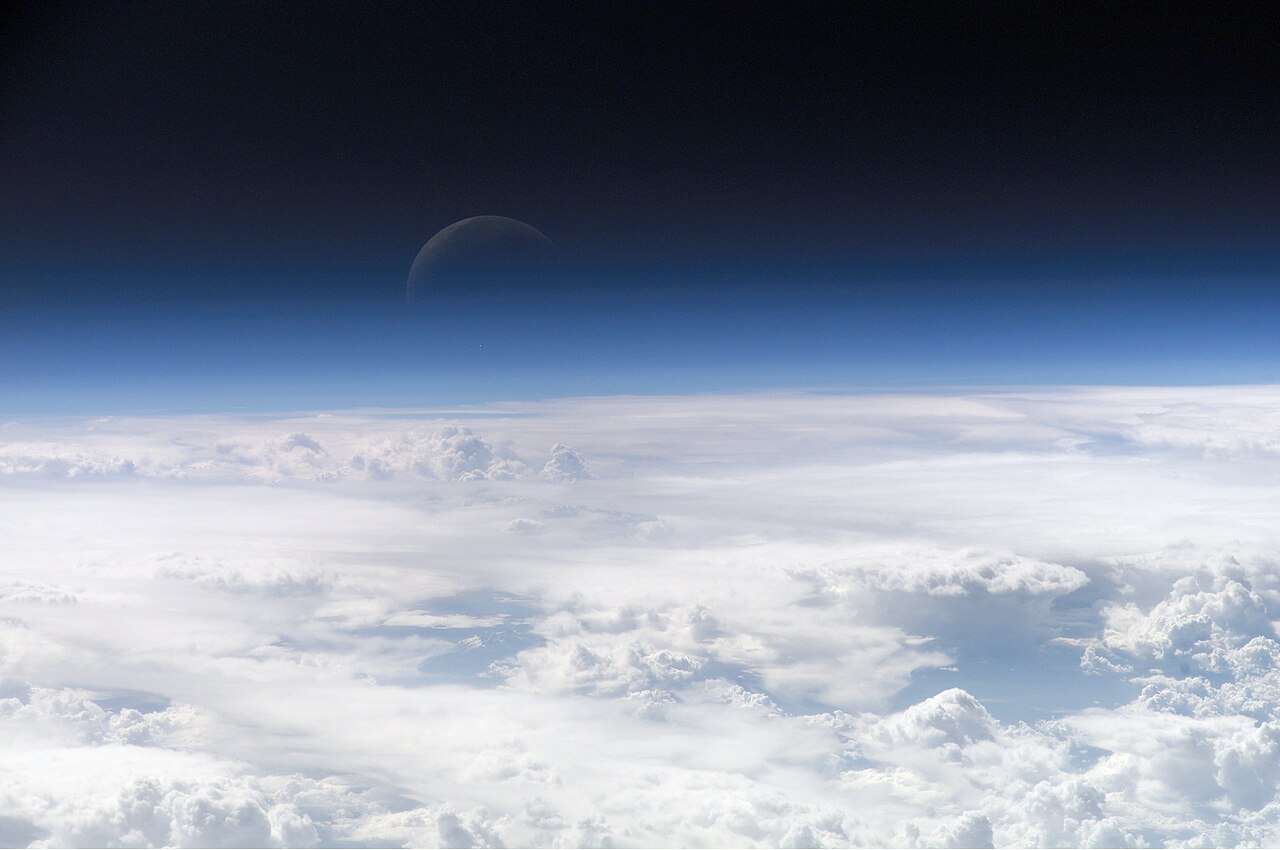





Composition and vertical layers
By volume the present atmosphere is roughly three quarters nitrogen and about one quarter oxygen, with the remainder consisting of argon, carbon dioxide and other gases. The mix changes slightly with altitude and local weather. Scientists describe the atmosphere in layers defined by how temperature changes with height and by their physical properties:
- Troposphere – the lowest layer where weather occurs and where most living processes and aerosols are found.
- Stratosphere – above the troposphere; contains the ozone layer that absorbs harmful ultraviolet radiation.
- Mesosphere – a colder, less dense region where meteors often burn up.
- Thermosphere – a high-altitude zone of very thin air and high energy particles; auroras occur here.
- Exosphere – the outermost region where gas molecules can escape into space.
Origins and development
The contemporary atmosphere evolved through geological time. The early solar system assembled from material left over from the formation of the Sun, whose composition is dominated by light elements such as hydrogen and helium. Heavier elements that form terrestrial planets were produced in earlier stellar processes, including supernovae, and were incorporated into planetary building blocks. Earth acquired volatile compounds and gases through accretion, volcanic outgassing and impacts; a major collision that produced the Moon also influenced the early atmosphere. Over billions of years, biological activity — especially photosynthesis — reshaped the atmospheric composition and increased the abundance of oxygen, enabling the rise of complex life.
Functions and importance
The atmosphere performs several essential roles. It moderates surface temperatures by redistributing heat, making our days cooler and our nights warmer than they would otherwise be. It shields organisms from harmful solar radiation: the ozone layer absorbs ultraviolet light and other layers attenuate charged particles. The atmosphere also sustains the water cycle, transports nutrients and supports weather systems that influence ecosystems and human activity. Greenhouse gases such as carbon dioxide and water vapor trap outgoing infrared energy and set planetary climate; changes in their concentrations lead to climate variability and long-term shifts.
Particles, clouds and visibility
Besides gases, the atmosphere contains solid and liquid particles—collectively called particulates—including volcanic ash, mineral dust, sea salt, pollen and human-made aerosols. These tiny materials act as nuclei for condensation and are critical to forming clouds and fog. Particle concentrations influence air quality, solar radiation reaching the surface, and even precipitation patterns.
Boundaries, measurements and notable facts
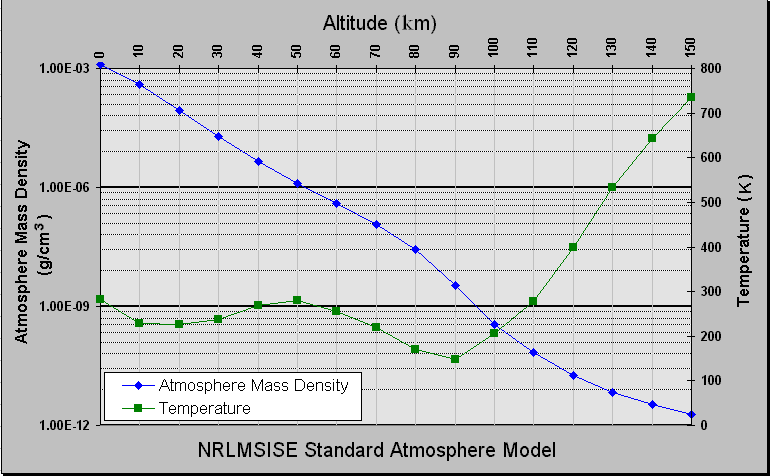
There is no single altitude that defines the end of the atmosphere; instead, density declines progressively with height. For practical and legal purposes several markers are used: the Kármán line is one commonly cited boundary between airspace and space, while for magnetospheric studies the edge of the magnetosphere may be relevant. Most of the atmospheric mass is concentrated near the surface—about three quarters lies within roughly 11 kilometres of altitude—so the layers close to the ground are especially important to weather, aviation and human life. The gradual transition into outer space means that defining a formal border is context-dependent. Collectively, these features make Earth’s atmosphere a dynamic, life-sustaining system shaped by physical, chemical and biological processes.
Further reading and resources: Earth overview, Sun and solar influence, Hydrogen in the universe, Helium facts, Supernovae and nucleosynthesis, Moon formation theories, Gases of the atmosphere, Gravity and retention, Nitrogen cycle, Oxygen and respiration, Argon properties, Carbon dioxide and climate, Water vapor role, Origins of life, Absorption processes, Ultraviolet radiation, Diurnal temperature effects, Nocturnal cooling, Particulate matter, Volcanic ash impact, Atmospheric dust, Cloud formation, Fog formation, Defining boundaries, Outer space context, Kármán line details, Magnetosphere, Vertical distribution.
Questions and answers
Q: What is the Sun made of?
A: The Sun is composed of hydrogen and a small amount of helium.
Q: Where did the materials that make up planets and their satellites come from?
A: The materials that make up planets and their satellites came from earlier supernovae explosions.
Q: How does the atmosphere protect life on Earth?
A: The atmosphere protects life on Earth by absorbing ultraviolet rays from the Sun, making days cooler and nights warmer.
Q: What are solid particulates in relation to the atmosphere?
A: Solid particulates, such as ash, dust, volcanic ash, etc., are small parts of atmosphere which are important in making clouds and fog.
Q: Is there a clear border between the atmosphere and outer space?
A: No, there is no clear border between the atmosphere and outer space though the Kármán line is sometimes treated as a border. Even higher, for some purposes the edge of the magnetosphere is treated as a border.
Q: How much of Earth's atmosphere is within 11 kilometres (6.8 miles) of its surface?
A: 75% of Earth's atmosphere is within 11 kilometres (6.8 miles) of its surface.
Q: When was life on Earth believed to have begun?
A: Life on Earth began after an impact with an early Earth formed our Moon; therefore it began after this event occurred.
Related articles
Author
AlegsaOnline.com Atmosphere of Earth: composition, structure, functions, and origins Leandro Alegsa
URL: https://en.alegsaonline.com/art/7030
Sources
- ncbi.nlm.nih.gov : "Earth's Earliest Atmospheres"
- doi.org : 10.1101/cshperspect.a004895
- pubmed.ncbi.nlm.nih.gov : 20573713
- rstb.royalsocietypublishing.org : rstb.royalsocietypublishing.org/content/361/1470/903.full.pdf