
4 Vesta — a large, bright protoplanet of the main asteroid belt
4 Vesta is the second most massive object in the asteroid belt, a differentiated, basaltic body visible at times to the naked eye. It was studied up close by NASA's Dawn mission and linked to HED meteorites.
Overview
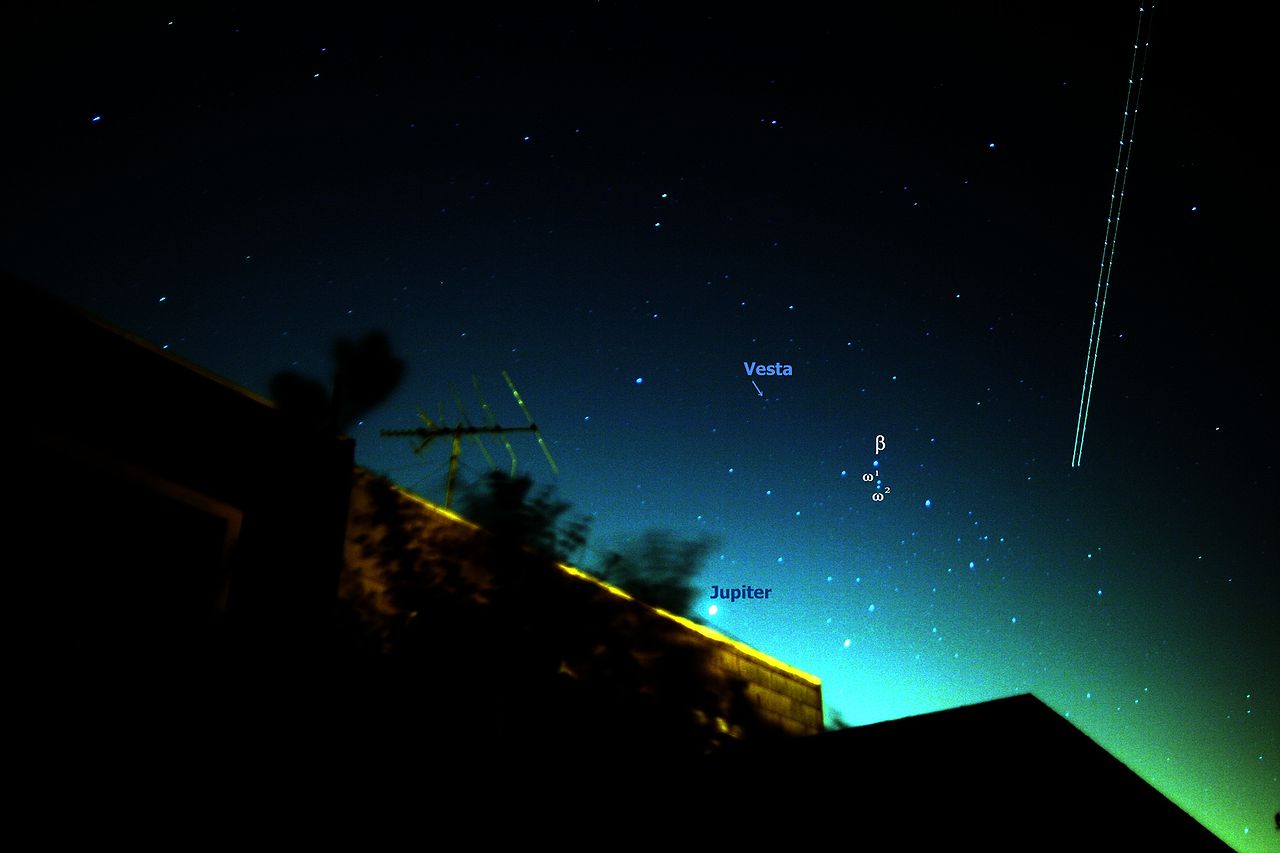
4 Vesta is a prominent object in the inner solar system's asteroid population and is commonly regarded as a large protoplanet. It is the second most massive body in the main belt and has an astronomical presence out of proportion to its modest size. Its bright, rocky surface and relatively high albedo make Vesta the brightest asteroid, and under favorable conditions it can be seen with the naked eye from Earth. The traditional astronomical symbol for Vesta is shown here: 
Image gallery
10 Images


Physical characteristics
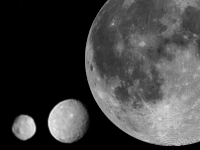
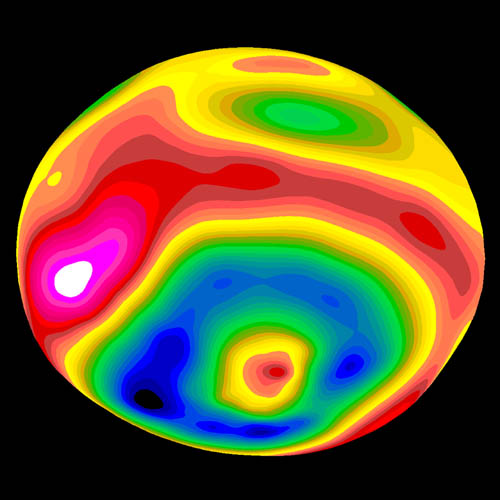
Vesta's average diameter is roughly about 530 km (around 330 miles), making it far smaller than the major planets but large enough for internal differentiation. Geological evidence indicates a layered structure with a metallic core, a rocky mantle and a basaltic crust produced by ancient volcanic processes. Typical surface features include a varied mix of bright and dark regions, steep scarps, ridges and large impact basins.
- Rotation period: a fast spin of a few hours produces pronounced day–night temperature contrasts.
- Composition: dominated by basaltic rock and minerals that match a class of meteorites found on Earth.
- Surface: shows both ancient, heavily cratered terrain and younger, relatively smooth basaltic areas.
History and exploration
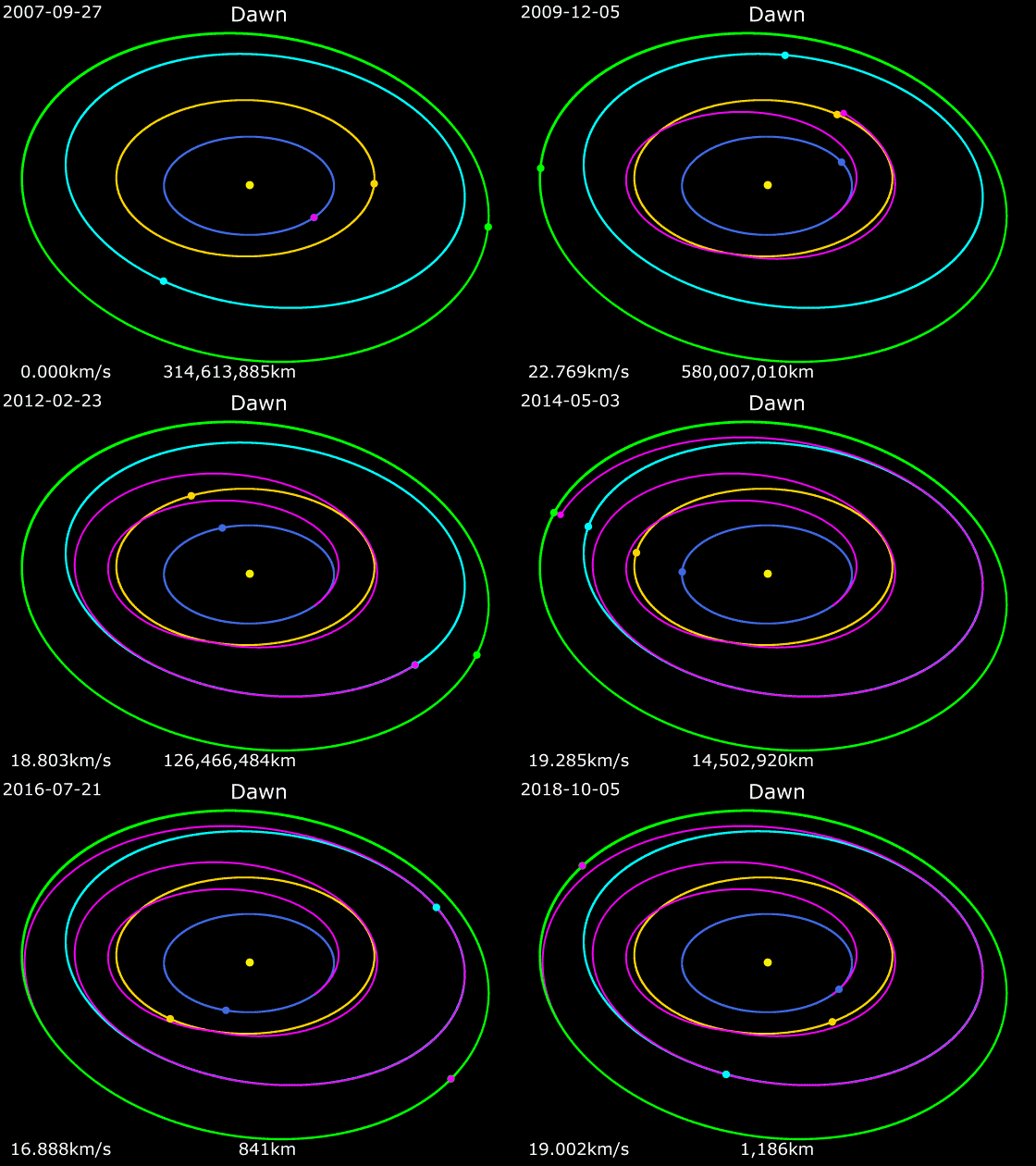
Discovered in the early 19th century, Vesta was numbered 4 and has been observed telescopically for more than two centuries. In the 21st century it became the first large asteroid visited by a dedicated spacecraft when NASA's Dawn probe arrived to map its surface and gravity field in detail before continuing to Ceres. The Dawn encounter provided high-resolution imagery and compositional data that transformed understanding of Vesta's geology and evolution.
Scientific importance and connections to meteorites
Vesta is uniquely important because it provides a preserved record of early planetary differentiation. Many basaltic meteorites recovered on Earth, known as HED (howardite–eucrite–diogenite) meteorites, are widely interpreted as fragments of Vesta's crust and upper mantle. Studies of these samples, together with spacecraft measurements, allow scientists to reconstruct Vesta's thermal history and the timing of major impacts that shaped its present form. The mass of Vesta constitutes a notable fraction of the total asteroid belt mass, underscoring its significance in studies of solar system formation.
Notable features and distinctions
One of Vesta's most striking surface landmarks is a giant south-polar impact basin with a central peak and multi-ring structure that dominates its geology. This basin and other large craters have excavated deep material and are likely sources of many Vesta-derived meteorites. Unlike the largest main-belt dwarf planet Ceres, Vesta is dry and rocky rather than water-rich, reflecting differences in origin and subsequent evolution. For further observational data and mission summaries consult mission pages and databases linked by official resources mission overview or public research catalogs detailed data and archives spectral catalogs. Additional general information can be found through astronomy reference portals main belt resources and scientific summaries visibility guides or educational pages observing notes.
Vesta remains a key object for comparative planetology: it bridges the gap between small, undifferentiated asteroids and fully fledged planets, offering insight into the processes that operated in the earliest epochs of the solar system.
Questions and answers
Q: What is 4 Vesta?
A: 4 Vesta is the second most massive asteroid in the solar system.
Q: What is the average diameter of 4 Vesta?
A: The average diameter of 4 Vesta is about 530 km (around 330 miles).
Q: How much is the estimated mass of 4 Vesta compared to the entire asteroid belt?
A: The estimated mass of 4 Vesta is 9% the mass of the entire asteroid belt.
Q: What makes Vesta unique among asteroids?
A: Vesta's size and unusually bright surface make it the brightest asteroid, and the only one ever visible to the naked eye from Earth.
Q: What is the astronomical symbol for Vesta?
A: The astronomical symbol for Vesta is .
Q: How is 4 Vesta pronounced?
A: 4 Vesta is pronounced IPA:[ˈvɛstə].
Q: What is the significance of Vesta being visible to the naked eye from Earth?
A: It is significant because it is the only asteroid ever visible to the naked eye from Earth.
Related articles
Author
AlegsaOnline.com 4 Vesta — a large, bright protoplanet of the main asteroid belt Leandro Alegsa
URL: https://en.alegsaonline.com/art/112941
Sources
- adsabs.harvard.edu : Estimations of masses of the largest asteroids and the main asteroid belt from ranging to planets, Mars orbiters and landers
- psi.edu : "Asteroid Lightcurve Derived Data. EAR-A-5-DDR-DERIVED-LIGHTCURVE-V8.0"
- psi.edu : "IRAS Minor Planet Survey. IRAS-A-FPA-3-RDR-IMPS-V6.0"
- esa.int : T. G. Mueller and L. Metcalfe ISO and Asteroids
- psi.edu : "Asteroid Taxonomy.EAR-A-5-DDR-TAXONOMY-V5.0"
- aa.usno.navy.mil : here
- hubblesite.org : Key Stages in the Evolution of the Asteroid Vesta
- adsabs.harvard.edu : K. Righter and M. J. Drake A magma ocean on Vesta: Core formation and petrogenesis of eucrites and diogenites
- adsabs.harvard.edu : M. J. Drake The eucrite/Vesta story
- bbc.co.uk : bbc.co.uk
- skyandtelescope.com : "Sky & Telescope: See Vesta at Its Brightest!"
- media.skytonight.com : Vesta Finder
- homepage.mac.com : "VESTA"
- ssd.jpl.nasa.gov : "Horizons system"