
iOS 7 — Major redesign of Apple's mobile operating system
iOS 7 is the seventh major release of Apple's mobile OS, introduced in 2013. It brought a comprehensive visual redesign and new system features such as Control Center, improved multitasking, AirDrop, and updated apps.
Overview
iOS 7 is the seventh major version of Apple's mobile operating system and a generational update to iOS. Announced at WWDC on June 10, 2013, it replaced iOS 6 and was released to the public on September 18, 2013. The release is widely remembered for a sweeping change to visual style and interactions that refreshed Apple's mobile platform.
Image gallery
3 Images

Design and user interface
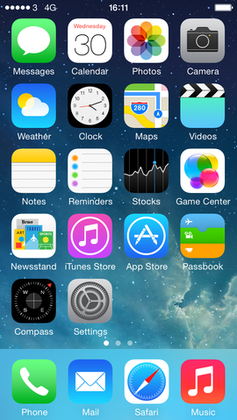
The most visible change in iOS 7 was its new aesthetic: a flatter, lighter look that moved away from skeuomorphic graphics toward simple typography, translucent layers and subtle motion. The redesign introduced a renewed focus on clarity and content over ornamentation, with redesigned icons, translucent panels, and dynamic wallpapers that created depth with parallax motion. Jony Ive and Apple's design team led the visual overhaul, which shaped later releases.
Key features
Beyond appearance, iOS 7 added or reworked several system features and apps. Notable changes included:
- Control Center: A swipe-up panel for quick access to settings, media playback and system controls.
- Notification Center: A redesigned summary view with Today view for appointments and alerts.
- Multitasking: System-wide background app refresh and a new app-switcher with preview cards.
- AirDrop: Peer-to-peer sharing between nearby iOS devices.
- Updated apps: Redesigned Camera app with filters, a reworked Photos app organizing images into Moments, Collections and Years, and improvements to Safari and Siri.
Technical, compatibility and security notes
iOS 7 expanded APIs for developers, enabling richer background activity and new animation tools. The release also introduced or emphasized security features such as Activation Lock to deter device theft. Apple supported a range of devices at launch, including several earlier iPhone, iPad and iPod touch models; users on older hardware experienced varied performance and some visual effects were reduced to preserve responsiveness.
Reception and legacy
Critical and public reaction was mixed but ultimately influential: many reviewers praised the modernized look and new capabilities, while others criticized certain usability issues and the abrupt stylistic shift. Over time, iOS 7 set a new visual baseline for Apple's platform and influenced subsequent versions. Minor updates continued to refine functionality and address bugs, with maintenance releases following into 2014.
For further technical details and developer guidance, consult official documentation and resources.
Related articles
Author
AlegsaOnline.com iOS 7 — Major redesign of Apple's mobile operating system Leandro Alegsa
URL: https://en.alegsaonline.com/art/48001
Sources
- apple.com : WWDC 2013 Keynote
- engadget.com : "iOS 7 arrives September 18th"
- support.apple.com : "iOS 7.1.2"
- 9to5mac.com : "Apple seeds iOS 7 beta 2 for developers: Voice Memos, new Siri voices, Reminders, UI tweaks, more"
- technonix.com : "Download iOS 7 beta for iPhone, iPad and iPad mini"
- engadget.com : "iOS 7 beta 3 released, brings a bundle of bug fixes and improvements"
- technoblimp.com : "iOS 7 fifth beta improvements"