
Impeachment: definition, process, history, and notable examples
Impeachment is a political process by which a legislature accuses public officials of misconduct; this article explains the concept, typical procedures, history, consequences, and notable cases worldwide.
Impeachment is a formal procedure used in many political systems to accuse a public official of misconduct and, in some systems, to remove that person from office. The term covers a range of practices: in some countries it leads directly to removal, while in others it is the first, accusatory stage of a longer trial process. The scope of who may be impeached — and for what conduct — varies by constitution and statute, but the mechanism is commonly available for heads of state, ministers, judges and other high officials. See general references on government offices: government officers.
Image gallery
7 Images


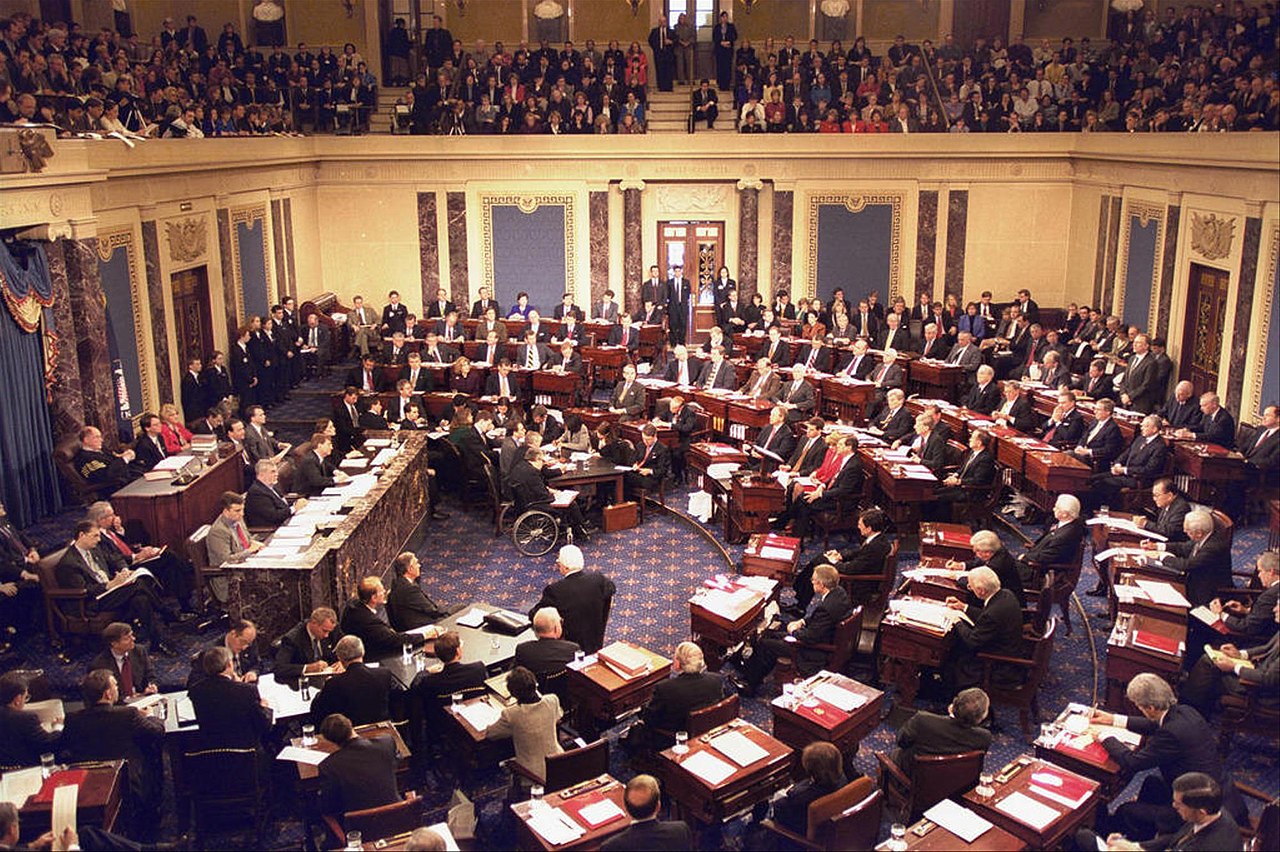


How impeachment typically works
Impeachment is often compared to an indictment in criminal law: it is a charge brought by a legislative body rather than a criminal conviction. In systems with separate chambers, one chamber usually votes to impeach (to bring charges) and the other holds a trial to decide whether to convict and remove the official. For example, in the United States the process begins in the House of Representatives, which may vote to impeach, and is followed by a trial in the Senate. Key constitutional and procedural terms and institutions are frequently referenced in reporting and analysis: Impeachment in the United States, the House of Representatives, the President, and the relationship between indictment-like charges (indictment) and legal actors such as the prosecutor when comparisons are made to ordinary criminal proceedings. Trials arising from impeachment are not always criminal trials in form or effect: they proceed under rules set by the legislature and may result in removal, disqualification from future office, censure, or acquittal.
Common grounds and legal character
Constitutions and statutes set the grounds for impeachment; commonly cited reasons include serious misconduct, abuse of power, corruption, or other high offenses. In the United States Constitution the phrase "high crimes and misdemeanors" is used, but its practical meaning has been interpreted differently over time and is shaped by political as well as legal judgment. Impeachment is primarily a political remedy, distinct from ordinary criminal prosecution: an official can be impeached and removed without a separate criminal conviction, and criminal charges may be pursued separately if applicable. The vote to convict may require a supermajority in the adjudicating chamber, reflecting the gravity of removing an elected or appointed official.
History and comparative practice
The institution of impeachment has roots in older parliamentary practices, and modern forms appear in many constitutional systems with notable variations. Some countries concentrate removal power in a single chamber, while others use a bicameral process. Several prominent examples have shaped modern public understanding: presidents and prime ministers have been impeached or otherwise removed in different regions, and judicial impeachments remain common in some jurisdictions. See comparative notes on legislatures and bicameral systems: legislature and bicameral.
Notable cases and outcomes
Impeachment proceedings often attract intense public attention, especially when they concern a national leader. Internationally, presidents such as Brazil's Dilma Rousseff (2016) and South Korea's Park Geun-hye (2017) were removed following impeachment processes. In the United States, three presidents have been impeached by the House: Andrew Johnson, Bill Clinton, and Donald Trump (the latter was impeached twice by the House); none were removed from office by conviction in the Senate. Another U.S. president, Richard Nixon, resigned before the House could vote on articles of impeachment. These examples illustrate a range of outcomes: removal, acquittal, resignation, and ongoing public debate about the propriety and effect of impeachment.
Consequences, distinctions and considerations
Consequences of impeachment may include removal from office, disqualification from holding future office, reputational damage, and potential referral for criminal prosecution. Impeachment differs from ordinary criminal proceedings in purpose, standards, and actors: it is a political tool intended to protect constitutional governance rather than simply to punish private wrongdoing. Because the process is inherently political, its use can provoke controversy over partisanship, separation of powers, and the balance between accountability and political instability. Related procedural terms and stages are often described using language like "convict" (convict, guilty) and legislative decision-making bodies (trial, prosecutor where comparisons are apt).
Further reading and reference links
- Government officers and roles
- Impeachment in the United States (overview)
- House of Representatives (procedural role)
- President (as an impeachable officer)
- Indictment (comparative term)
- Prosecutor (comparative role)
- Trial (legislative trial vs. criminal trial)
- Legislature (institutional context)
- Conviction (in impeachment context)
- Guilt and standards of proof
- Bicameral systems and impeachment
- Heads of state (impeachment focus)
- Dilma Rousseff (Brazil)
- Rousseff (2016 proceedings)
- Park Geun-hye (South Korea)
- Park (2017 proceedings)
- Presidential impeachments (general study)
- Andrew Johnson (U.S. case)
- Bill Clinton (U.S. case)
- Donald Trump (U.S. cases)
- Richard Nixon (resignation and impeachment context)
Note: This article provides a general overview. Specific procedures, thresholds and legal language vary by country and constitution; when researching a particular case, consult primary legal texts and authoritative analyses.
Related articles
Author
AlegsaOnline.com Impeachment: definition, process, history, and notable examples Leandro Alegsa
URL: https://en.alegsaonline.com/art/46878