
Richard Nixon: American president, policies, Watergate, and legacy
Comprehensive overview of Richard Nixon (1913–1994): his early life, rise in Republican politics, presidency (1969–1974), domestic and foreign policies, Watergate resignation, and lasting legacy.
Richard Milhous Nixon (1913–1994) was an American politician best known for serving as the 37th President of the United States from 1969 until his resignation in 1974. A Republican from California, Nixon earlier represented his state in the U.S. House and Senate and served two terms as Vice President under Dwight D. Eisenhower. His career combined notable foreign-policy achievements and domestic initiatives with a final and enduring scandal that ended his presidency and reshaped public expectations of political accountability.
Image gallery
10 Images




Early life and political rise
Nixon was born in Yorba Linda, California, and educated at Duke University School of Law, graduating in 1937. After practicing law and serving in the U.S. Naval Reserve during World War II, he entered electoral politics. Elected to the U.S. House of Representatives in 1946, he gained national attention for his role in anti-communist investigations in the late 1940s. In 1950 he won a Senate seat, and in 1952 he was chosen as Dwight D. Eisenhower’s running mate. As Vice President from 1953 to 1961 he built a reputation as a determined and sometimes combative partisan. He narrowly lost the 1960 presidential election to John F. Kennedy and was defeated in a 1962 race for California governor, only to return to national politics and win the presidency in 1968.
Presidency: policies and international diplomacy
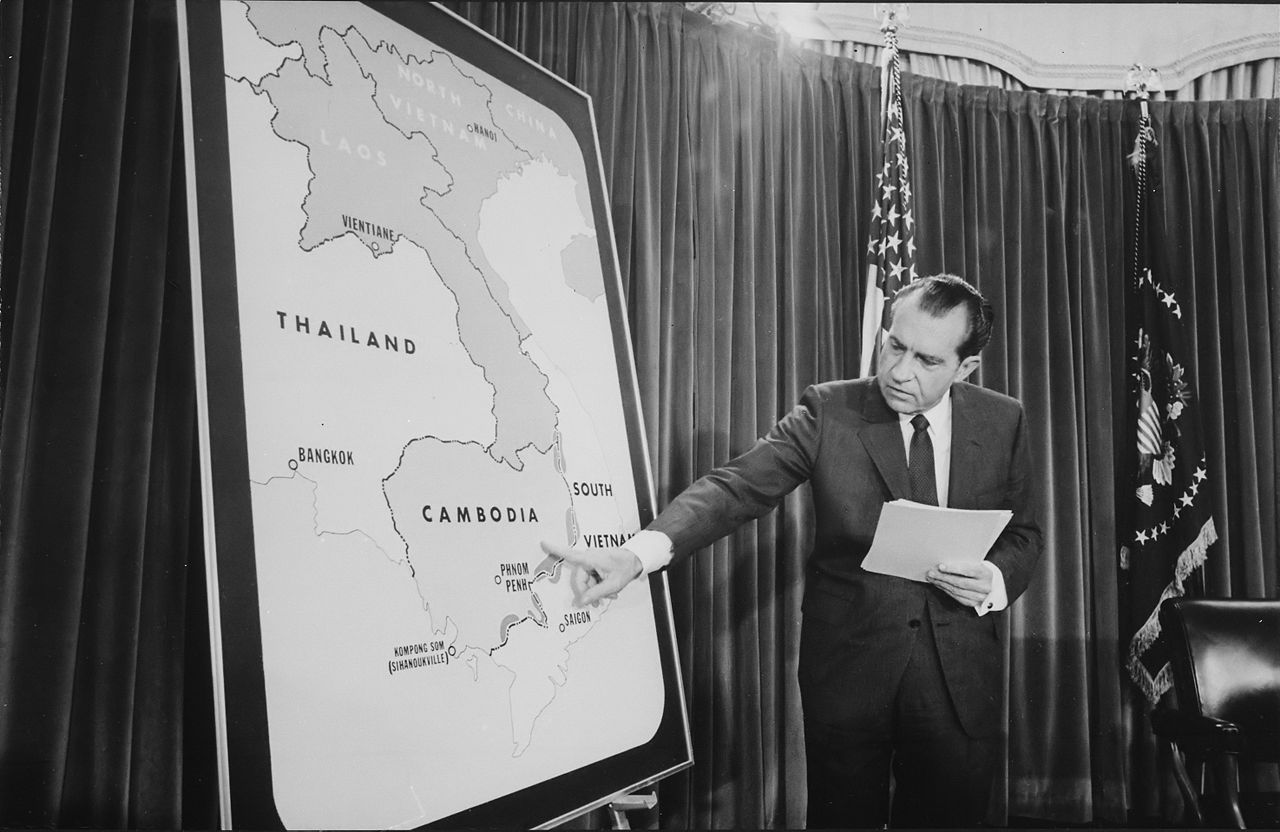
Nixon’s presidency combined pragmatic domestic measures with landmark foreign-policy initiatives. He pursued a policy of "Vietnamization," seeking to transfer combat responsibility to South Vietnamese forces while reducing American troop levels. He ordered the end of the military draft and negotiated troop withdrawals during a complicated, prolonged process of ending direct U.S. involvement in the Vietnam War. Internationally, Nixon pursued détente with the Soviet Union and opened a diplomatic pathway to the People’s Republic of China; his 1972 visit to Beijing was a dramatic breakthrough that altered Cold War alignments and set the stage for later formal diplomatic relations.
On the domestic front, his administration enacted a mix of conservative and regulatory measures. Nixon imposed temporary wage and price controls to combat inflation, expanded social programs in some areas, and signed laws that led to the creation of the Environmental Protection Agency and the Occupational Safety and Health Administration. He also supported federal enforcement of school desegregation and backed initiatives to combat cancer and other public-health priorities. The Apollo 11 Moon landing in 1969 occurred under his watch, symbolizing American technological achievement during his term.
Watergate, resignation, and aftermath
Despite policy achievements, Nixon’s presidency became dominated by the Watergate scandal, which began with a break-in at the Democratic National Committee headquarters and expanded to include illegal campaign practices, abuses of executive power, and efforts to obstruct investigations. As evidence mounted and congressional inquiries progressed, political support for Nixon eroded. Facing near-certain impeachment, Nixon resigned on August 9, 1974 — the only U.S. president to do so — and his successor, Gerald Ford, later issued him a full pardon for federal offenses. The episode profoundly affected public trust in government and prompted reforms in campaign finance and oversight of the executive branch.
Later life and historical assessment
After leaving office, Nixon wrote extensively, gave speeches, and maintained an active role in international affairs as an elder statesman, visiting many countries and commenting on foreign-policy matters. He died in 1994 following a stroke. Historians and political scientists continue to debate his legacy: some emphasize diplomatic successes and administrative accomplishments, while others stress the ethical failures and constitutional crisis produced by Watergate. His life remains a frequent subject of study for lessons about power, accountability, and the complexities of governing in the modern United States.
Notable points and distinctions
- Only U.S. president to resign, stepping down amid the Watergate scandal.
- Major foreign-policy achievements: opening to China, arms-limitation talks with the Soviet Union, and efforts to end U.S. combat role in Vietnam.
- Domestic initiatives: creation of the EPA and OSHA, wage-and-price controls, expanded federal health efforts, and enforcement of school desegregation.
- Contested legacy: administrative reforms and international diplomacy weighed against abuses of power and the erosion of public trust.
Further reading and links
- 37th President — overview and chronology
- 36th Vice President — role and duties
- Dwight D. Eisenhower administration
- Republican Party context during mid-20th century
- Yorba Linda, California — Nixon’s birthplace
- Duke University School of Law — alumni and history
- World War II — U.S. Naval Reserve service
- U.S. House of Representatives — 1946 campaign
- U.S. Senate — 1950 election and tenure
- 1960 presidential election — Nixon vs. Kennedy
- California gubernatorial race, 1962
- 1968 presidential election context
- Hubert Humphrey — 1968 opponent
- George Wallace — third-party candidacy
- Vietnam War and the policy of Vietnamization
- 1972 visit to China — diplomatic significance
- Anti-Ballistic Missile Treaty and SALT I
- Environmental Protection Agency — origins and mission
- Apollo 11 Moon landing (1969)
- 1972 landslide re-election
- George McGovern — 1972 Democratic nominee
- Yom Kippur War and 1973 Middle East crisis
- Watergate scandal — investigations and consequences
- Gerald Ford — pardon and succession
Questions and answers
Q: Who was Richard Milhous Nixon?
A: Richard Milhous Nixon was an American politician who served as the 37th president of the United States from 1969 to 1974, when he became the only president to resign. He was previously the 36th vice president (from 1953 to 1961 under President Dwight D. Eisenhower), and a U.S. Representative and Senator from California. He was a Republican.
Q: Where was Nixon born?
A: Nixon was born in Yorba Linda, California.
Q: What did Nixon do after graduating college?
A: After graduating college, Nixon returned to California to practice law.
Q: When did he begin his career in politics?
A: Nixon began his career in politics after he was elected to the House of Representatives in 1946.
Q: What diplomatic relations did he create between two nations during his presidency?
A: During his presidency, Nixon created diplomatic relations between the United States and China by visiting China in 1972.
Q: What domestic policies did he enact while president?
A: While president, Nixon imposed wage and price controls for 90 days, had Southern schools desegregated (ending the separation of people by their race), established the Environmental Protection Agency (EPA) as well as the Occupational Safety and Health Administration (OSHA), and began the War on Cancer.
Q: How did his presidency end?
A: His presidency ended when he resigned on August 9, 1974 due to a scandal known as Watergate; this made him become the first American president to do so. His successor Gerald Ford pardoned him afterwards
Author
AlegsaOnline.com Richard Nixon: American president, policies, Watergate, and legacy Leandro Alegsa
URL: https://en.alegsaonline.com/art/129532