
Imperial Seal of Japan (Chrysanthemum Seal)
The chrysanthemum crest used by the Japanese imperial house: its design, history, variations, official uses, and how it differs from other national emblems.
Overview
The Imperial Seal of Japan, commonly called the Chrysanthemum Seal (kikumon), is the principal emblem of the Japanese imperial household. The motif is a highly stylized chrysanthemum flower used as a family crest (mon) to denote the Emperor and members of the imperial family. It functions both as a symbol of authority and as a mark of property and official documents belonging to the imperial house.
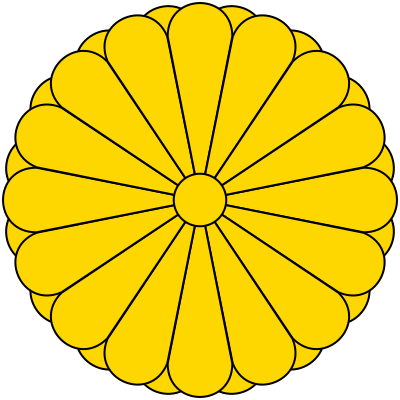
Image gallery
9 Images






Design and characteristic elements
The standard form of the seal is a radial, symmetrical chrysanthemum rendered as a circle of regularly spaced petals. The familiar depiction used for the Emperor often appears with a regular set of outer petals and an inner ring of shorter petals, producing a layered floral appearance. Variants exist: some simplify the petal count or change spacing and orientation to indicate different ranks, household branches, or institutional use. The emblem is frequently shown in single-color rendering — often metallic gold or monochrome for formal contexts.
History and development
As a crest, the chrysanthemum motif has been associated with the imperial household for many centuries. Its association grew gradually through court usage and noble practices rather than from a single founding event. Over time the chrysanthemum became recognized as the mark of the Emperor, appearing on robes, seals, and ceremonial objects. The motif was adapted into modern state and ceremonial contexts during the 19th and 20th centuries as Japan centralized national emblems and honors.
Uses, significance and regulation
The Chrysanthemum Seal appears on a range of imperial and state items: it is used on imperial standards, some official decorations (notably the Order of the Chrysanthemum), and on objects and buildings associated with the Emperor. It is also embossed on Japanese passports and other formal insignia to denote sovereign authority. Use of the emblem by private individuals or commercial entities is restricted by long-standing convention and by official regulations intended to protect the dignity of the imperial house; unauthorized commercial exploitation is generally prohibited.
Distinctions and related emblems
- The chrysanthemum crest is a specific type of mon, a family or clan emblem distinct from other national symbols such as governmental seals or corporate logos.
- Other crests and government emblems (for instance, the paulownia crest associated with certain cabinet functions) serve different official roles; the chrysanthemum remains principally associated with the Emperor and imperial family.
- Members of the imperial family and related institutions may use modified or subsidiary versions of the chrysanthemum to indicate rank or affiliation.
Notable facts
The Chrysanthemum Seal continues to be a powerful visual shorthand for the imperial institution in modern Japan and appears wherever the authority or presence of the imperial household needs to be signified. For further reading on its official uses and visual variants see the resources linked for the Imperial family and institutional histories.
Related articles
Author
AlegsaOnline.com Imperial Seal of Japan (Chrysanthemum Seal) Leandro Alegsa
URL: https://en.alegsaonline.com/art/46890