
Ibn al‑Arabi (Muhyiddin): Sufi mystic, philosopher and poet
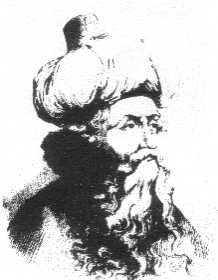
Ibn al‑Arabi (1165–1240) was an Andalusian Sufi thinker known for his writings on unity of being, metaphysics and spiritual practice; his major works shaped later Islamic thought and mysticism.
Overview
Ibn al‑Arabi (full honorific Muhyiddin Ibn al‑ʿArabī) was a leading figure of classical Sufism whose writings combined poetry, spiritual instruction and metaphysical speculation. Born in the late 12th century in Murcia, he spent formative years in Seville and later travelled extensively across the Islamic world. Revered by many as Sheikh al‑Akbar (the Greatest Sheikh), he is best known for articulating a vision often described as wahdat al‑wujūd or "unity of being," a phrase that has come to summarise one strand of his thought.
Image gallery
8 Images


Life and travels
Ibn al‑Arabi was born in what is now southern Spain and grew up in an environment shaped by Andalusian culture and learning. Although his early life was rooted in Spain, he frequently travelled through North Africa and eventually made the pilgrimage to Mecca as part of the Hajj in 1202. He remained for several years in the Hijaz, producing many of his earliest works, and later visited lands across the eastern Mediterranean and Near East, including Syria, Iraq, parts of Anatolia commonly referred to as Turkey, and Palestine, before settling in Damascus, where he died in 1240.
Major writings and themes
Ibn al‑Arabi's corpus is vast and varied, combining theology, metaphysics, mystical psychology and poetry. His best known works include the encyclopedic Al‑Futūḥāt al‑Makkīyya (often rendered in English as The Meccan Revelations) and the more concise Fusūs al‑Hikam (The Bezels of Wisdom). The Meccan Revelations is especially large — traditionally counted as some 560 chapters — and ranges across topics from cosmology and prophetic knowledge to spiritual practice and legal theology. Many of his texts attempt to reconcile exoteric religious law with inner spiritual states.
- Main works: Al‑Futūḥāt al‑Makkīyya (The Meccan Revelations), the Fusūs al‑Hikam and numerous treatises and poems.
- Subjects addressed: cosmology, metaphysics, spiritual psychology, and matters of religion and Islam.
- Traditional scope: an immense work often described as comprising 560 chapters, though counts can vary by edition.
Ideas and influence
Central to Ibn al‑Arabi's thought is an exploration of how the divine presence relates to creation. He wrote about the ways in which being manifests and how humans can recognise divine realities through spiritual practice. His writings use careful distinctions between states and stations, essence and manifestation, and stress the role of prophetic knowledge as a model for mystical insight. Over subsequent centuries his ideas were widely commented on, incorporated, contested, and adapted by readers across the Islamic world.
Reception and legacy
Ibn al‑Arabi's reputation varies: he is venerated in many Sufi lineages and has been a major source for later mystical literature, while some scholars and legal authorities have questioned or critiqued particular philosophical formulations. Nevertheless, his influence extends into poetry, theology, and philosophy, and modern scholarship continues to study his complex terminology and imaginative prose. His blend of rigorous scholastic detail and visionary language makes his writings a key reference for understanding medieval Islamic mysticism and its continuing cultural impact.
Further reading and study
Those seeking to learn more often begin with annotated translations and studies of his two principal works and consult critical introductions that place him in the context of Andalusian and Near Eastern Sufism. For geographic and biographical context see materials on Murcia, Seville, his time in Mecca and later residence in Damascus. Scholarly discussions of his doctrines of unity and divine manifestation make frequent reference to sections of the Meccan Revelations and the Fusūs.
Related articles
Author
AlegsaOnline.com Ibn al‑Arabi (Muhyiddin): Sufi mystic, philosopher and poet Leandro Alegsa
URL: https://en.alegsaonline.com/art/46379
Sources
- wdl.org : "The Meccan Revelations"