
Hajj — the Islamic Pilgrimage to Mecca
The Hajj is the annual Islamic pilgrimage to Mecca, required once in a lifetime for eligible Muslims. This article explains its rituals, timing, history, significance, and modern practice.
Overview
The Hajj is the major annual pilgrimage undertaken by Muslims from around the world to the city of Mecca. It is one of the central acts of worship in Islam and is counted among the Five Pillars alongside Shahadah, Salat, Zakat and Sawm. Observant Muslims who are adult, physically able and financially capable are obliged to perform Hajj at least once in their lifetime. The pilgrimage is often described as a profound demonstration of religious devotion, communal solidarity and equality before Allah.
Image gallery
10 Images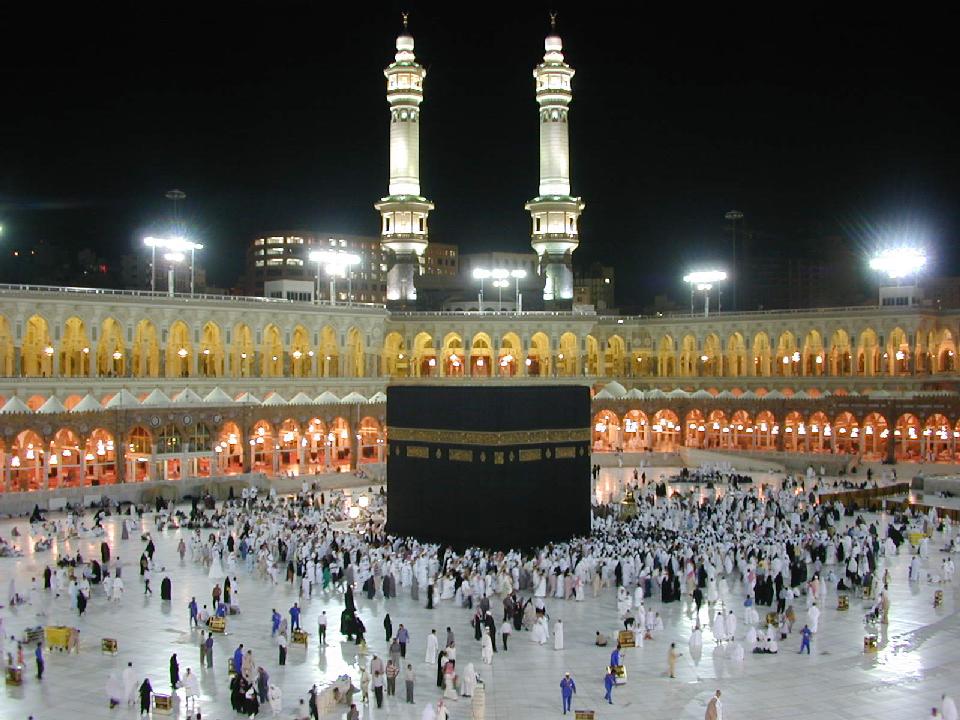


When and how it takes place
Hajj is performed during the Islamic month of Dhu al-Hijjah, with the principal rites falling between the 8th and 12th (sometimes the 13th) days. Because the Islamic year follows a lunar calendar, the corresponding dates in the Gregorian calendar shift earlier by about eleven days each year. Pilgrims assume a consecrated state called ihram, in which simple white garments are worn and certain behaviors are curtailed to emphasize spiritual focus and equality.
Principal rituals
The sequence of Hajj rites recalls events associated with the prophets Abraham and Muhammad and is carried out in a fixed order over several days. Key acts include:
- Circling the Kaaba seven times (tawaf) in the Grand Mosque in Mecca.
- Walking or running between the hills of Safa and Marwah in remembrance of Hagar’s search for water.
- Standing in vigil on the plains of Mount Arafat (wuquf), considered the spiritual climax of Hajj.
- Spending a night at Muzdalifah and collecting pebbles for the symbolic stoning of the devil.
- Performing animal sacrifice (or its monetary equivalent where permitted), trimming or shaving the head, and celebrating the festival of Eid al‑Adha.
Origins and historical development
Muslims trace the origin of the pilgrimage rites to the patriarch Abraham (Ibrahim) and his family; many of the physical sites and actions on Hajj commemorate episodes from Abrahamic narratives. The ritual pattern took its present form in the centuries after the life of the Prophet Muhammad, who both performed Hajj and taught practices associated with it. Over time, the Hajj developed from local and regional journeys into a genuinely global observance, with pilgrims traveling by caravan, ship, rail and aircraft as transportation technologies evolved.
Social, spiritual and practical significance
For individuals, Hajj is a powerful rite of passage and a time for repentance, renewal and communal prayer. Collectively, it is one of the largest annual human gatherings on earth, bringing together people of different languages, cultures and nationalities. The event has long shaped religious scholarship, law, economics and infrastructure in the Muslim world. Modern Hajj administration involves extensive planning by host authorities and sending communities to manage accommodation, health services and crowd safety.
Distinctions and related forms of pilgrimage
Smaller pilgrimages to Mecca may be undertaken at other times and are commonly called Umrah. Umrah shares some of the same rituals but is not a substitute for the Hajj obligation. Legal and theological discussions address when a Muslim is considered eligible (a state called istita'ah) and how to reconcile the spiritual aims of Hajj with modern constraints. Issues such as permit systems, crowd control, public health and environmental impact are part of ongoing debates about how to preserve the pilgrimage’s meaning while ensuring safety and accessibility.
Notable facts
Hajj is commemorated globally through sermons, charity and family observances. It culminates in the festival of Eid al‑Adha, which is observed by millions who may or may not have performed the pilgrimage itself. Academic and policy studies often use the Hajj as a case study in large-scale event management, intercommunal communication and the practice of global faith traditions.
Questions and answers
Q: What is the Hajj?
A: The Hajj is an annual Islamic pilgrimage to Mecca, the most holy city of the Muslims. It is a Fard or mandatory religious duty for Muslims that must be carried out at least once in their lifetime by all adult Muslims who are physically and financially capable of undertaking the journey.
Q: What are the five pillars of Islam?
A: The five pillars of Islam are Shahadah, Salat, Zakat, Sawm, and Hajj.
Q: What does it mean to be mustati?
A: To be mustati means to be physically and financially capable of performing the Hajj.
Q: When does the pilgrimage occur?
A: The pilgrimage occurs from the 8th to 12th (or in some cases 13th) of Dhu al-Hijjah, which is the last month of the Islamic calendar.
Q: How do pilgrims demonstrate solidarity during Hajj?
A: Pilgrims demonstrate solidarity during Hajj by joining processions with hundreds of thousands of people simultaneously converging on Mecca for the week-long event. They also perform a series rituals such as walking counter-clockwise seven times around Ka'aba, running back and forth between Al-Safa and Al-Marwah hills, drinking from Zamzam Well, standing in vigil at Mount Arafat plains, spending a night in Muzdalifa plain, and throwing stones at three pillars symbolizing stoning devil.
Q: Is Umrah a substitute for Hajj?
A: No, Umrah is not a substitute for Hajj; even if they choose to perform Umrah they are still obligated to perform Hajj at some other point in their lifetime if they have means to do so.
Related articles
Author
AlegsaOnline.com Hajj — the Islamic Pilgrimage to Mecca Leandro Alegsa
URL: https://en.alegsaonline.com/art/41819
Sources
- dictionary.reference.com : "Hajj"
- books.google.com : Islamic Beliefs, Practices, and Cultures
- books.google.com : Islam: Its History, Teaching, and Practices
- berkleycenter.georgetown.edu : Berkley Center for Religion, Peace, and World Affairs - Islam
- books.google.com : Praying: The Rituals of Faith
- science.time.com : "As the Hajj Unfolds in Saudi Arabia, A Deep Look Inside the Battle Against MERS"
- books.google.com : Islam: Its History, Teaching, and Practices
- books.google.com : Indonesian Syariah: Defining a National School of Islamic Law
- books.google.com : Perspectives in Religious Studies: Volume III
- hajjpracticalities.heliohost.org : "13th of Zil Hajj"
- britannica.com : "ihram"
- hajj.org.au : "Ihram - Summary"
- bbc.co.uk : "Eid ul Adha"
- rt.com : "Saudi Arabia to move from oil, earn more from Hajj"