
Hurricane Easy (1950)
Hurricane Easy was a major September 1950 Atlantic hurricane that hit Cuba and Florida (landfall near Cedar Key), moved inland and dissipated over Arkansas; it caused heavy rain, damage and two indirect deaths.
Hurricane Easy was a powerful Atlantic hurricane in early September 1950. It reached major hurricane strength with peak sustained winds near 125 mph, placing it at Category 3 on the Saffir–Simpson scale at its height. The cyclone affected parts of the Caribbean and the southeastern United States, making notable impacts in Cuba and Florida before moving inland and weakening.
Image gallery
5 Images


Characteristics
- Peak intensity: about 125 mph sustained winds (Category 3).
- Main hazards: strong winds, storm surge near the coast, and heavy rainfall leading to localized flooding.
- Casualties: contemporary reports indicate no confirmed direct fatalities; two deaths were attributed indirectly to the storm.
Storm history and track
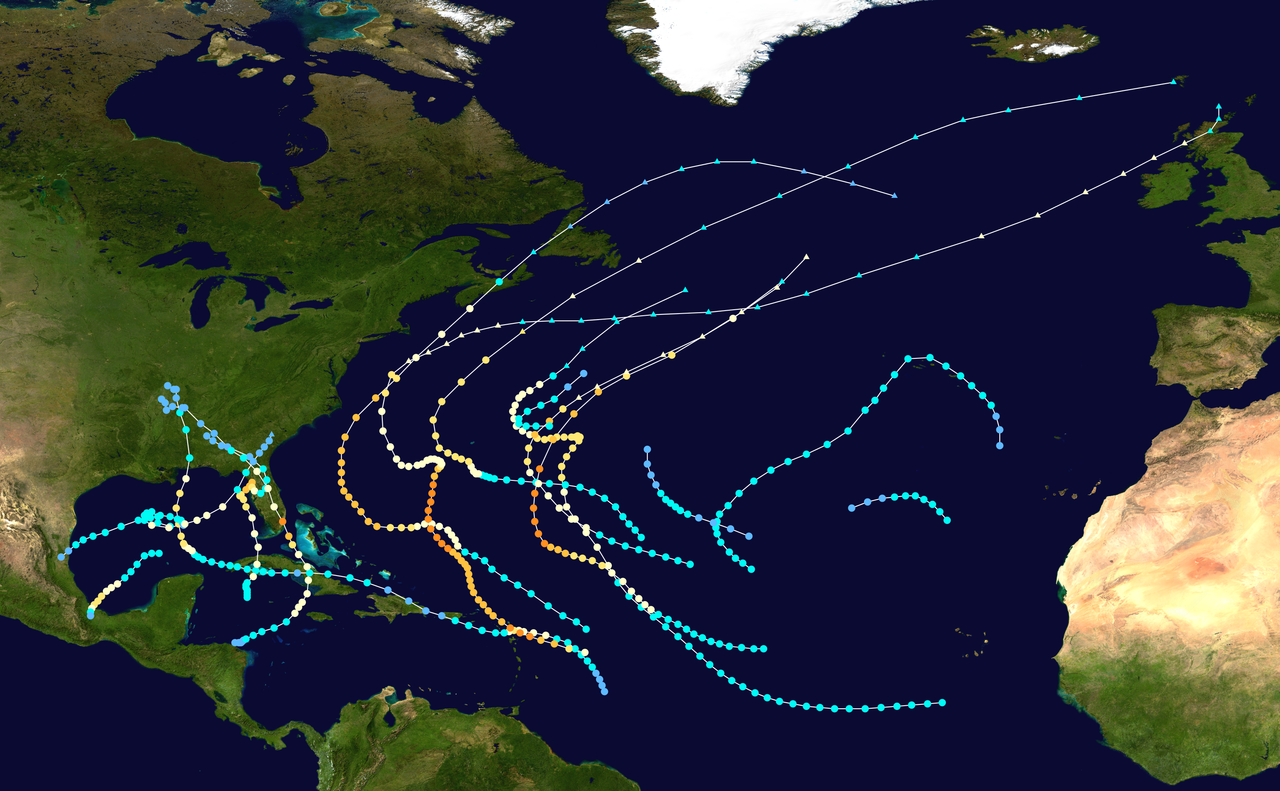
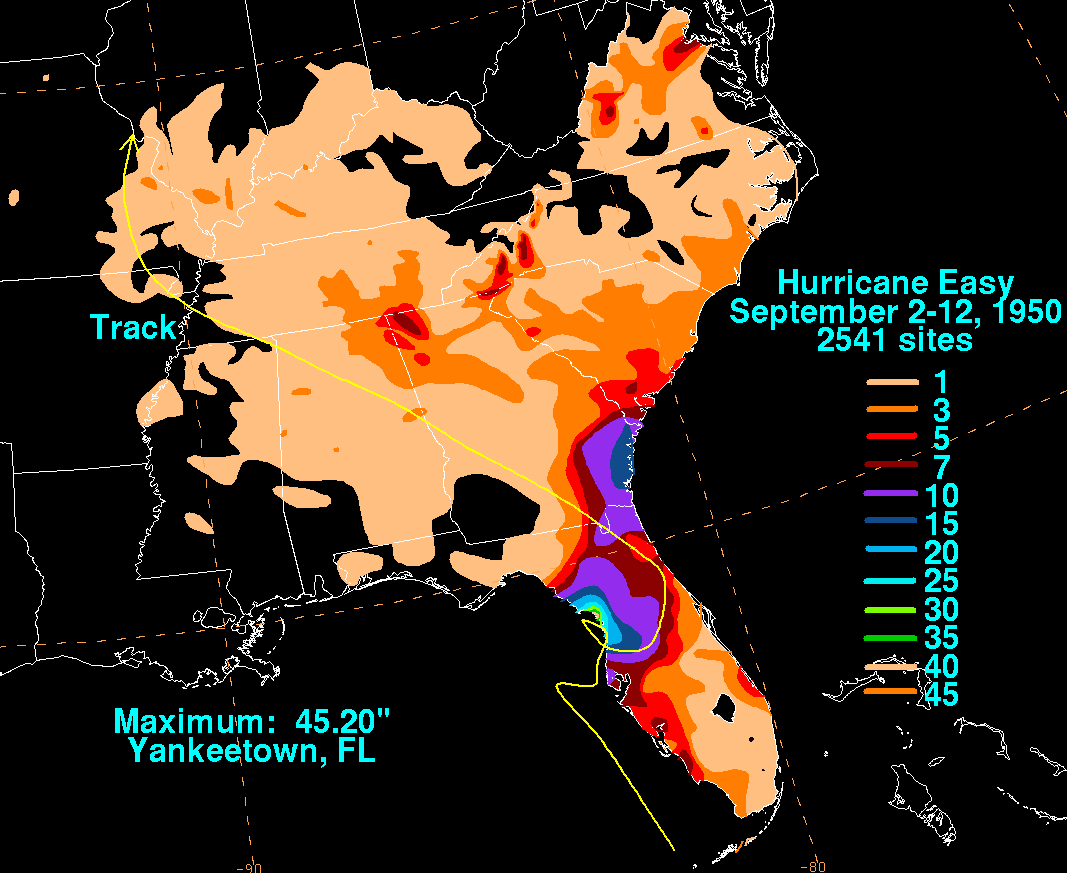
Hurricane Easy developed during the 1950 hurricane season and moved generally northwestward as it strengthened. It affected Cuban territory early in its life cycle, then approached the Florida west coast. The storm made landfall near Cedar Key on September 5, 1950, and continued to influence nearby coastal areas the following day, including regions well north of Tampa. After moving ashore it tracked inland across the southeastern United States and gradually lost tropical characteristics, finally dissipating over Arkansas.
Impacts
Although Easy was not associated with a large number of direct fatalities, it produced damaging winds and heavy rains that caused property damage, disrupted agriculture, and flooded low-lying coastal and riverine areas. Coastal communities experienced surge and erosion, while inland areas saw periods of high rainfall and runoff as the system weakened. Emergency services and local officials at the time reported scattered structural and crop losses and power outages in affected counties.
Context and historical notes
Hurricane Easy is often noted in historical summaries for its intensity at landfall and for occurring during a period when naming conventions for storms were different than the later female-name lists. The storm's name—"Easy"—reflects the phonetic naming practice used by U.S. agencies in that era. Meteorologists studying mid-20th century storms cite Easy as an example of a powerful coastal hurricane that produced a combination of wind, surge, and inland flooding despite a relatively modest recorded death toll.
Contemporary accounts and post-storm assessments contributed to evolving forecasting and warning procedures in the 1950s. For readers seeking original reports, meteorological summaries and archived local newspapers from September 1950 provide additional detail on the storm's track, warnings, and community response.
Related articles
Author
AlegsaOnline.com Hurricane Easy (1950) Leandro Alegsa
URL: https://en.alegsaonline.com/art/45865