
Höðr: the blind god of darkness in Norse myth
Höðr (Hodr) is the blind son of Odin and Frigg in Norse myth, best known for unintentionally killing his brother Baldr and for his role in accounts of revenge and Ragnarök.
Overview
Höðr (also written Hodr, Hother, Hoder, Hodur or Hodor) is a figure in Norse mythology described as the blind son of Odin and Frigg and the twin brother of Baldr. He appears most prominently in the narratives that tell how Baldr was slain and the consequences that followed. Ancient sources portray Höðr as a tragic, manipulated figure rather than an active villain: his blindness and the role of a trickster figure are central to traditional accounts.
Image gallery
4 Images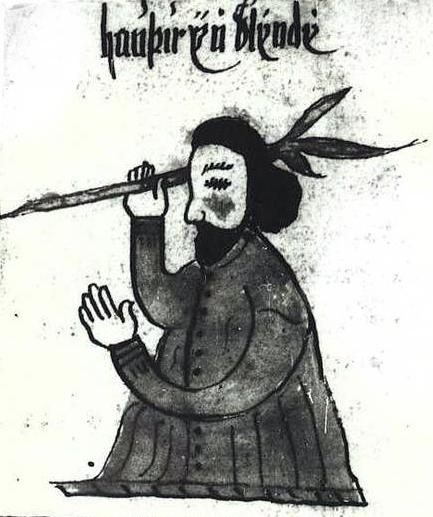


Name, attributes and depiction
The Old Norse name Höðr likely appears in medieval Icelandic texts and is discussed in the poetic tradition. Classical portrayals emphasize his lack of sight: he is described as having closed eyes or covering them. Mythic contrasts often pair him with his brother Baldr—Höðr associated with darkness and cold, Baldr with light and goodness. Some medieval sources and later retellings link Höðr to winter motifs and the darker aspects of fate.
The death of Baldr
Primary accounts in the Prose Edda and Poetic Edda relate that Baldr was made invulnerable to all things except one: a seemingly harmless sprig of mistletoe. The trickster Loki discovered this vulnerability and persuaded Höðr to throw a missile made of mistletoe, which struck and killed Baldr. Sources differ in emphasis—some depict Höðr as uncertain and coerced, others as unwitting—so later interpretations often treat the episode as a study in fate, innocence and deception.
Aftermath and vengeance
Following Baldr’s death, the gods sought vengeance. The god Váli is described as being born specifically to avenge Baldr; texts say Váli grew to adulthood quickly and slew Höðr. These events set in motion grief among the Æsir and are narrated as prelude to the world-ending series of events called Ragnarök. Despite the tragedy, some poetic traditions suggest that after Ragnarök both Baldr and Höðr survive or return to a renewed world and rule together, a motif that highlights reconciliation and cyclical renewal.
Interpretations and legacy
Scholars have debated Höðr’s symbolic role: as an embodiment of darkness, winter, or the tragic consequences of blindness (literal and moral). Interpretive approaches draw on comparative mythology, ritual studies and textual analysis. Höðr appears in later literature, art and popular culture, where authors often adapt his story to explore themes of fate, culpability and redemption.
Key facts
- Parentage: Son of Odin and Frigg (sources).
- Sibling: Twin brother of Baldr.
- Notable episode: Death of Baldr by a mistletoe shaft, arranged by Loki and thrown by Höðr.
- Avenger: Váli kills Höðr in revenge.
- Sources: Prose Edda, Poetic Edda and later medieval texts; modern studies and translations discuss variant readings (winter motifs, mistletoe symbolism).
For further reading, consult critical editions and translations of the Norse corpus and modern summaries of mythic cycles (family accounts, poetic sources, Ragnarök studies). Additional summaries and interpretations are available in contemporary reference works and literature on Germanic myth (seasonal symbolism, motif studies, Eddic poetry).
Related articles
Author
AlegsaOnline.com Höðr: the blind god of darkness in Norse myth Leandro Alegsa
URL: https://en.alegsaonline.com/art/45083