
Hroðgar — King in the Old English Epic Beowulf
Hroðgar is the aged king of the Danes in the Old English epic Beowulf. He presides over Heorot, suffers Grendel's attacks, and receives Beowulf's aid; his role highlights leadership, kinship and the poem's moral themes.
Hroðgar (Old English Hrothgar) is a principal figure in the Anglo‑Saxon epic poem Beowulf. Portrayed as an established and prosperous ruler of the Danes, he is the builder of the great hall Heorot and head of the Scylding dynasty. In the narrative he appears as an older, respected king whose reign has been marred by the repeated assaults of the monster Grendel and, later, Grendel's avenging mother.
Image gallery
3 Images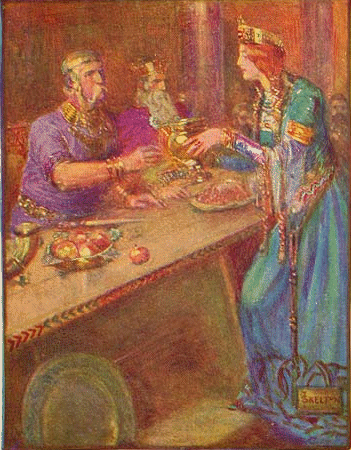


Role and characteristics
The poem presents Hroðgar as both generous and troubled: he is generous in distributing treasure and hospitality to retain the loyalty of his retainers, but troubled because his community is terrorized and his hall—symbol of royal authority and social order—is desecrated. He is wise, experienced and somewhat weary; his speeches to Beowulf emphasize the responsibilities and limits of kingship. Hroðgar is often read as a moral voice who counsels humility and prudent rule.
Hroðgar in the poem's narrative
When the hero Beowulf arrives from Geatland, he pledges to help Hroðgar and fights Grendel at Heorot. After Beowulf defeats Grendel, Grendel's mother attacks that night and is subsequently pursued and slain by Beowulf in her lair. Hroðgar rewards Beowulf lavishly with treasure and praise; following these events Beowulf returns home and Hroðgar's later life is not detailed in the poem.
Historical and literary context
The poem itself is an Old English composition preserved in a single manuscript, often dated to the early medieval period. Hroðgar's figure blends legendary material with social ideals valued in Germanic societies—kin loyalty, gift exchange, and the hall as communal center. Scholars note that while the poem may preserve fragments of older Scandinavian tradition, its portrayal of Hroðgar is shaped by Anglo‑Saxon poetic conventions and Christianized commentary.
Significance and interpretations
Readers and critics have examined Hroðgar as an embodiment of successful kingship under strain: he commands respect and wealth yet lacks the strength to defeat the new menace, thus necessitating heroic intervention. His famous admonition to Beowulf about the dangers of pride is frequently cited in studies of the poem's moral dimension. Hroðgar's character also functions as a foil to other rulers in the narrative and contributes to the poem's exploration of fate, legacy and the responsibilities of power.
Further reading and resources
- Primary text and translations: consult editions of the poem and resources that discuss Heorot and the Scylding lineage—see a general reference on Denmark and early Scandinavian kingship.
- Monster studies and character analysis: background on Grendel and related figures is available in scholarship and compendia about Grendel.
Questions and answers
Q: Who is Hrothgar in the poem Beowulf?
A: Hrothgar is the king of Denmark in the epic poem Beowulf.
Q: Why is Hrothgar's kingdom under attack?
A: Hrothgar's kingdom is under attack from the monster Grendel.
Q: Who defeats Grendel in the poem?
A: The warrior Beowulf defeats and slays Grendel when he attacks Heorot, the king's mead hall.
Q: What happens after Grendel's death?
A: Grendel's mother attacks in retaliation for her son's death.
Q: What does Beowulf do after Grendel's mother attacks?
A: Beowulf tracks down Grendel's mother to her lair and slays her.
Q: Does the poem state anything about Hrothgar's fate?
A: No, the poem does not state anything about Hrothgar's fate after these events.
Q: What is the warrior Beowulf's homeland?
A: Beowulf's homeland is Geatland.
Related articles
Author
AlegsaOnline.com Hroðgar — King in the Old English Epic Beowulf Leandro Alegsa
URL: https://en.alegsaonline.com/art/45471