
Huitzilopochtli — Aztec god of the sun, war, and patron of Tenochtitlan
Huitzilopochtli was a central deity of the Mexica (Aztecs), combining sun and war aspects, associated with hummingbird imagery, Tenochtitlan’s foundation, ritual sacrifice, and state ceremonies.
Overview
Huitzilopochtli was a principal deity in Mexica religion, often described as both a sun god and a god of war. He occupied a central role in the political and religious life of the Aztec capital. For general background on the cultural context, see Aztec mythology.
Image gallery
10 Images




Names and characteristics
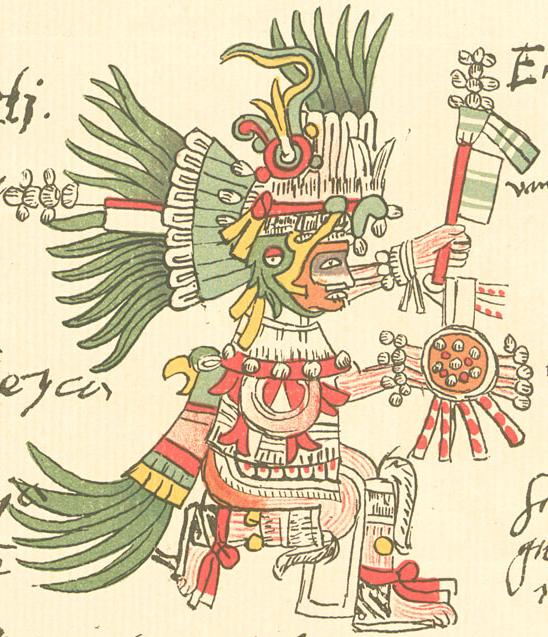
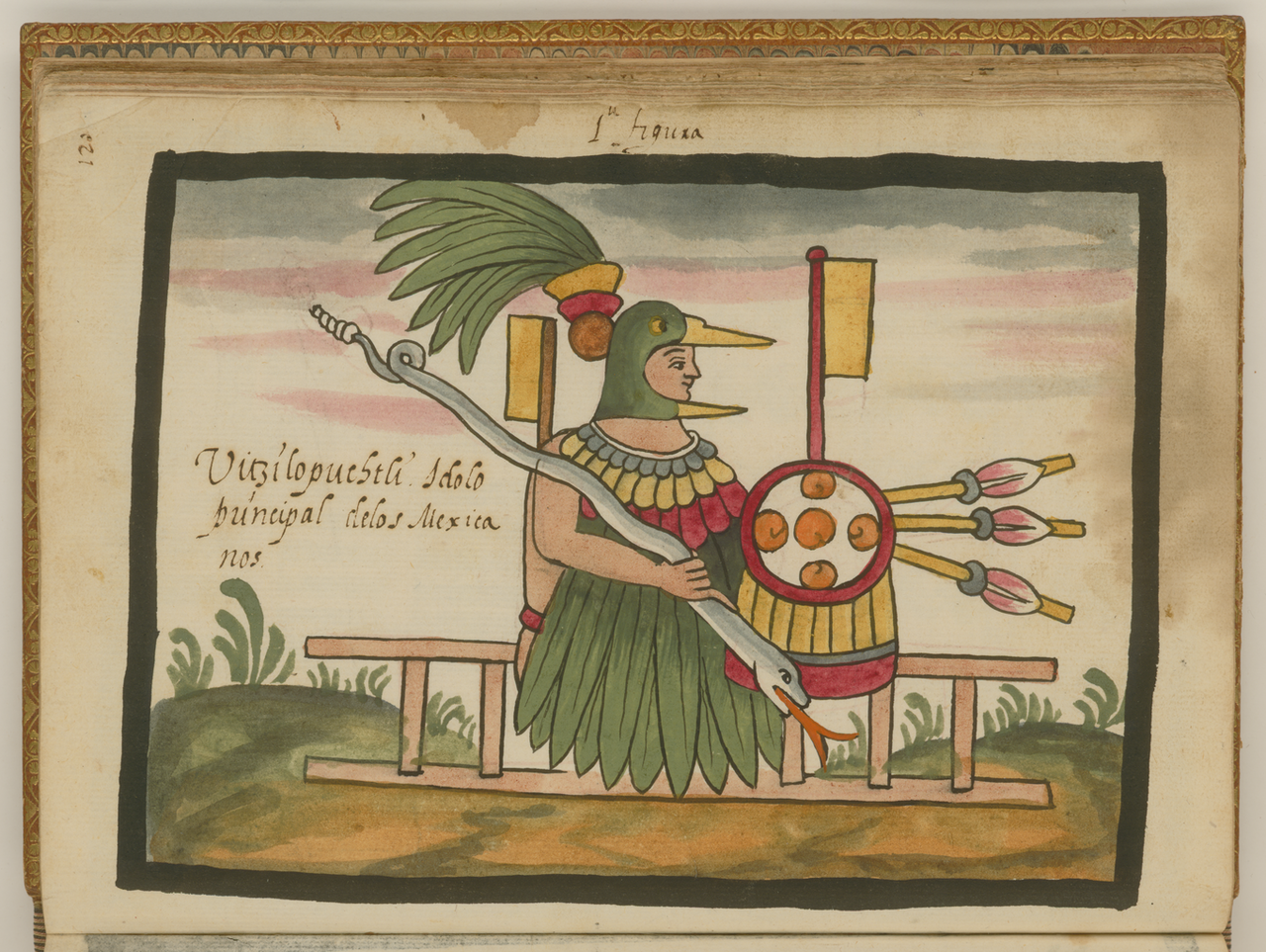
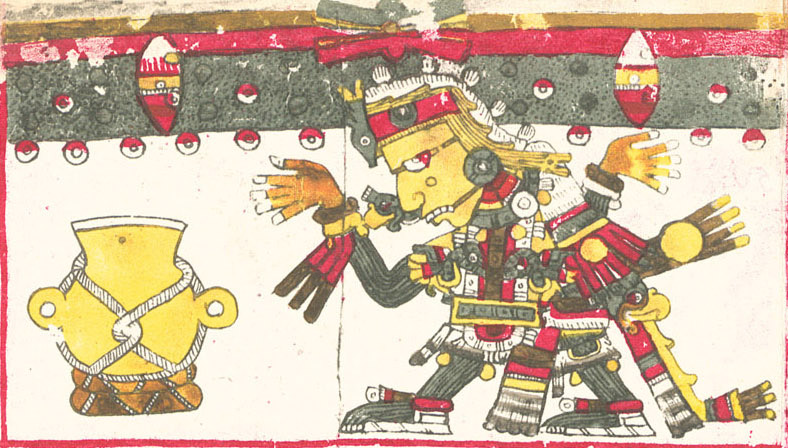
The name is commonly translated as "Hummingbird of the South" or "Left-Handed Hummingbird." Huitzilopochtli was portrayed in warrior regalia and associated with two principal symbols: the hummingbird (or hummingbird helmet) and a fire-serpent weapon often called the xiuhcoatl. His character combined solar imagery—representing the moving sun—and martial aspects that justified military activity and expansion.
Mythic origins and civic importance
In Mexica origin myths, Huitzilopochtli is born of the earth goddess Coatlicue and plays a decisive role in the cosmogonic narrative by confronting rival deities and enemies. As patron god, he legitimized the foundation and dominance of Tenochtitlan; the major temple complex honored him alongside other important deities. The city’s association with him can be explored further through resources about Tenochtitlan.
Rituals and festivals
State rituals and public festivals were central to his cult. One important annual observance was the winter month dedicated to his worship, marked by banners, processions, and offerings. Human sacrifice is a well documented and contested part of these ceremonies: offerings of blood and captives were described by contemporaneous and later sources as ways to sustain the sun and secure victory in war. Scholarship continues to debate scale, meaning, and interpretation of these rites.
Iconography and legacy
- Iconography: hummingbird motifs, blue-green coloring, warriors’ attire, and the fire-serpent.
- Political role: state-sponsored cult that reinforced military and imperial ideology (war deity).
- Modern relevance: studied in archaeology, ethnohistory, and popular culture as a symbol of pre-Columbian religion and identity.
Huitzilopochtli remains a focal figure for understanding Mexica religion, the ritual logic of sacrifice, and the ways political power and theology were intertwined in central Mexico before European contact.
Related articles
Author
AlegsaOnline.com Huitzilopochtli — Aztec god of the sun, war, and patron of Tenochtitlan Leandro Alegsa
URL: https://en.alegsaonline.com/art/45616
Sources
- worldcat.org : 0226094871