
Lernaean Hydra
Multi‑headed serpent of Greek myth, slain by Heracles during his second labor; known for regenerative heads, an immortal central head, poisonous blood, and enduring symbolic and artistic presence.
The Lernaean Hydra is a legendary multi‑headed serpent from ancient Greek mythology, associated particularly with the swampy spring of Lerna in the Argolid. Traditional accounts describe the creature as the offspring of great chthonic monsters: the storm‑giant Typhon and the half‑serpent Echidna. Classical sources such as Hesiod’s Theogony place the Hydra among a brood of dangerous, often semi‑divine, beasts. The Hydra appears repeatedly in vase painting, sculpture and literary summaries from the Archaic period onward, reflecting its long cultural resonance.
Image gallery
9 Images



Characteristics and legendary powers
Descriptions of the Hydra vary, but several features are constant in surviving accounts: it had multiple snake heads, one of which was often said to be immortal; the heads could regrow—sometimes two for each one severed—and its breath or blood was venomous. Some traditions also attribute to the Hydra the ability to animate the dead from sown dragon’s teeth or to contaminate water and land around its lair. These elements give the monster a strongly chthonic and toxic character in mythic imagery.
The labor of Heracles
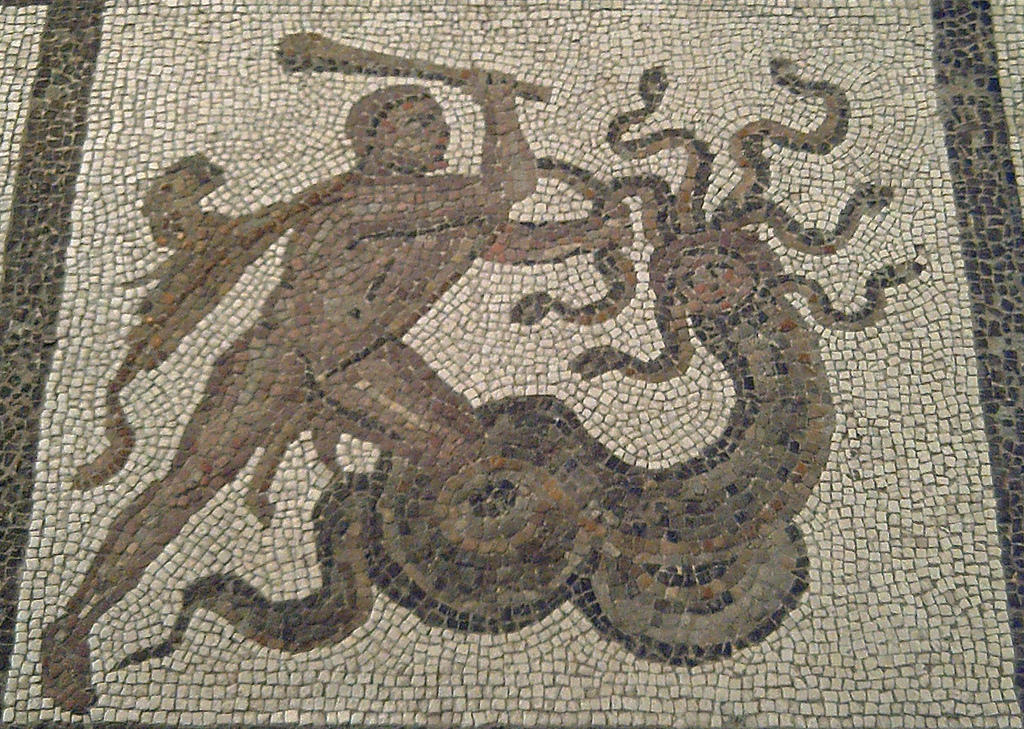
Killing the Hydra was the second of the canonical twelve labors assigned to Heracles. The beast made its home at the lake of Lerna, a place already steeped in older local cult and legend near the city of Argos, which itself lay within the older Mycenaean landscape (Mycenaean material culture). In the best‑known version, Heracles discovered that cutting off a head caused two to grow back. He enlisted the help of his nephew Iolaus, who cauterised each neck stump with fire so the heads could not regenerate. After hewn away, the single immortal head was either buried under a rock or otherwise disposed of to prevent further harm. Heracles also collected the monster’s venomous blood and later used it to poison arrows, an element that links this labors narrative to further adventures.
Symbolism, interpretation and uses
Mythologists and historians interpret the Hydra on several levels: as a symbol of a proliferating problem (one that multiplies when attacked directly), as an emblem of watery, underworld danger, and as a poetic personification of disease or poisonous marshes. Its regenerative property makes the Hydra a frequent metaphor for stubborn or compounding difficulties in later literature and rhetoric.
Artistic and cultural legacy
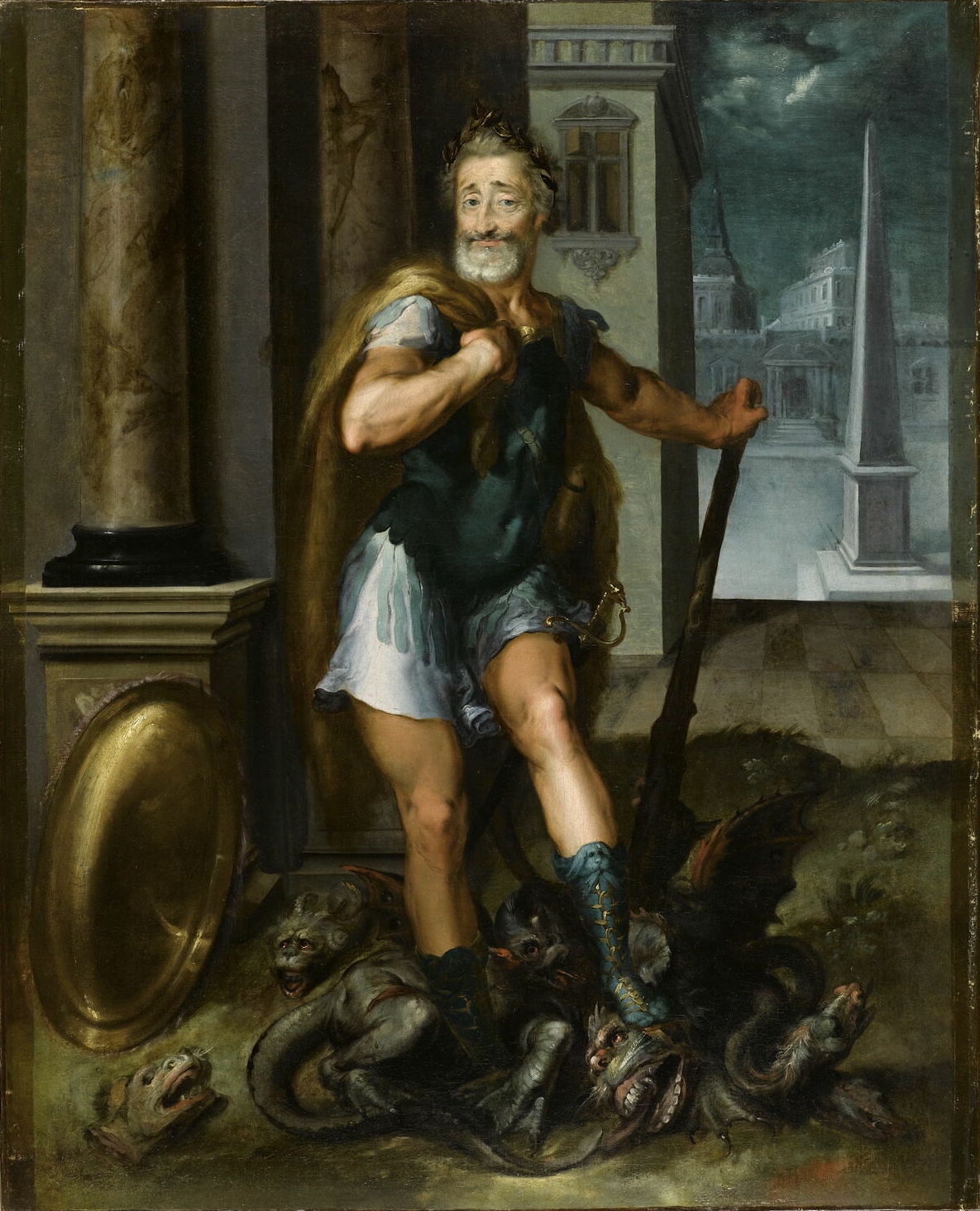
The Hydra appears in archaic pottery and later classical art, often in scenes showing Heracles at work. Bronze reliefs, engraved gems and post‑classical paintings continued to exploit its striking silhouette of entwined necks and heads. Modern references—literature, film, and even scientific nomenclature—draw on the Hydra’s image to suggest resilience, malignancy or complexity. Scholarly treatments and popular summaries of the creature remain accessible in overviews of serpentine monsters and compilations of Greek myth, and the site of Lerna retains archaeological and folkloric interest (see local traditions).
- Primary epic and genealogical texts that mention the Hydra.
- Parentage in myth connecting the beast to primordial giants.
- Echidna and related monsters, situating the Hydra among chthonic creatures.
- Heracles’ labors and the narrative role of the Hydra.
- Mycenaean and Argive context for the cult site of Lerna.
- Regional archaeology and mythic topography around Argos.
Related articles
Author
AlegsaOnline.com Lernaean Hydra Leandro Alegsa
URL: https://en.alegsaonline.com/art/46072
Sources
- encyclopedia.com : Hydra.
- encyclopedia.com : encyclopedia.com/