
Horae (Greek goddesses of the seasons and social order)
The Horae were Greek goddesses who governed the rhythms of nature and later the principles of civic order. Two distinct groups — seasonal and civic — appear in classical myth and art.
Overview
The Horae are a collective of female deities in Greek mythology associated with natural cycles and the regulation of social life. Classical authors present them in two broad traditions: an early generation tied to the progression of the year and harvest, and a later set connected with law, justice and public order. In most accounts they are daughters of Zeus and Themis, reflecting their dual role as agents of both cosmic and legal balance.
Image gallery
6 Images



Members and roles
Descriptions and names vary by source, but the two principal groupings are commonly distinguished as follows.
- First generation (seasonal) — Personifications of stages of the agricultural year, often described as young women who govern growth, flowering and harvest. Typical names associated with this group include Thallo (bloom), Auxo (growth) and Karpo (fruit/harvest).
- Second generation (civic, moral) — Deities who embody social virtues that sustain the polis: Eunomia (good order), Dike (justice) and Eirene (peace). These Horae represent rules and customs that keep communities functioning.
Iconography and worship
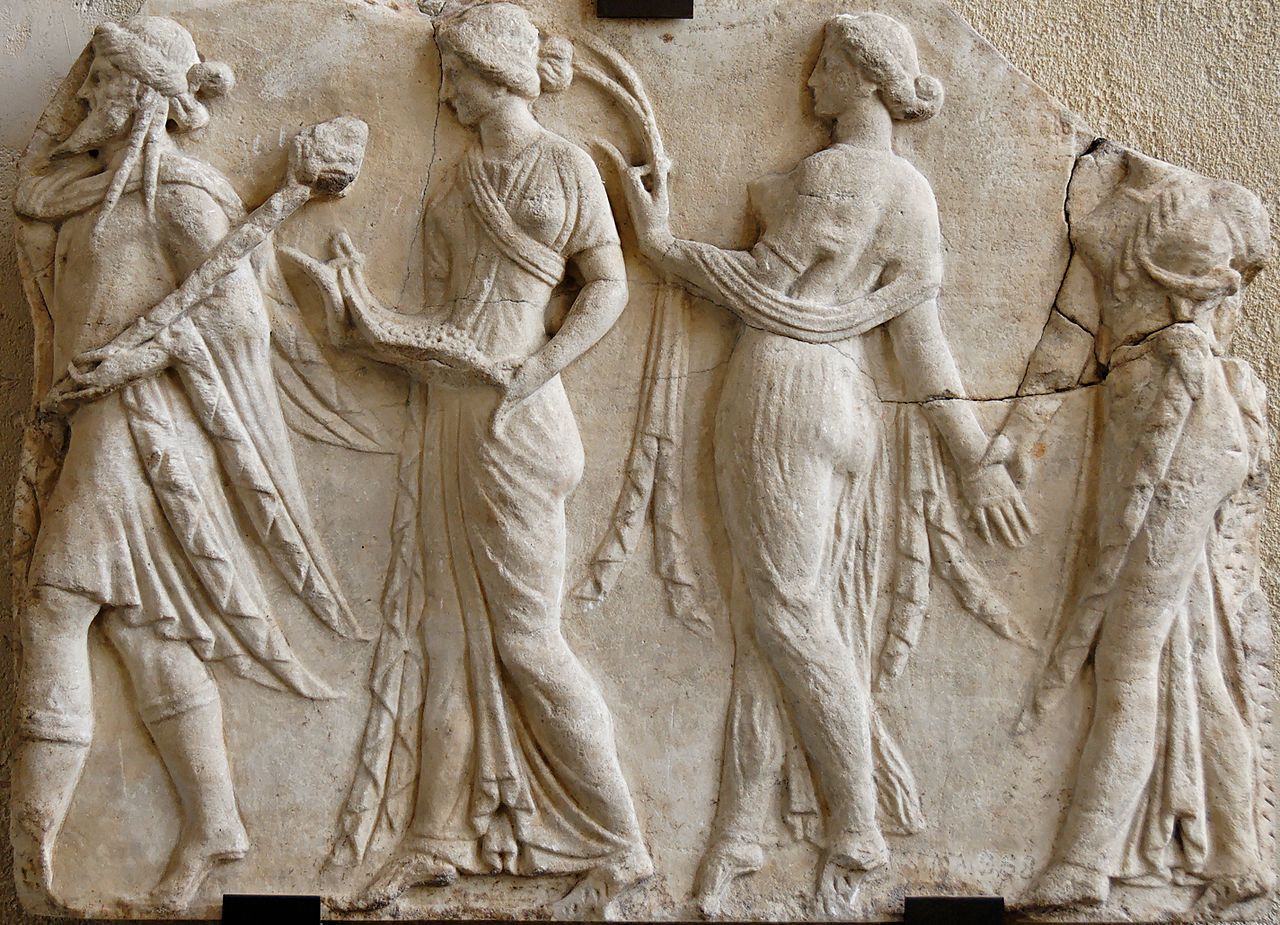
In visual art the Horae are usually shown as graceful women bearing symbols appropriate to their functions: blossoms, shoots, fruits or agricultural implements for the seasonal Horae; emblems such as scales, scepters, wreaths or a cornucopia for the civic Horae. They appear in vase painting, reliefs and public monuments, sometimes serving as attendants to greater gods and goddesses or as figures in processions during festivals tied to the agricultural cycle and public rites.
Development and cultural role
Over time the concept of the Horae broadened. Hellenistic and Roman writers and artists expanded the group to include additional personifications of specific hours, times of day, or orderly aspects of life. The shift from primarily seasonal functions to explicit moral and juridical attributes illustrates how Greek religion adapted natural metaphors to describe social institutions. Through this evolution the Horae became convenient symbols for poets, philosophers and civic propaganda concerned with stability and the proper ordering of society.
Notable distinctions and legacy
It is important to distinguish the two traditions when reading ancient sources: the seasonal Horae underline the dependence of human life on the cycles of nature, while the civic Horae emphasize rules and virtues that maintain communal harmony. Their names and images continued to influence later Roman art and European reception of classical mythology, where they often stand as emblematic representations of time, law and prosperity.
For further reading on how different authors and artists treated these figures, see specialized studies and museum catalogues that collect primary texts and visual evidence. The Horae remain a clear example of how the Greeks personified complex ideas — from the passing of seasons to the abstract principles that hold societies together.
Related articles
Author
AlegsaOnline.com Horae (Greek goddesses of the seasons and social order) Leandro Alegsa
URL: https://en.alegsaonline.com/art/45090