
Baldr (Baldur) — Norse god of light, beauty and the mistletoe myth
Baldr, son of Odin and Frigg, is a central figure in Norse myth associated with light, beauty, and a celebrated death by mistletoe; his story appears in Eddic sources and influenced later art and scholarship.
Overview
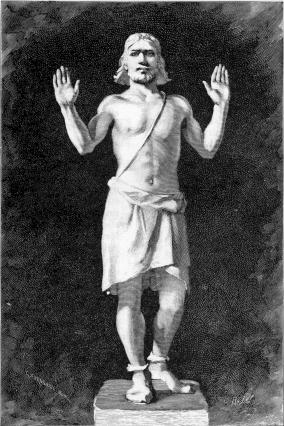
Baldr (also Balder, Baldur or Baldor) is one of the best-known figures in the medieval Norse corpus. He appears as a member of the Æsir and as the beloved son of Odin and Frigg. In surviving narrative and poetic texts he is repeatedly associated with radiance, beauty, peace and an idealized goodness. Accounts of Baldr’s life and death form one of the more complete and widely discussed stories in the literature commonly referred to as Norse mythology.
Image gallery
7 Images



Names and identity
The name Baldr is Old Norse; related Germanic forms are attested elsewhere and may reflect a broader continental tradition. A possibly related name appears in the Anglo-Saxon Merseburg charms, where a deity sometimes identified with Baldr is called Phol. The myths portray Baldr as both a narrative character—handsome, gentle, admired—and a symbol whose fate carries seasonal, ritual or moral resonances depending on scholarly interpretation.
Family and attributes
Baldr’s immediate family is central to his role in the myths. He is described as brother to the blind god Höðr (also rendered in some accounts with similar forms that appear under different manuscript headings; see alternate textual traditions). His wife is Nanna, and their son is the god Forseti, associated with law and mediation. Baldr’s hall, called Breidablik, is said to be a spotless and honourable place, and his funeral vessel in the sources is the great ship Hringhorni, described as exceptionally large.
The mistletoe episode and his death
The most famous passage of Baldr’s story recounts a prophetic dream in which he foresees his own killing. In response, his mother extracts sworn oaths from all things in the world that they will not harm him; a small plant—mistletoe—is not bound by this promise, often explained as being judged too young or insignificant to be forced. The trickster Loki learns of this omission, fashions a dart or spear from mistletoe, and causes the blind Höðr (by trickery) to cast it, inadvertently killing Baldr. The scene is told with variations across sources: in some versions Höðr is explicitly manipulated, in others the weapon is cast more indirectly.
Mourning, judgment and consequences
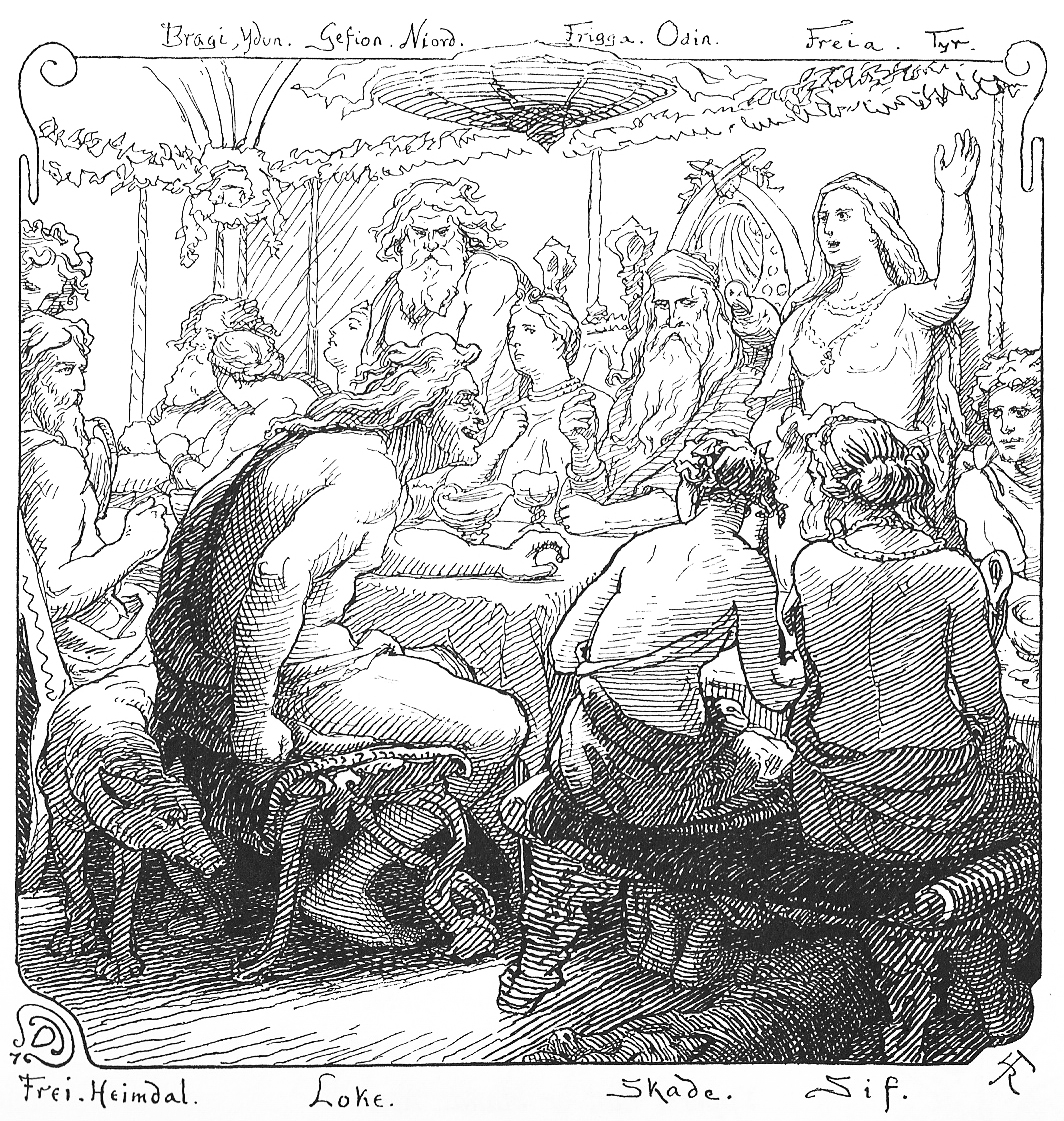
The death of Baldr provokes intense grief among the gods and is followed by an elaborate funeral where many beings from across the realms attend. Attempts to ransom Baldr from the underworld fail, and the gods turn their anger upon Loki, who is ultimately captured. One account describes Loki bound beneath a serpent whose venom inflicts torment; his suffering is tended by his wife, and when she must leave the venom drips upon him, causing convulsions. That imprisonment and later escape are woven into the chain of events that culminate in Ragnarök.
Ragnarök and renewal
In the eschatological framework, Baldr’s death is both a prelude to the final struggle and a part of the cycle of destruction and renewal. During Ragnarök the barriers between worlds break down and, after the great conflict and the death of Odin to the wolf Fenrir, the myths relate that Baldr and Höðr return from the underworld to live upon the renewed plain of Iðavöllr, near where Asgard once stood. In that rebuilt world Baldr is often presented as a figure of restored harmony.
Sources and interpretation
Material about Baldr survives chiefly in the Old Norse poetic and prose Eddas and in later medieval prose that preserves mythic narratives. Scholars debate the age and original shape of the Baldr tradition, whether motifs such as the mistletoe killing carry seasonal or sacrificial meanings, and how later Christian contexts may have influenced the surviving versions. Comparative evidence from wider Germanic material, including charms and fragmentary continental records, is used cautiously to reconstruct earlier forms.
Legacy and cultural influence
Baldr’s story has had a long afterlife in art, literature and popular culture, frequently invoked as a symbol of lost innocence and tragic fate. Artists and writers have adapted the narrative, emphasizing different aspects—moral, ritual, or psychological—while modern scholarship continues to examine its origins and meanings. For introductory treatments consult general surveys of Norse mythology and studies of the Æsir; for specific textual discussion see editions and translations of the Eddic material and comparative notes linking the tale to continental Germanic traditions.
Further reading and resources
- Overview of primary sources and translations: see editions of the Poetic and Prose Edda and accessible guides to Norse mythology.
- Comparative and continental notes: discussions that place Baldr alongside names found in the Æsir-cycle and the Merseburg charms.
- Character studies: scholarly treatments exploring Baldr’s role as son of Odin and Frigg, his relation to Höðr and Nanna, and the legal associations of Forseti.
- Mythic motifs and ritual: analyses of the mistletoe episode, Hringhorni (Hringhorni), the role of Loki and the sequence leading toward Ragnarök and the battle with Fenrir.
Related articles
Author
AlegsaOnline.com Baldr (Baldur) — Norse god of light, beauty and the mistletoe myth Leandro Alegsa
URL: https://en.alegsaonline.com/art/8469