
Hylas: youth of Greek myth taken by the nymphs
Hylas, a young companion of Heracles in Greek myth, is best known for his abduction by water-nymphs during the Argonauts' voyage; his story appears in classical poetry and later art.
Overview
Hylas is a minor but evocative figure from Greek mythology. He is remembered chiefly as the handsome young companion of the hero Heracles whose disappearance at a freshwater spring became a poetic and artistic theme. Hylas’ brief story links family ties, heroic companionship, and the perennial mythic motif of humans drawn into the realm of nature spirits.
Image gallery
7 Images




Origins and relationships
Ancient writers describe Hylas as the son of King Theiodamas of the Dryopians, a people associated with Thessaly. After Heracles slew Theiodamas in battle, the hero took the youth under his care; later sources present Hylas as an intimate companion or beloved of Heracles. Poets such as Theocritus dwell on the tenderness of that bond, comparing Heracles’ care for Hylas to a father’s instruction of a cherished son.
The abduction at the spring
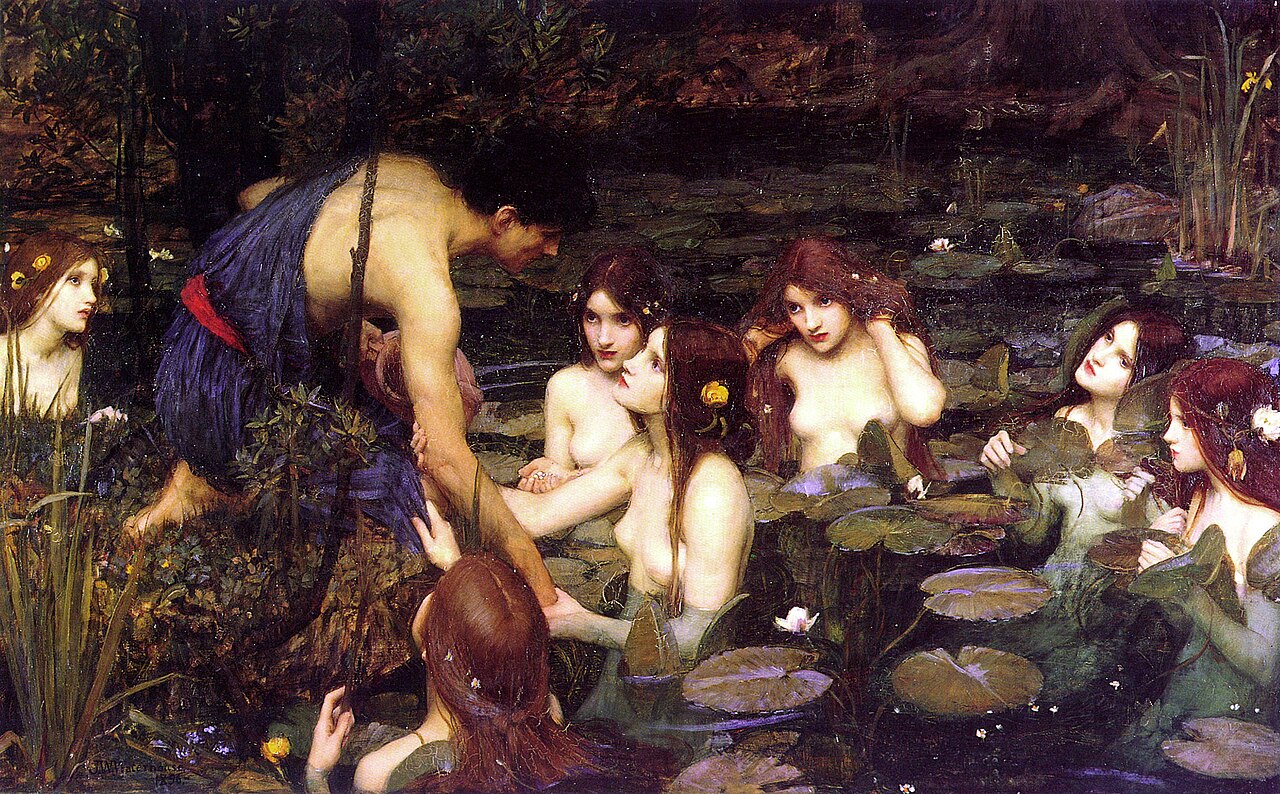
The best-known episode in Hylas’ story occurs during the voyage of the Argonauts in search of the Golden Fleece. When the ship put in at an island, Hylas went ashore to fetch water. Near a spring, local water-nymphs fell in love with him and drew him into the water; accounts differ on whether he drowned, was carried off to live with the nymphs, or chose to remain with them. The Argonauts sailed without him after Heracles’ long, unsuccessful search. Writers variously emphasize the supernatural compulsion of the nymphs and the tragic grief of Heracles.
Literary and artistic reception
The narrative survives in fragments and allusions across classical sources, including the epic tradition surrounding the Argonauts and later Roman and Hellenistic poets. Theocritus and other Hellenistic writers mention Hylas by name; more extensive treatments appear in the epic tradition and in mythographical summaries. In later centuries the subject inspired painters and sculptors: the scene of Hylas drawn into the spring became a popular subject in European art, often used to explore themes of beauty, desire, and the boundary between civilization and nature. Notably, the image of Hylas and the nymphs appears in Victorian and modern visual art as a symbolically charged tableau.
Interpretations and significance
Hylas functions on several levels: as an etiological figure explaining an unexplained disappearance in the Argonaut narrative; as a motif about the power of natural spirits over mortals; and as a cultural touchstone for ancient practices of heroic companionship and reflective treatment of same-sex love in antiquity. Scholars highlight the story’s capacity to address tensions between public heroism and private affection, and to explore the dangerous attraction of the untamed world.
Variants, sources and notable facts
- Classical sources: the episode is connected to the Argonautic tradition and appears in later summaries and poems; poets like Theocritus preserve the emotional detail.
- Motifs: the narrative combines a heroic adoptive relationship with the familiar folkloric theme of water-spirits or nymphs who lure mortals.
- Artistic afterlife: the story has been repeatedly reinterpreted in painting and literature; the pathos of Heracles’ search is often highlighted.
- Geography and battle: Hylas’ father is linked to conflict in Thessaly and the youth’s entry into Heracles’ retinue follows the killing of Theiodamas (see account of that episode).
- Reception: modern discussion frequently treats Hylas as an example of ancient narratives that address companionship, desire, and the porous border between human society and the natural/supernatural world (social and sexual roles).
For further reading on the Argonautica tradition and classical treatments of Hylas, consult scholarly translations and commentaries on the epic cycle and Hellenistic poetry; visual reference can be explored through museum catalogues that reproduce artworks inspired by the myth. For a concise ancient poetic reflection on Heracles and Hylas, see passages attributed to Theocritus and the epic summarizations linked above.
Related articles
Author
AlegsaOnline.com Hylas: youth of Greek myth taken by the nymphs Leandro Alegsa
URL: https://en.alegsaonline.com/art/46133