
Hard water: causes, characteristics, effects and treatment
Hard water contains high levels of dissolved minerals—mainly calcium and magnesium. This article explains its chemistry, types, impacts on homes and industry, health considerations, testing and common softening methods.
Hard water is water that contains an elevated concentration of dissolved mineral salts. In everyday usage the term usually refers to water that produces observable effects such as reduced lathering of soaps, scale deposits on kettles and pipes, and spotting on glassware. These effects arise because minerals are picked up naturally as groundwater and surface water flow through rock and soil. See also general information on water and on minerals.
Image gallery
4 Images

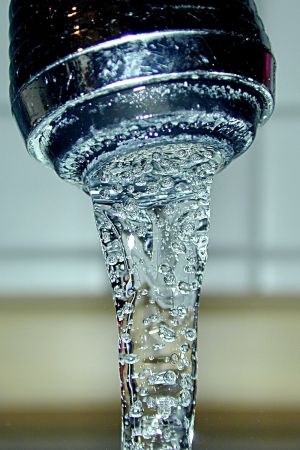

Chemical makeup and sources
The principal contributors to hardness are divalent cations, particularly calcium (Ca2+) and magnesium (Mg2+), present in solution as ions. These cations are commonly balanced by anions such as bicarbonates and sulfates. Calcium often enters water through dissolution of carbonate minerals, for example from calcium carbonate found in limestone and chalk, while magnesium can be released from mixed carbonate rocks such as dolomite. Local geology determines the relative amounts of these and other dissolved salts.
Types and measurement
Hardness is commonly classified as temporary or permanent. Temporary hardness is associated with bicarbonate salts and can often be reduced by boiling, which causes carbonate salts to precipitate. Permanent hardness is linked to non‑bicarbonate salts (for example sulfates and chlorides) and is not removed by simple boiling. Water quality is quantified by laboratories and utilities using chemical titration or instrumental methods and is reported in units such as milligrams per liter (mg/L, equivalent to parts per million, ppm) or grains per gallon; these values guide treatment choices.
Effects in households and industry
Hard water has a range of practical consequences. In homes it forms scale on heating elements, kettles and plumbing fixtures, reduces soap and detergent performance, and can leave residues on dishes and glass. In industrial systems scale reduces heat transfer, clogs pipes and valves, raises energy costs and increases maintenance needs. Some water-using appliances and processes are particularly sensitive to mineral deposition and require regular descaling or pretreatment.
- Common impacts: scale buildup, soap scum, reduced heater efficiency, higher detergent use and increased appliance wear.
- Operational concerns: in boilers and heat exchangers, mineral deposits reduce thermal efficiency and can cause premature failure.
- Consumer effects: hard water can affect hair and skin feel for some users and change taste perception of drinking water.
Health considerations
Hard water is generally not considered a health hazard. The dissolved calcium and magnesium contribute to dietary mineral intake and are beneficial for bone and metabolic health; see related material on bone health. However, some treatment methods alter water chemistry: for example ion exchange softening replaces hardness ions with sodium or potassium, which raises sodium content and may be relevant for people on low‑sodium diets. Where sodium is a concern, alternatives such as potassium-based softeners or membrane systems may be considered.
Testing and treatment options
Home test strips and kits provide a quick estimate of hardness; professional analysis gives precise concentrations and a full chemical profile. Common treatment methods include:
- Ion exchange water softeners that replace calcium and magnesium with sodium or potassium ions, widely used in homes and small businesses.
- Membrane processes such as reverse osmosis and nanofiltration, which remove dissolved ions to produce low-mineral water.
- Lime softening and chemical precipitation employed at municipal or industrial scale to remove hardness-forming ions.
- Chemical sequestrants and conditioners that keep hardness in solution or inhibit scale formation without removing minerals.
- Boiling for temporary hardness in small-scale or domestic situations.
Each approach has trade-offs: ion exchange is effective but increases sodium, membranes produce very low-mineral water and require maintenance and waste disposal considerations, and chemical treatments introduce additives that must be managed. Selection depends on water composition, intended use, cost, and environmental factors.
Maintenance, regional variation and practical tips
Hardness varies by geology and region; areas underlain by carbonate rocks typically yield harder groundwater, while regions with granitic or sandstone geology often have softer water. Practical measures include periodic descaling of kettles and appliances, installing appropriate softening or conditioning equipment where needed, and choosing detergents formulated for hard water. For detailed guidance contact local water authorities or consult technical resources on soft water treatment and on fundamental concepts such as ions and bicarbonates.
For further reading and supplier information consult specialized resources on calcium, magnesium, calcium carbonate, limestone, chalk, and dolomite, or general water quality portals at water-related sites.
Related articles
Author
AlegsaOnline.com Hard water: causes, characteristics, effects and treatment Leandro Alegsa
URL: https://en.alegsaonline.com/art/42401