
Dolomite: mineral and rock composed of calcium magnesium carbonate
Dolomite is a carbonate mineral (CaMg(CO3)2) and the dominant mineral of dolostone. This article covers its composition, textures, origin, uses, and how it differs from limestone.
Dolomite refers both to a mineral and to a sedimentary rock largely made of that mineral. The mineral has the ideal formula CaMg(CO3)2 and belongs to the carbonate family: see carbonate. The term is also applied to the rock commonly called dolostone or dolomite rock (rock), which is predominantly composed of the mineral dolomite (mineral). Its principal cations are calcium and magnesium, combined with carbon and oxygen in the carbonate groups. Crystalline specimens are sometimes found as well-formed crystals.
Image gallery
7 Images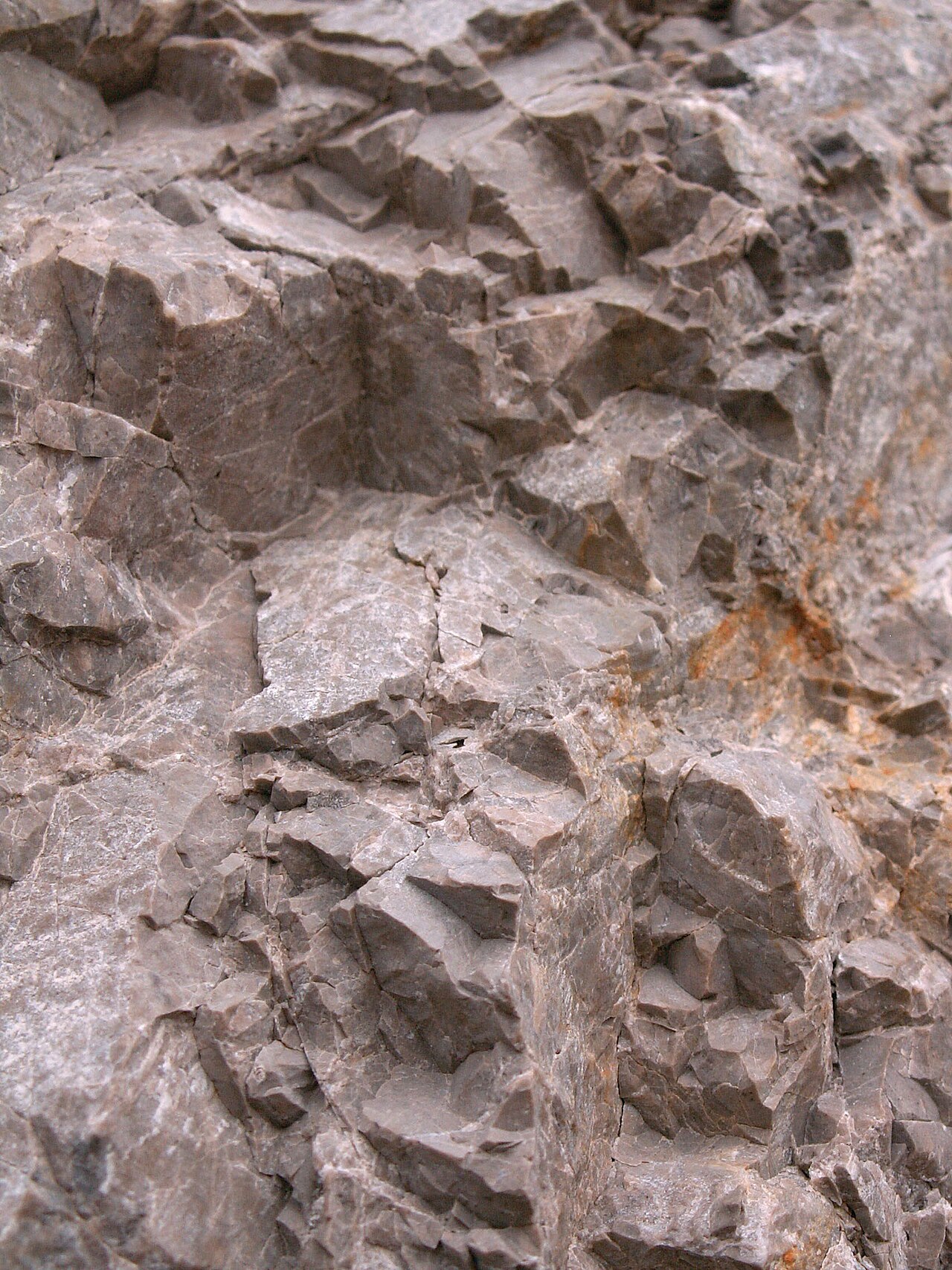
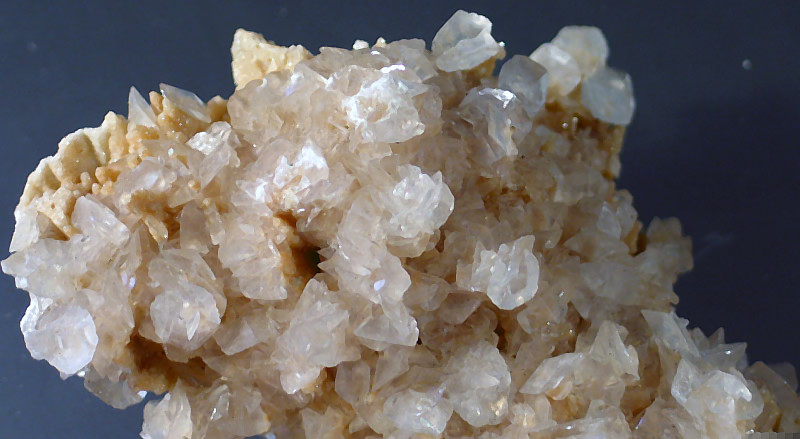



Characteristics and identification
Dolomite commonly occurs as fine- to coarse-crystalline rocks with textures that record growth and replacement of original limestones. Unlike calcite-rich limestones (limestone), fresh dolomite usually reacts only weakly with cold dilute hydrochloric acid; it effervesces more readily when powdered or heated. Dolomite minerals crystallize in a trigonal (rhombohedral) lattice and may show zoned or saddle-shaped crystals in some deposits. The rock made predominantly of dolomite is often called dolostone, while limestone that has been partially converted is described as dolomitic limestone (historically termed magnesian limestone).
Formation and geological context
Dolomite forms by a process called dolomitization, in which magnesium-rich fluids alter preexisting calcium carbonate sediments and replace calcite with dolomite. This can occur during early diagenesis in shallow marine, evaporitic, or restricted-basin settings, and microbial activity may assist the process in some environments. As a result, dolostones can preserve primary sedimentary structures but often develop secondary porosity, making them important reservoir rocks in some petroleum systems.
History and naming
The rock and mineral were first described from exposures in the Dolomite Alps of northern Italy; the name recalls that region (Dolomite Alps). The mineralogic concept and systematic study of dolomite date to the late 18th century and subsequent work on carbonate petrology.
Uses and importance
Dolomite and dolostone have many practical applications. Common uses include:
- Construction aggregate and dimension stone for buildings and roads.
- Raw material in the production of cement, glass, and ceramics, where its Ca and Mg content is valuable.
- A source of magnesium compounds and as a soil conditioner and animal feed supplement in agriculture.
- Industrial uses such as pH buffering, manufacture of refractory bricks, and chemical processing.
Because dolostone can develop secondary porosity and permeability, it is also significant in hydrogeology and petroleum geology as an aquifer and hydrocarbon reservoir rock.
Notable distinctions
Dolomite differs from limestone primarily by its magnesium content and its response to acid testing. Terminology can be confusing: "dolomite" can mean the mineral or the rock; "dolostone" is often used to avoid ambiguity. Older literature in some regions uses the term "magnesian limestone" for limestones with elevated magnesium. For further technical information consult mineralogy and sedimentary petrology references (carbonate, rock).
Related articles
Author
AlegsaOnline.com Dolomite: mineral and rock composed of calcium magnesium carbonate Leandro Alegsa
URL: https://en.alegsaonline.com/art/28242