
Chalk: sedimentary rock and common chalk materials
Chalk is a soft, white, porous form of limestone formed from microscopic marine skeletons; the term also applies to several manufactured writing and marking materials with different chemistry and uses.
Overview
In geology, chalk is a soft, white, fine-grained variety of limestone composed predominantly of the mineral calcium carbonate (CaCO3). It is formed from the accumulation of microscopic calcareous plates and shells produced by planktonic algae over millions of years. The resulting rock is typically porous and friable, pale in color, and often contains thin bedding, flint nodules and fossil fragments. Outside geology, the word "chalk" is commonly used for several distinct materials used for marking and drawing; these manufactured products may have quite different chemical compositions.
Image gallery
10 Images




Formation and geological characteristics
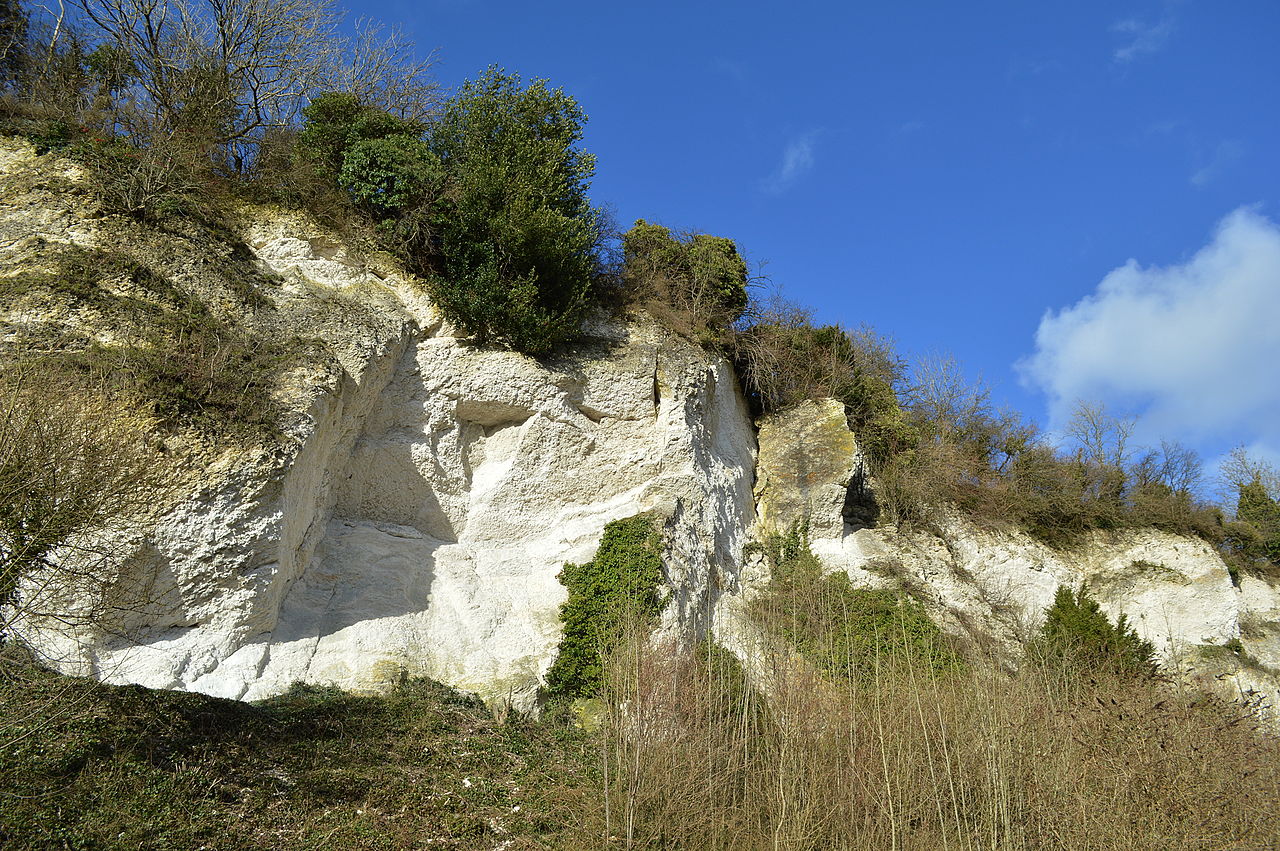
Chalk accumulates in marine settings where light and nutrients allow vast numbers of tiny, calcifying organisms to thrive. When these organisms die, their microscopic skeletons settle through the water column and compact on the seafloor. Over geological time and burial, these accumulations lithify into chalk. Classic chalk deposits, such as the famous white cliffs, were formed during warm periods of the Mesozoic era. Because chalk is made mostly of calcium carbonate, it reacts with acidic water and can form characteristic landforms like steep coastal cliffs, escarpments and porous hill-country aquifers.
Physical properties and hydrogeology
Chalk is relatively soft and typically has a high porosity but variable permeability. It can hold a considerable amount of groundwater in its pore spaces and fractures, acting as a natural aquifer that releases water slowly. This makes chalk landscapes important for water supply in some regions. At coastal margins, resistant bedding and low erosion rates of the rock can produce prominent white cliffs and headlands.
Uses and cultural significance
Historically and today, chalk (the rock) has been quarried for lime production, agricultural liming to neutralize acidic soils, and as a raw material in cement and building lime. The familiar sticks sold for classroom blackboards or sidewalk drawing are usually manufactured from gypsum (a sulfate mineral) or compressed calcium carbonate, not pure geological chalk. Tailors' chalk, used for marking fabric, is typically a form of talc or other soft mineral. Each of these materials is chosen because of softness, ease of removal, and the contrast they provide on different surfaces.
Types, distinctions and notable facts
It is important to distinguish between geological chalk (carbonate rock) and several products called "chalk":
- Geological chalk: limestone composed mainly of coccoliths and other microfossils.
- Blackboard/sidewalk chalk: often gypsum or manufactured calcium carbonate formulated for mark-making.
- Tailors' chalk: typically talc or another soft marking compound suited to textiles.
Further reading and related topics
For related subjects and more detailed entries, see the following topics and resources:
- Limestone and carbonate rocks
- Planktonic organisms
- Marine algae that produce calcareous plates
- Coccoliths and coccolithophores
- Carbonate production and photosynthesis
- Examples of chalk cliffs
- Paleogeography and ancient latitudes
- Upper Cretaceous deposits
- Air effects on rock weathering
- Water interactions with carbonate rocks
- Coastal chalk exposures
- Cliff formation processes
- White Cliffs and landmark cliffs
- Kent and regional geology
- National geological examples
- Climate influences on groundwater
- Gypsum-based blackboard chalk
- Chalkboards and blackboards
- Cleaning marks and erasers
- Sidewalk chalk and children's play
- Concrete surfaces and marking
- Pavements and sidewalks
- Asphalt surfaces
- Rain and natural removal of marks
- Talc and tailors' chalk
- Tailoring tools and techniques
- Fabric marking and garment construction
Questions and answers
Q: What is chalk made of?
A: Chalk is a type of limestone made from calcareous (CaCO3) skeletons of tiny planktonic algae called coccoliths.
Q: How did the chalk cliffs form?
A: The chalk cliffs were formed when England was below the equator in a tropical sea during the Upper Cretaceous, when the Earth was even warmer than now.
Q: Is blackboard chalk real chalk?
A: No, blackboard chalk is not real chalk. It is actually gypsum (calcium sulfate).
Q: What do people use blackboard chalk for?
A: People use blackboard chalk for drawing on hard things because it is soft and leaves a mark if rubbed on something hard or rough. It can be used to write on a chalkboard or blackboard and then erased with an eraser or water.
Q: What does tailors' chalk consist of?
A: Tailors' chalk consists of talc (magnesium silicate), which they use to draw on material when making clothes.
Q: How long are sticks of blackboard usually sold in stores?
A: Sticks of blackboard are usually sold in stores at about 5 cm long.
Related articles
Author
AlegsaOnline.com Chalk: sedimentary rock and common chalk materials Leandro Alegsa
URL: https://en.alegsaonline.com/art/18386