
Halo (optical phenomenon and religious symbol)
A halo is a luminous ring or disk seen both as an atmospheric optical effect and as a symbolic element in art and religion; this article explains its causes, varieties, history and cultural meanings.
Overview
A halo is a circular or ringlike display of light that can surround luminous objects or figures. In physics it refers to atmospheric optical phenomena that form around bright sources; in art and religion it denotes a luminous field used to mark sacred or important figures. The term is often applied broadly, so distinguishing physical halos from symbolic depictions is helpful: the atmospheric occurrence is a naturally produced ring of light, while the artistic halo highlights saints, deities and notable individuals such as Jesus.
Image gallery
10 Images





Optical causes and common types
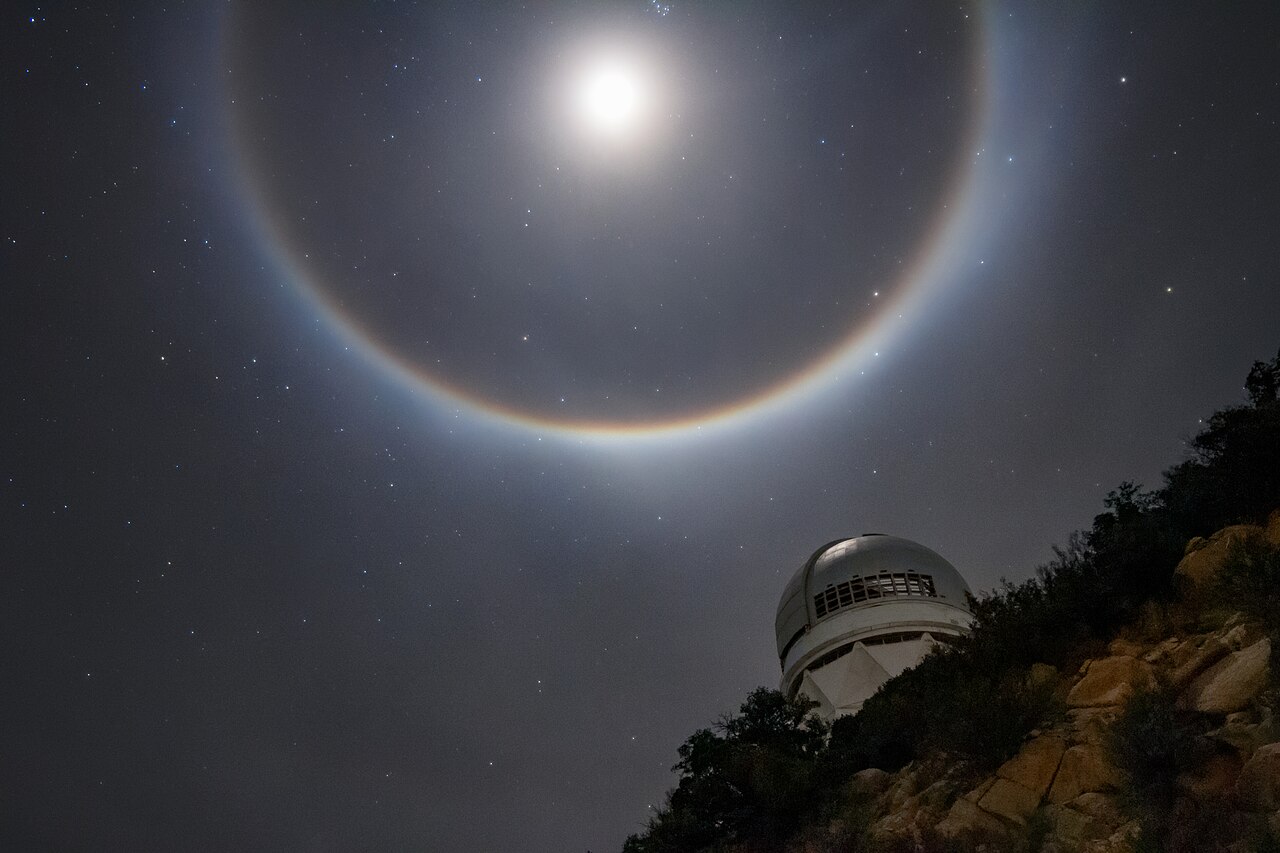
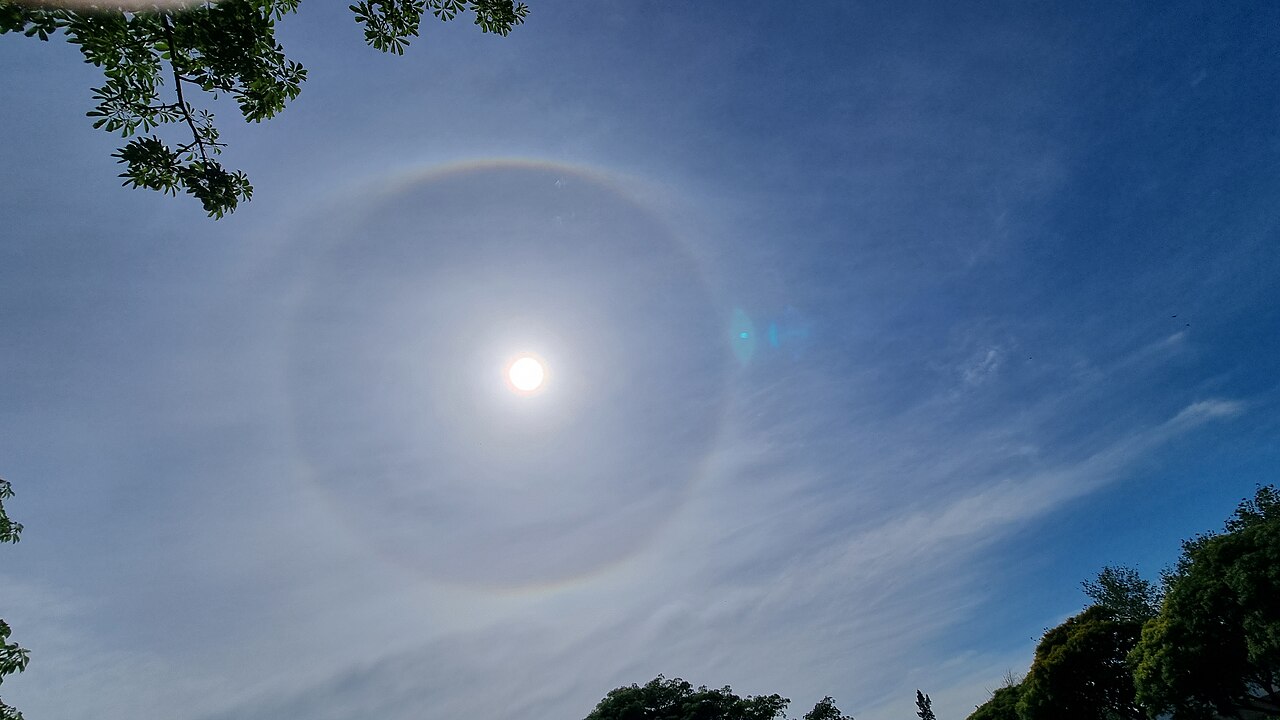
Atmospheric halos are visual phenomena caused chiefly by the interaction of sunlight or moonlight with ice crystals suspended in the upper atmosphere, typically in thin cirrus or cirrostratus clouds. The way light is refracted, reflected and dispersed by hexagonal ice crystals determines the halo's shape, size and color separation.
- 22° halo: one of the most frequently observed rings, formed by refraction through hexagonal ice crystals and often faintly colored.
- 46° halo: a larger, rarer ring produced by different light paths through crystals.
- Sun dogs (parhelia): bright spots appearing at the same elevation as the Sun, often colorful and occurring on either side of the Sun.
- Light pillars and arcs: vertical columns or curved features created mainly by flat oriented crystals reflecting light.
- Coronas and iridescence: generally caused by diffraction around small water droplets; coronas are smaller and more colorful than ice-crystal halos.
History and cultural meanings
Depictions of luminous disks or radiant fields predate modern optics. Ancient cultures used solar and luminous imagery in art and religion: Egyptian solar disks, classical portraits with radiant crowns, and later Christian and Buddhist iconography that placed a halo or nimbus behind important figures. In Hindu traditions some observers interpret the halo around a deity or sage as related to the crown chakra; for example, some Hindus describe it as a visual shorthand for spiritual activation. Different religions and artistic schools developed varied shapes (round disks, full-body aureoles, or radiating crowns) and terms to describe the motif.
Practical significance and distinctions
For meteorologists and skywatchers, halos indicate the presence of ice crystals aloft and can hint at approaching weather systems. Photographers and artists study their appearance to capture dramatic skies or convey holiness. It is important to distinguish halos from related effects: coronas and diffraction patterns are produced by small droplets rather than ice, and phenomena like the apparent brightening on the horizon are separate optical effects. Halos may surround the Sun, the Moon, or bright artificial lights, and their exact appearance depends on crystal shape, orientation and observer geometry.
Notable facts and terminology
Specialized vocabulary exists: "parhelion" refers to a sundog, "circumzenithal arc" denotes a colorful arc high above the Sun, and "nimbus" or "aureole" are used in art history to describe luminous fields. Observing halos offers a practical lesson in atmospheric optics: by watching their color order, sharpness and radius one can infer whether ice or water droplets are responsible. While scientific explanations clarify how halos form, cultural and religious meanings continue to shape how people interpret luminous rings in the sky and in images.
Further reading and visual examples are available through general references on atmospheric optics and art history; for online resources and image archives see links below: definition, iconography, biblical art, Hindu traditions, optical phenomena, solar halos, lunar halos, cloud types.
Related articles
Author
AlegsaOnline.com Halo (optical phenomenon and religious symbol) Leandro Alegsa
URL: https://en.alegsaonline.com/art/41972