
Heart (symbol): meanings, history, and cultural uses
Stylized heart used to represent love, emotion, and related concepts. Explains forms, possible origins, historical development, modern uses in art and digital media, and notable variations.
Overview
The heart symbol is a simplified, symmetric graphic commonly used to represent love, affection, emotion, or deep liking. It appears across languages and media as a quick signifier of positive feeling, from jewelry and greeting cards to logos and user-interface icons. The abstract shape differs from the anatomical heart yet has become the dominant visual shorthand for matters of emotion and caring. For a general reference to its cultural role see heart symbol.
Image gallery
10 Images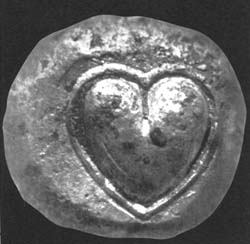


Form and common variations
The familiar heart outline consists of two rounded lobes at the top meeting at a central point and tapering to a lower point. Variants convey distinct meanings and are often used as visual shorthand:
- Solid red heart — conventional sign for romantic love or strong affection.
- Broken or split heart — indicates sadness, loss, or emotional pain; often drawn as a fracture down the middle.
- Pierced heart — shown with an arrow or dagger; commonly denotes lovesickness or passion.
- Sacred or flaming heart — a religious motif, for example in Christian iconography, combining a heart with light, flame, or a crown of thorns to express devotion or divine love.
Origins and historical development
The exact origin of the stylized heart shape is uncertain and has been debated by scholars. Several theories exist: it may derive from stylized plant forms such as seed pods or leaves that were familiar decorative motifs in antiquity; it may have emerged through medieval manuscript illustration and later devotional art; or it may reflect a long process of graphic simplification of earlier motifs. By the late Middle Ages the shape was widely used in European art and on playing cards and gradually became associated specifically with romantic love. Printed valentines, jewelry, and commercial ornamentation in the 18th and 19th centuries helped cement its modern associations.
Uses and cultural importance
The heart symbol functions in many contexts: as a declaration of love on greeting cards, as a motif in visual arts and fashion, and as an emblem on flags, logos, and monuments. In informal communication it acts as a quick signal of approval, sympathy, or emotional emphasis. Social media and messaging platforms use heart icons as reactions or “likes,” and designers employ various colors and sizes to convey nuanced meanings. For discussions of the heart as a sign of love see love and for its romantic associations see romantic.
Notable distinctions and facts
Although universally recognized, the heart symbol's precise interpretation depends on context, color, and form: a black heart may suggest grief or dark humor, while other colors can signify friendship, trust, jealousy, or health. The graphic is visually flexible, lending itself to minimalist logos, ornate devotional images, and pixel-sized emoji. Its persistence and adaptability make the heart one of the most enduring and widely understood symbols of human feeling.
Because its early development is not definitively documented, many historical claims about precise origins are offered cautiously: the symbol's evolution appears to be a gradual cultural process rather than the invention of a single author or date.
Related articles
Author
AlegsaOnline.com Heart (symbol): meanings, history, and cultural uses Leandro Alegsa
URL: https://en.alegsaonline.com/art/43087