
Glen Campbell (1936–2017)
American country-pop singer, guitarist, session musician, TV host and actor, known for hits like "Wichita Lineman" and "Rhinestone Cowboy" and for a long influence on popular and country music.
Glen Travis Campbell (April 22, 1936 – August 8, 2017) was an American musician, singer and actor whose career spanned several decades and whose recordings helped shape the crossover between country and mainstream pop music. Born in Billstown, Arkansas, Campbell rose from modest rural beginnings to become widely known both as a highly skilled session guitarist and as a successful solo recording artist and television host. His style combined clear, melodic guitar lines, a warm baritone voice and an ability to interpret contemporary songs by prominent songwriters, which together produced a string of popular and enduring singles.
Image gallery
3 Images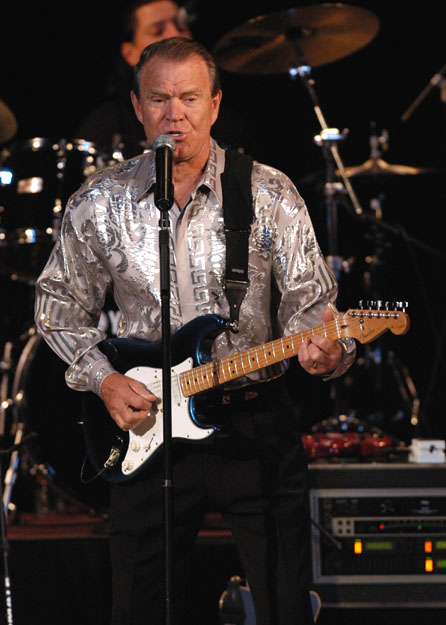


Early life and session career
Campbell learned guitar as a child and moved to the West Coast to pursue professional work in music. By the 1960s he had established himself in the Los Angeles studio scene as a first-call session player. He contributed to a wide range of rock and pop records of the era, playing on sessions that brought a country-tinged approach to popular productions. His steady, economical technique and musical sensitivity made him a valued collaborator among producers and fellow musicians. During this period he also performed briefly with established touring acts, stepping in for live engagements when needed, and built a reputation that would serve as the foundation for his later solo success.
Solo breakthrough and signature songs
As a solo artist, Campbell recorded primarily within a country-pop idiom that appealed to both radio formats. He became closely associated with material by the songwriter Jimmy Webb; their collaborations yielded some of Campbell's most memorable performances, including songs that combined narrative country lyricism with lush pop arrangements. Among his best-known recordings are "By the Time I Get to Phoenix," "Wichita Lineman," "Galveston" and "Gentle on My Mind," each of which showcased his interpretive gifts and cinematic approach to production. In 1975 Campbell achieved his largest commercial phenomenon with "Rhinestone Cowboy," a crossover hit that became emblematic of a certain show-business glamour within country performance and helped broaden his appeal to a mass television audience.
Television, acting and public image
Campbell extended his reach beyond records with frequent television appearances. He guest-starred on variety and comedy programs and later hosted his own nationally broadcast series, The Glen Campbell Goodtime Hour, which mixed musical performances, guest artists and light entertainment. The show introduced Campbell to viewers who might not have followed country radio and contributed to a family-friendly public profile. He also made occasional film and television acting appearances, expanding the range of his public work. Throughout his career his private life attracted attention at times, and personal relationships and episodes of overexposure in the media sometimes affected public perception of his artistry.
Later career, personal struggles and return
By the late 1970s Campbell's commercial prominence had diminished, a pattern experienced by many artists as popular tastes shifted. He continued to record, tour and collaborate with other musicians, and experienced renewed interest in his catalog in later decades. Like many long-career performers he had struggles away from the stage, which received public attention. In later years he returned to recording and to selective performing, earning recognition from peers and maintaining a devoted fan base. He balanced artistic work with periods of withdrawal from the spotlight, and continued to be cited by guitarists and producers for the directness and musicality of his studio contributions.
Health, farewell and legacy
Campbell revealed a diagnosis of Alzheimer's disease in the early 2010s and thereafter made public plans to record one final studio project and to complete a farewell tour. He issued a final recording in that period and concluded a carefully staged touring schedule designed to allow him to perform while managing the progression of his illness. He died in Nashville, Tennessee, in 2017. After his death, critics, fellow musicians and fans continued to celebrate his recordings for their elegant blending of country storytelling and pop production, and his session work is frequently cited as an influential example of tasteful studio musicianship.
Musical characteristics and influence
- Guitar approach: Campbell was known for clear, melodic single-note lines and supportive accompaniment rather than overly showy solos, making his guitar work especially suited to songs that foregrounded narrative and vocal delivery.
- Interpretive skill: He had an ability to choose and shape material by contemporary songwriters so that it resonated with both country and pop audiences.
- Crossover role: Through recording and television exposure he helped blur boundaries between country and mainstream pop radio during the late 1960s and 1970s.
- Session legacy: His studio contributions remain a reference point for musicians studying tasteful accompaniment and the collaborative craft of session work.
Selected recordings and resources
Campbell's catalog contains many widely known singles and albums that illustrate different phases of his career. Notable songs often cited in retrospectives include "Gentle On My Mind," "By the Time I Get to Phoenix," "Wichita Lineman," "Galveston" and "Rhinestone Cowboy." For readers seeking overviews of his life, a range of resources summarize his work, document his session credits, and review his television and acting appearances. Further information on the musical and cultural context of his career can be found via the links below.
- Biography overview
- Discography and session credits
- Television appearances
- Acting roles and filmography
- Genre context: country and pop crossovers
- Critical perspectives on his style
- Guitar technique and equipment
- Session musician work in the 1960s
- Collaborations with pop artists
- Notable session credits
- The Beach Boys tour involvement
- Relationship with other musicians
- Variety show guest spots
- List of hit singles
- Cultural impact of "Rhinestone Cowboy"
- Later career and recordings
- Personal life and public controversies
- Return to recording in the 1990s and beyond
- Legal issues and public incidents
- Influence on popular culture
- Health, diagnosis and farewell tour
- Obituary and tributes
Campbell's life and career illustrate how a gifted musician can move between roles—support player, solo artist and television personality—while leaving a lasting imprint on the sound and business of popular music. His recordings continue to be played and reissued, and his example as a session player and interpreter remains instructive for singers, guitarists and producers working across genres.
Questions and answers
Q: Who was Glen Travis Campbell?
A: Glen Travis Campbell was an American musician, singer and actor. He was born in Billstown, Arkansas and most of his solo works were in the country music genre.
Q: What records did he play guitar on before his solo career?
A: Before his solo career, he played guitar on rock and pop music records, including "Mary, Mary" by The Monkees.
Q: What TV shows did Campbell guest-star on?
A: Campbell guest-starred on The Smothers Brothers Comedy Hour. Later he hosted a series of his own, The Glen Campbell Goodtime Hour.
Q: What are some of the hits that Glen Travis Campbell had during his career?
A: Some of the hits that Glen Travis Campbell had during his career include "Galveston", "By The Time I Get to Phoenix", "Wichita Lineman", "Try a Little Kindness", "Gentle On My Mind", "Sunflower", and "Hey Little One". Many of these songs were written by Jimmy Webb. In 1975, he had his biggest hit with “Rhinestone Cowboy” which became a phenomenon and rhinestone-covered clothing became a fad. Other hits included “Country Boy (You Got Your Feet in L. A.)” and “Can You Fool?".
Q: Why did people seem to lose interest in him in the late 1970s?
A: People seemed to lose interest in him in the late 1970s because it seemed like he suffered from public overexposure due to his romance with Tanya Tucker who was much younger than him as well as cutting back on public appearances at this time.
Q: How did people become interested again in Campbell's music and career during the 1990s?
A: People became interested again in Campbell's music and career during the 1990s despite personal problems such as being arrested for drunk driving getting as much attention as his career at times.
Q: When was it discovered that Glen Travis Campbell had Alzheimer's disease?
A; It was discovered that Glen Travis Campbell had Alzheimer's disease late 2010 which he announced publicly June 2011 after releasing one final album before completing his last concert tour November 2012 before passing away from this illness August 8th 2017 at 81 years old
Related articles
Author
AlegsaOnline.com Glen Campbell (1936–2017) Leandro Alegsa
URL: https://en.alegsaonline.com/art/39154
Sources
- tmz.com : Glen Campbell Dead at 81
- rollingstone.com : "Glen Campbell, 'Rhinestone Cowboy' Singer Who Fused Country and Pop, Dead at 81"