
Giant tube worm (Riftia pachyptila)
A large annelid of deep‑sea hydrothermal vents that hosts chemosynthetic bacteria in an internal organ, lacks a digestive tract as an adult, and supports diverse vent communities.
The giant tube worm, Riftia pachyptila, is a conspicuous annelid that lives attached to hydrothermal vents on the deep ocean floor. Discovered after vents were first explored in the late 20th century, these worms are notable because they do not depend on photosynthetic food chains. Instead, they thrive in complete darkness by hosting chemosynthetic bacteria that convert dissolved inorganic chemicals into organic matter.
Image gallery
9 Images


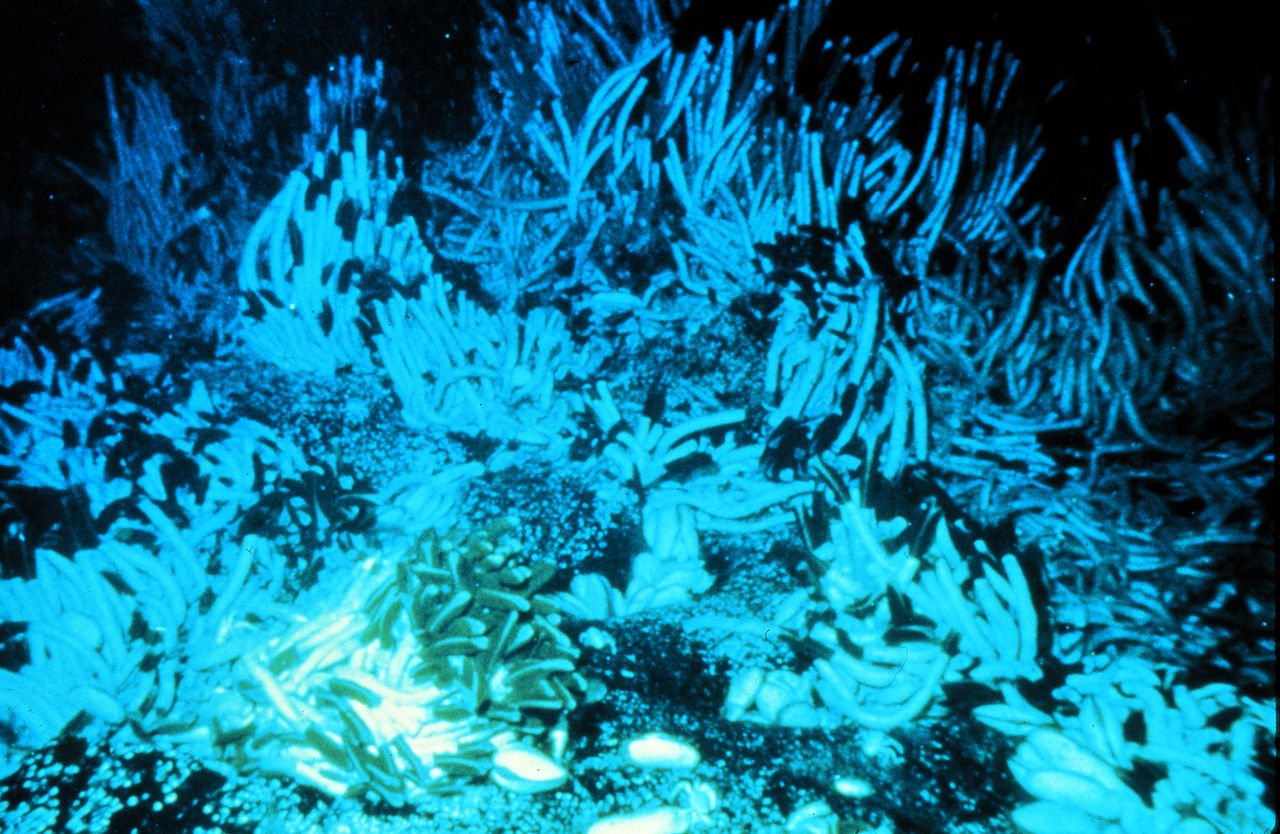


Characteristics and anatomy
Adults live within a protective, non‑living tube secreted by the animal. Tubes may be long and rigid and commonly exceed one metre in length in mature individuals. A prominent red plume of vascularized tissue protrudes from the tube; this plume is rich in hemoglobins and functions in gas exchange. Adult Riftia lack a functional mouth and digestive tract; their nutrition is supplied by a large internal organ, the trophosome, which contains dense populations of symbiotic bacteria.
Physiology and symbiosis
The bacterial symbionts are chemosynthetic: they use energy obtained by oxidizing reduced sulfur compounds, such as hydrogen sulfide, together with oxygen to fix carbon dioxide into organic compounds. The worm supplies the bacteria with the raw materials—sulfide and oxygen—transporting them from seawater via the plume and specialized blood pigments capable of binding both gases. In return, the bacteria release organic molecules that nourish the host.
Habitat, distribution and tolerance
Riftia is associated with hydrothermal vent fields, notably along mid‑ocean ridges and seafloor spreading zones, where hot, mineral‑rich fluids escape as black smokers and other vent structures. They occupy chemical mixing zones rather than the hottest fluid vents themselves, tolerating steep gradients of temperature and high concentrations of sulfide that would be toxic to many animals. Major known populations occur along parts of the Pacific seafloor where vents are common.
Life cycle and ecology
Reproduction is sexual, and larvae disperse in the plankton before settling near vents. Juveniles have a functional mouth and gut during early development; environmental bacteria colonize internal tissues at this stage, and as the worm matures the gut closes and the trophosome becomes the primary site of nutrition for the remainder of its life. Riftia often forms dense aggregations and acts as a foundation species, supporting a diverse community of specialized invertebrates and microbes.
Research significance and conservation
Giant tube worms are central to studies of symbiosis, adaptation to extreme environments, and the limits of life. They have informed work on chemosynthesis, novel biochemistry, and even hypotheses about life on other worlds. Human activities such as deep‑sea mining and changes to seafloor habitats pose potential risks to vent communities, prompting interest in conservation and careful study of vent ecosystems.
Notable facts
- Adults lack a mouth and gut; the trophosome houses chemosynthetic bacteria.
- The red plume contains hemoglobin that helps transport both oxygen and sulfide.
- Tubes are secreted protective structures that persist after the animal dies.
- They form dense colonies that provide habitat and food for other vent organisms.
For introductory summaries and more detailed resources see: species overview, vent habitats, black smokers, hydrothermal vents, thermal tolerance, sulfur chemistry at vents, symbiosis concepts, bacterial symbionts, sulfur oxidation, oxygen transport, chemosynthetic production, further reading.
Related articles
Author
AlegsaOnline.com Giant tube worm (Riftia pachyptila) Leandro Alegsa
URL: https://en.alegsaonline.com/art/38718